

 pork ribs
 fermented fish sauce
A dill stew from Isan
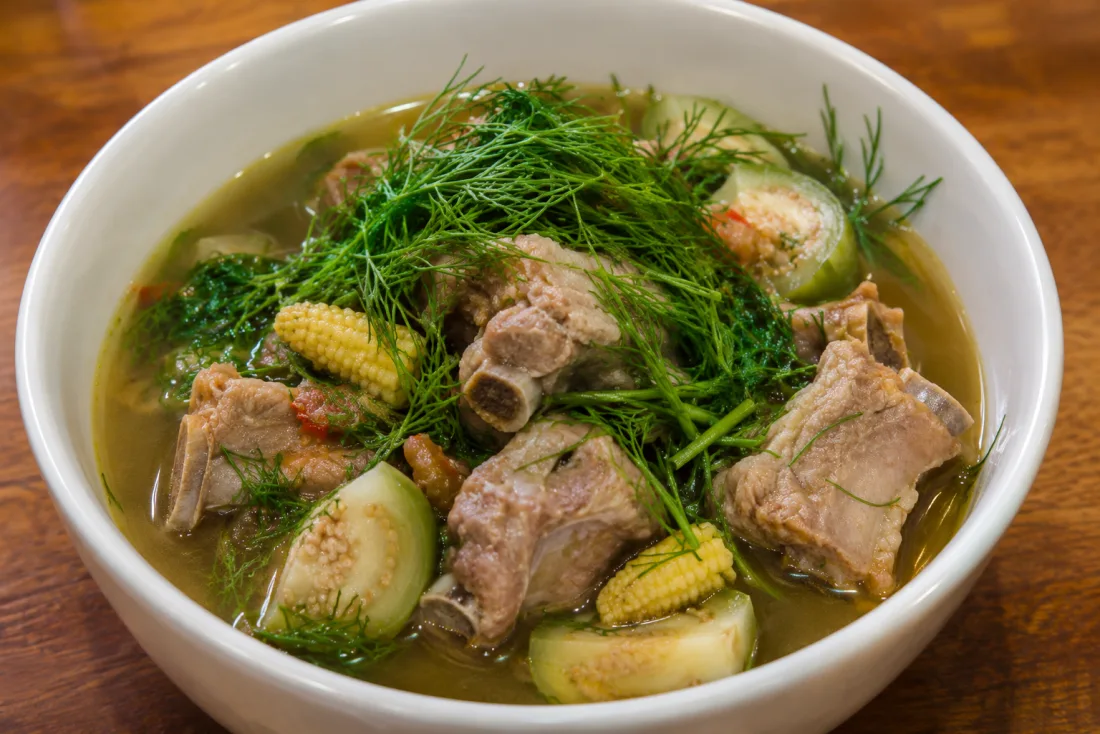
Gaeng om names a family of herby, vegetable-rich dishes, and moo identifies this pork version. Dill is a familiar Isan flavour. Northern dishes can use the same broad name with different seasoning. In an Isan restaurant this dish can be shared with sticky rice and other dishes or eaten with white rice.
Pork and the vegetables
Ribs or cartilage cuts lend body to the broth. Sliced pork works well alongside tender greens. Round Thai eggplant, cabbage, bok choy, baby corn and spring onion are possibilities, depending on the cook. Dill, shallot, lemongrass, garlic and chilli season the liquid.
The savoury broth
Cooked fermented fish seasoning can carry the salt and savoury depth. Some recipes add toasted rice for a nutty aroma. Regional accounts also document soaked pounded sticky rice cooked into the soup to thicken it. The stew is fragrant and hot rather than emphatically sour.
Ribs and sliced pork
Cooked meat around a rib tastes different from thin slices gathered up with greens. Cartilage may stay gently springy, while rib bones should be set aside. Some cooks add lemon basil or holy basil along with dill. Pork cut, vegetables, heat and fermented fish intensity vary.
Serving and recognising it
Tom saep pork soup puts a stronger sour flavour to the fore. Gaeng om is full of vegetables and dill, with a relatively small amount of well-seasoned broth. It generally lacks the richness of coconut curry. Use sticky rice to dip or spoon meat and vegetables over steamed rice.
Allergens in the seasoning
Fermented fish seasoning and fish sauce can contain fish. Some curry pastes use shrimp paste. Soy sauce or prepared stock may add soy and wheat. Ask which ingredients were cooked in the stock and whether equipment is shared. Picking out visible pork does not change the base.
If you have a food allergy, tell the restaurant before ordering and ask about ingredients, sauces and shared cooking equipment.