
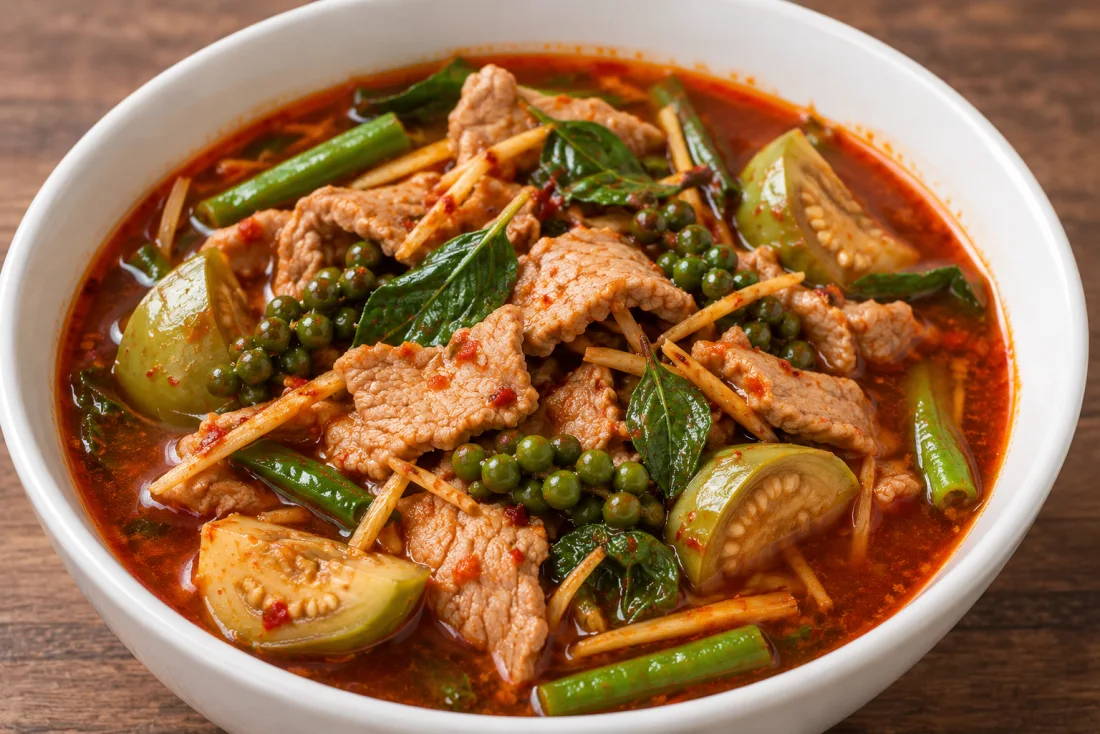

 minced pork
Pork jungle curry in Thai home cooking
Moo means pork. Home recipes use ground pork or sliced pork. Gaeng pa is the curry style; moo pa specifies wild boar. Vegetables and cuts depend on the cook.
Minced pork, vegetables and curry broth
Stir the paste into a little water, cook the pork and add eggplants, baby corn and long beans. Finish with fingerroot, green peppercorn, makrut lime leaves and holy basil. Some versions add fish sauce and a little sugar.
Pork savor and peppery heat
Minced pork spreads through the broth, while sliced pork has a more distinct bite. Tender eggplant and crisp long beans make different textures. Fresh peppercorn and fingerroot add a warm herbal heat.
Rice and an optional omelet
Taste the broth, then serve it with white rice and an optional omelet. Share meat and vegetables before ladling the broth. Ask about the chili in a prepared pot.
Wild boar, red curry and stir-fried curry paste
Moo pa means wild boar. Red curry can use coconut milk, while pork jungle curry is generally water-based. Pad phrik gaeng indicates a stir-fry with curry paste.
Allergens in paste and side dishes
Shrimp paste contains crustaceans and fish sauce contains fish. Prepared sauce or marinade can contain soy or wheat. Omelet adds egg. Ask about the paste, stock and shared grinders, boards, pots and ladles.
If you have a food allergy, tell the restaurant before ordering and ask about ingredients, sauces and shared cooking equipment.