
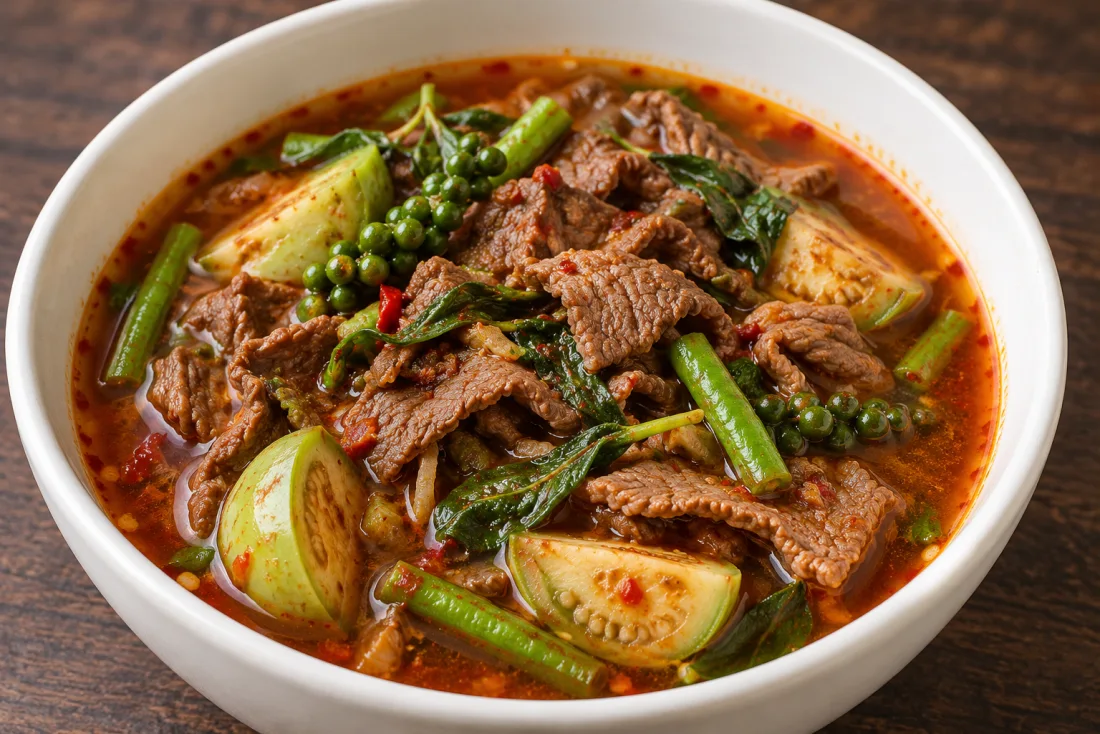

 beef
 fish sauce
Beef in the Thai jungle curry family
Neua indicates beef. Thai cooks document jungle curry with tenderloin or slow-cooked shank. The water- or stock-based broth shows the chili and fresh herbs clearly. The cut and vegetables vary.
Tenderloin, shank and the paste
Tenderloin can be cooked near the end with eggplants and baby corn, while shank can be simmered separately. Curry paste can contain dried chili, garlic, shallot, lemongrass and shrimp paste. A published recipe adds ground glutinous rice for body.
Beef savor and layered heat
Shank gives rich broth and tender connective tissue. Fingerroot and holy basil perfume the broth, while peppercorns and dried chili add heat. Pea eggplant can be lightly bitter and baby corn can stay sweet and crisp.
Eating with rice and handling herbs
Serve with plain rice or other mild dishes. Split meat and vegetables before adding broth. Set aside tough lime leaves and peppercorn stems if desired, and ask whether the chili can be adjusted.
Green curry, massaman and panang
Green curry has green chili and coconut, panang uses a thick coconut sauce, and massaman often has warm dried spices and tamarind. Jungle curry has a more direct heat and herbal water-based broth.
Allergens in curry paste and sauces
Shrimp paste brings crustaceans and fish sauce contains fish. Check soy and wheat in marinades and packaged seasonings. Ask separately about the paste, stock and shared grinders, pots, boards and ladles.
If you have a food allergy, tell the restaurant before ordering and ask about ingredients, sauces and shared cooking equipment.