
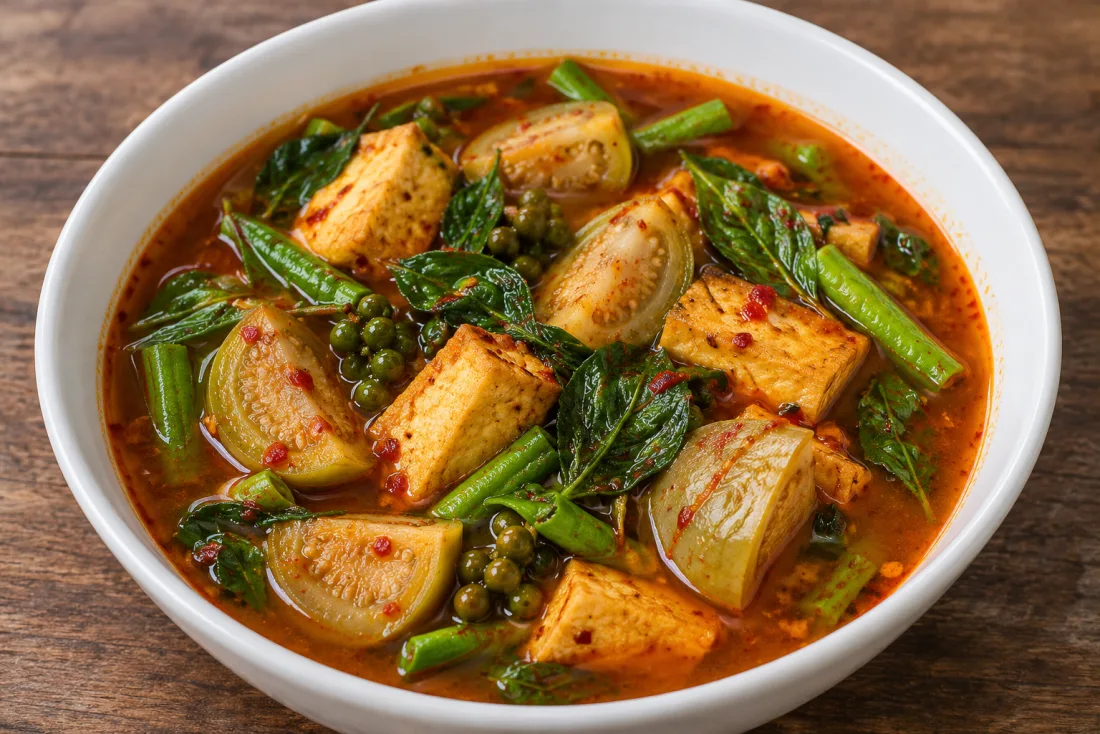

Jungle curry as a cooking style
The name pairs vegetables with the Thai jungle curry style. Thai kitchens use available ingredients such as eggplants, mushrooms or prepared bamboo shoots. The name does not require foraged produce or a single regional recipe.
Cooking aromatics, vegetables and tofu
One Thai chef replaces shrimp paste with fermented soybean paste, dissolves the paste in water and cooks Thai eggplant, pea eggplant, bamboo and fingerroot. Tender herbs and optional tofu can go in near the end. Soy protein appears in other plant-based recipes. The broth can be slightly cloudy without coconut milk.
Direct chili heat and several vegetable textures
Water-based broth lets the chili and fingerroot come through directly. Holy basil brings a distinct scent. Thai eggplants soften, pea eggplants can be bitter, bamboo stays crisp and tofu picks up the savory broth. Ask whether the heat is fixed in a prepared batch.
Portioning vegetables, tofu and broth with rice
Spoon a little broth over rice and divide vegetables and tofu. Set aside woody pieces as needed. Ask whether tofu is included and whether the restaurant can adjust the heat.
Comparing clear soup, sour curry and jungle curry
Clear soup is usually milder. Sour vegetable curry leads with acidity, and southern yellow sour curry can use turmeric. Gaeng liang emphasizes pepper and lemon basil. Look at the paste and broth as well as the vegetables.
Allergens in the bean paste and curry seasoning
Tofu and fermented soybean paste contain soy. Some seasonings contain wheat, and other styles of jungle curry can contain shrimp paste, fish sauce or animal stock. Check shared utensils. Removing vegetables or tofu cannot undo contact.
If you have a food allergy, tell the restaurant before ordering and ask about ingredients, sauces and shared cooking equipment.