
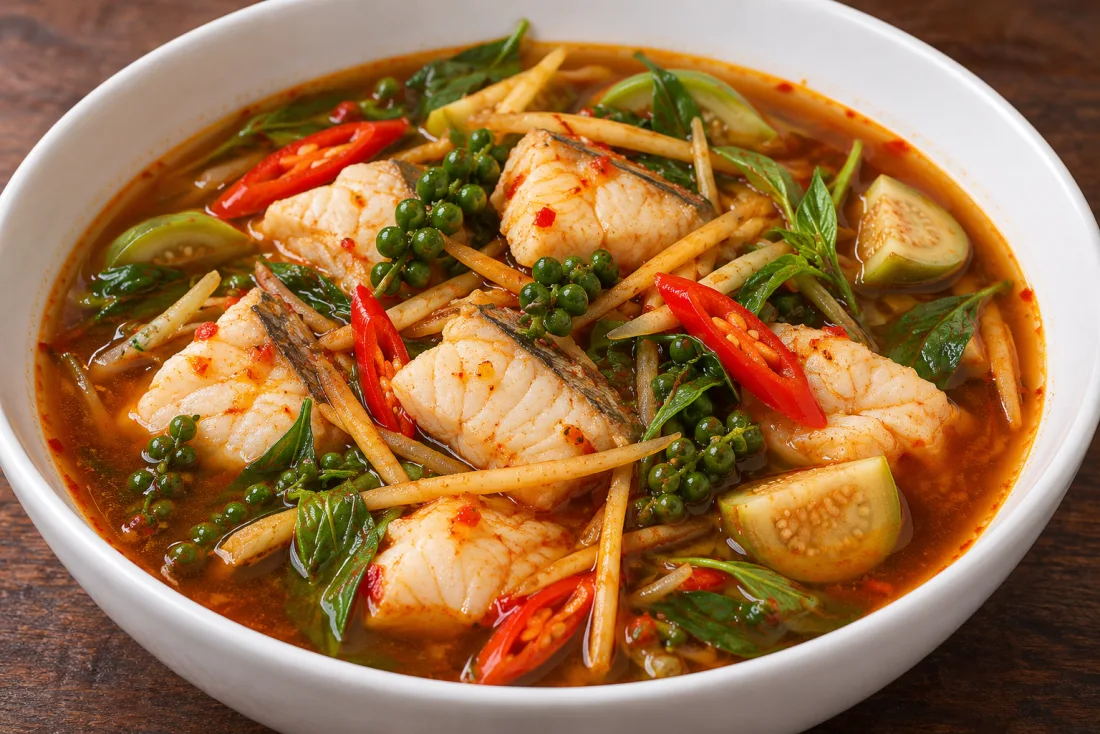

 catfish
Fish names on the jungle curry menu
Pla means fish. Thai recipes document catfish and pla khang, another freshwater catfish. Some restaurants also prepare jungle curry with featherback fish balls. The name alone does not specify species, cut or bones.
Cooking the fish and vegetables
Fry the paste and add water, or dissolve the paste directly in water. Flavor with fish sauce and cook the fish gently so the pieces hold together. Add eggplant, long beans, bamboo shoots and fingerroot as available. Finish with holy basil, chili and optional lime leaves.
Tender fish and direct chili heat
Fish can be tender and the skin springy. A water-based broth shows the heat and herbs with less richness than coconut curry. Fingerroot and green peppercorn can add spice and the vegetables contribute different textures.
Eating with rice and checking for bones
Spoon fish, vegetables and broth over rice. Check for bones and move tough aromatics aside. Ask about the cut, whether it is deboned and how the prepared batch is seasoned.
Tom yum, red curry and fish ball choices
Fish tom yum often emphasizes sourness and red curry can use coconut milk. Jungle curry uses water-based hot paste and aromatics. Fish balls are labeled luk chin pla and may use a particular fish.
Fish, shrimp paste and fish ball allergens
Fish, fish balls and fish sauce contribute fish allergens. Shrimp paste adds crustaceans and fish balls or commercial seasonings may contain egg, soy or wheat. Ask about shared knives, grinders, pots and ladles.
If you have a food allergy, tell the restaurant before ordering and ask about ingredients, sauces and shared cooking equipment.