

 pork
 fish sauce
 shrimp paste
A rich coconut curry on the central Thai table
Gaeng describes a curry, panaeng names this style and moo specifies pork. Mahidol University places the recipe in its central Thai collection and calls it a popular coconut curry. Pork versions also appear on menus in Bangkok and on Koh Yao Yai in Phang Nga.
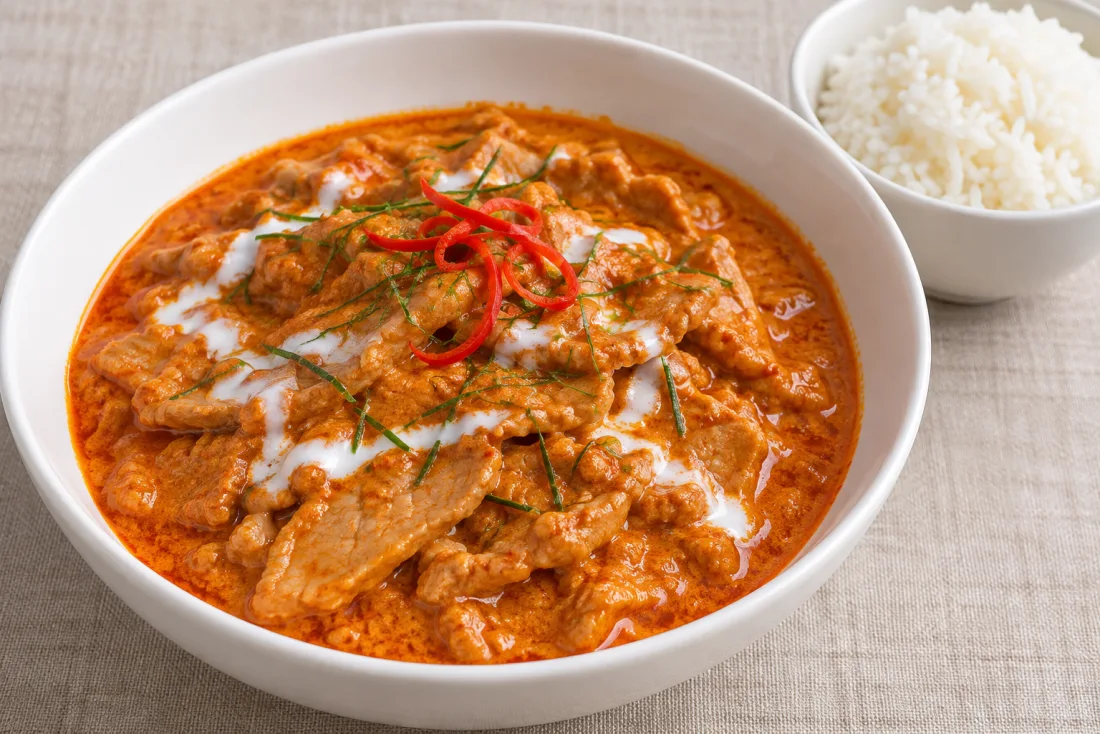
Look for a reddish-orange sauce clinging to pork and thin green shreds of makrut lime leaf. The recipes place it in Thai cooking, while the name alone cannot establish its place of invention.
Pork, coconut milk, curry paste and peanuts
Mahidol uses pork from the hind leg with thick and thin coconut milk. Its paste includes dried chilli, onion, garlic, lemongrass, galangal, makrut lime rind, coriander root, pepper, shrimp paste, toasted coriander and cumin. The ingredient list also includes pounded roasted peanuts for body and richness.
Fish sauce and palm sugar balance the salt and sweetness. Red chilli and finely sliced makrut lime leaves can go on at the end. Prepared pastes vary in salt and peanuts, which may also be added separately.
Why cooks fry the paste in thick coconut milk
The Mahidol recipe simmers thinly sliced pork in thinner coconut milk. Separately the cook heats thick coconut milk until some oil separates, fries the paste in it, then combines it with the pork, sugar and fish sauce. Droplets of red oil can rise, while the sauce should still coat the pork.
Another method cooks thin slices straight in the curry. The time depends on the meat and thickness of the sauce. Adding the makrut lime leaves and red chilli near the end lets the fresh aroma come through.
Rich, savoury-sweet, warm and easy to spoon over rice
Creamy coconut comes first, then a salty note and warm coriander and cumin. Dried chilli can give noticeable heat depending on the paste. Makrut lime leaves leave a green citrus scent. Ground peanuts can make the sauce feel fuller even when you cannot see them.
Try it a little at a time with plain rice. Heavy spoonfuls bring out its strongest sweet and salty notes. Removing the sliced garnish cannot remove chilli in the paste.
Different cuts, vegetables and other Panang curries
Mahidol uses pork from the hind leg. A Bangkok menu pairs pork with pea eggplants, and a Koh Yao Yai hotel describes a pork tenderloin version with eggplant. Pea eggplants can add a little bite and bitterness. Other servings focus on pork and lime leaves.
Panang sauce can also be used with chicken or beef. Look for moo to identify pork. Ask about the cut and the curry paste if the spice level or ingredients matter to you.
Allergens to ask about: peanuts, coconut, fish and shrimp
The Mahidol recipe lists peanuts, coconut milk, fish sauce and shrimp paste. Ground peanuts may be invisible. Coconut milk contains coconut, fish sauce contains fish and shrimp paste contains a crustacean. Brands and restaurant recipes differ, so ask about the paste, added sauce and garnish.
Ask about shared mortars and serving spoons if cross-contact matters. Coconut milk is made from coconut. Check separately whether cream or another dairy ingredient is added if you need to avoid milk.
If you have a food allergy, tell the restaurant before ordering and ask about ingredients, sauces and shared cooking equipment.