

 shrimp
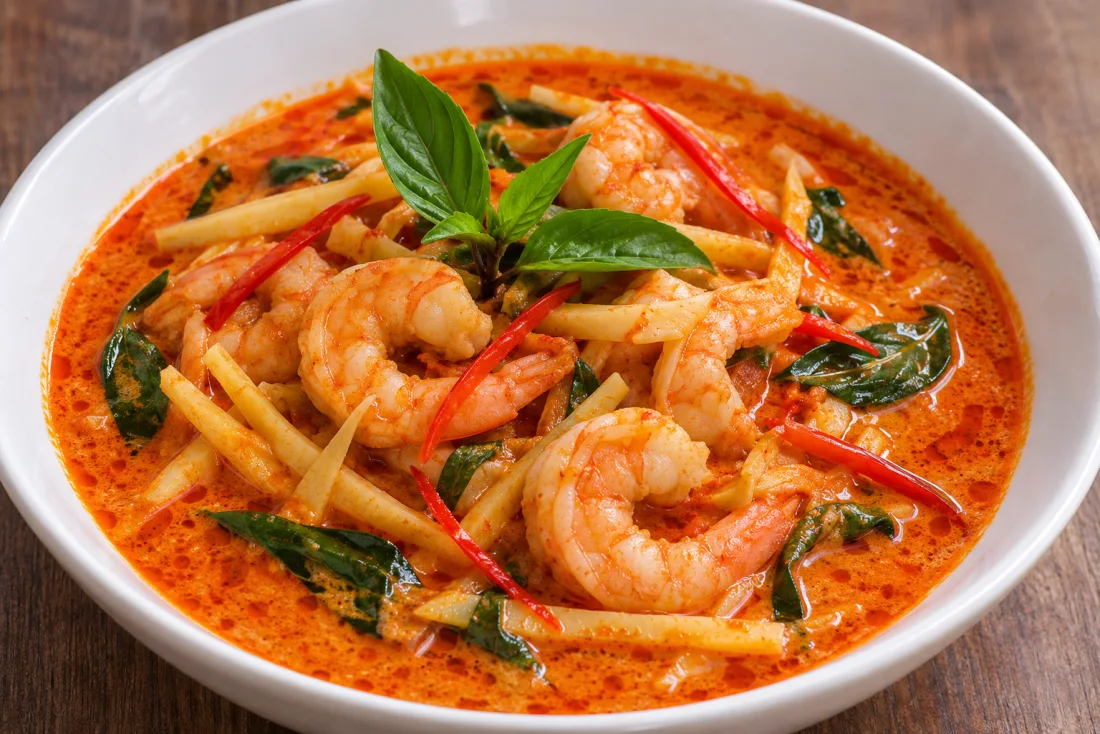
Shrimp in Thai coconut red curry
Goong or kung means shrimp. This is one option in the red curry family associated with central Thai cooking. A Thai home recipe combines fresh shrimp and small round eggplant. Size, species and shell preparation depend on the kitchen.
Shrimp and eggplant in the coconut base
Fry red curry paste in coconut cream and adjust it with coconut milk or water. Add eggplant and shrimp, with order depending on the size of the cuts. Shrimp cooks quickly. Once it is cooked, lift the pan from the heat before the shrimp and softened eggplant lose their shape. Some cooks adjust with fish sauce, sugar, sweet basil or lime leaves.
Toasty chili, silky coconut and springy shrimp
Dried chili gives warmer aromatics. Coconut makes the sauce silky, shrimp adds sweetness and eggplant absorbs the curry. Basil is fragrant when added near the end. Sauce color alone cannot indicate heat.
Serving the curry with rice
Taste some sauce before pouring it over white rice or rice noodles. Divide shrimp and eggplants when sharing and set tails aside. Ask whether the kitchen can reduce the paste in a fresh batch.
Green curry, chu chi and tom yum
Green curry usually uses fresh green chilies. Chu chi can serve seafood with a smaller quantity of thick sauce. Tom yum more often emphasizes lime sourness and lemongrass. Check the Thai menu and coconut base.
Shrimp, coconut and sauce allergens
Shrimp and shrimp paste contain crustaceans and fish sauce contains fish. Declare coconut allergy. Ask about soy, wheat and shared grinders, boards, pots and utensils. An egg side adds egg.
If you have a food allergy, tell the restaurant before ordering and ask about ingredients, sauces and shared cooking equipment.