

 pork
 fish sauce
Pork in the Thai red curry family
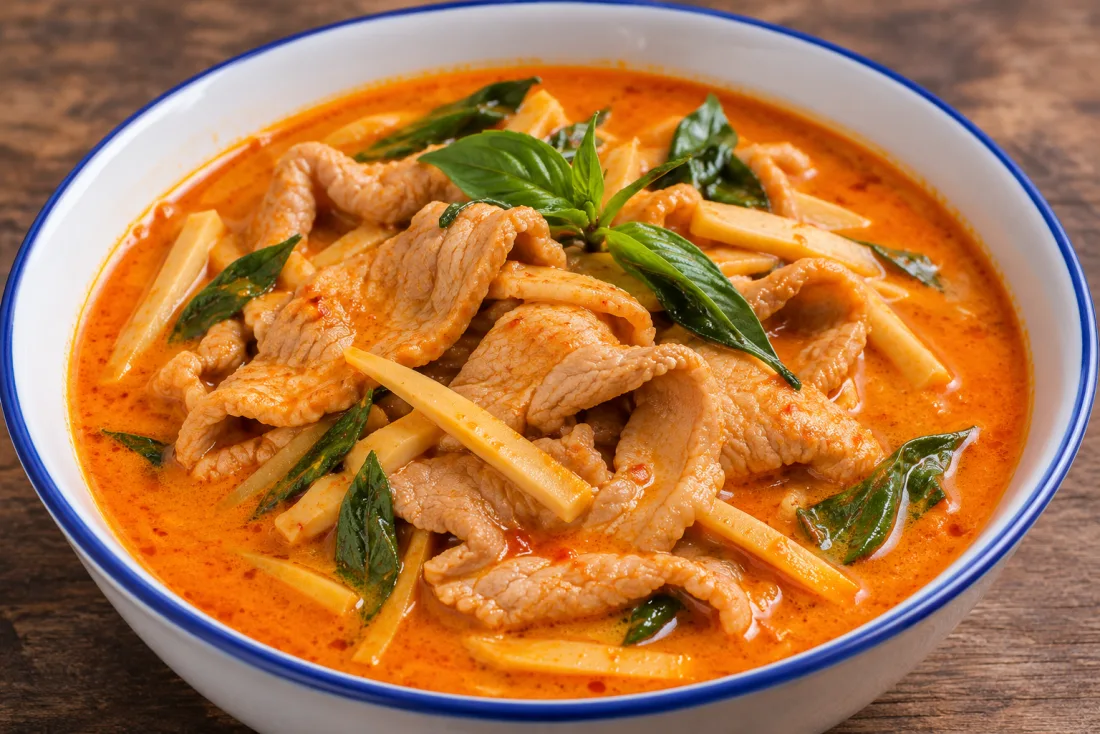
Moo means pork. This coconut curry is familiar in central Thai cooking. Home recipes can use pork slices and two kinds of Thai eggplant, while others use bamboo shoots. Pork cut and vegetables vary.
Frying the paste and simmering the pork
Reduce coconut cream, fry the paste and add pork with thinner coconut milk. Adjust cooking time by the cut. Add Thai eggplant, pea eggplant or bamboo shoots. Season with fish sauce and palm sugar and finish with basil and makrut leaves.
Coconut richness and toasted chili
Coconut gives a smooth sauce, dried chili gives warm fragrance and pork fat can add richness. Eggplant softens, pea eggplant is slightly bitter and bamboo stays crisp. Sauce color does not reliably predict heat.
Serving with rice or thin noodles
Add the pork, vegetables and a little gravy to rice or khanom chin. Set aside tougher leaves or chili if desired. Ask about the pork cut and whether the kitchen can adjust the paste.
Panang, jungle curry and a curry stir-fry
Panang tends to coat meat in thicker sauce and can contain peanuts. Jungle curry uses a water base with fingerroot and peppercorn. A curry paste stir-fry usually has less liquid than red curry.
Allergens in paste, sauce and marinade
Shrimp paste brings crustaceans and fish sauce brings fish. Declare coconut allergy. Check soy or wheat in packaged sauce or marinade and ask about shared grinders, boards, pots and ladles.
If you have a food allergy, tell the restaurant before ordering and ask about ingredients, sauces and shared cooking equipment.