
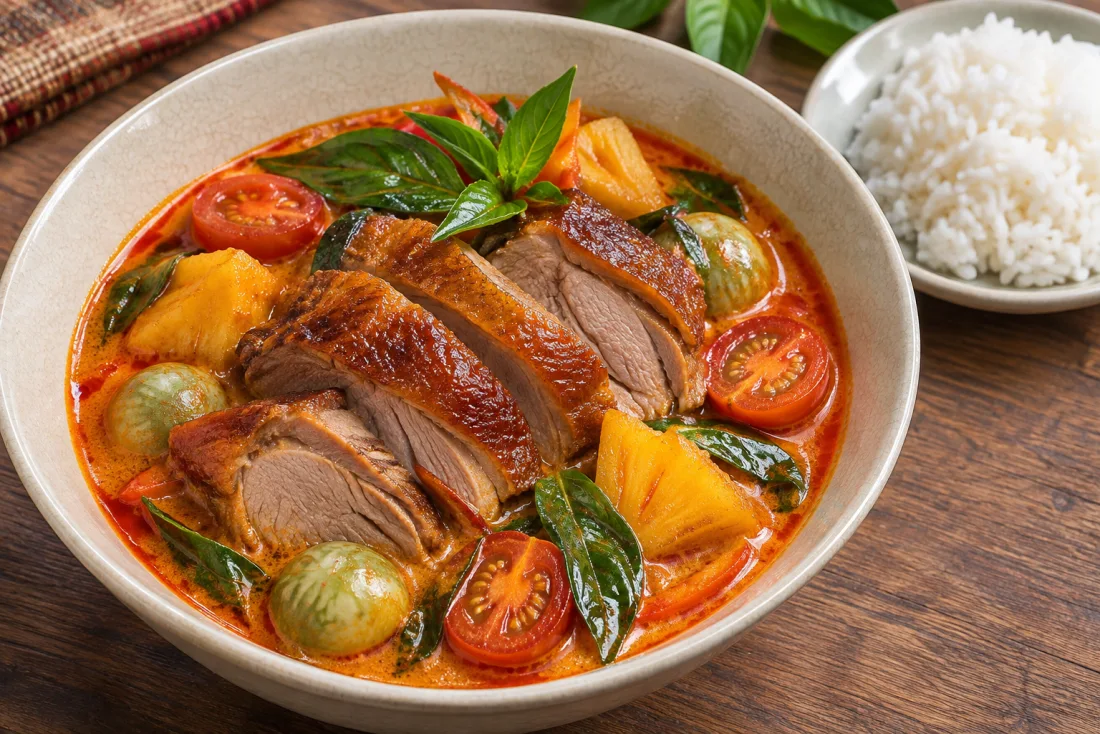

What the name means and where you see it
Gaeng phet means a hot curry, and ped yang names roast duck. “Red curry” alone can describe a dish with chicken, beef or another main ingredient. Here, the roast duck goes into the sauce in pieces, so meat, gravy, vegetables and sometimes fruit can share the same spoon.
A Tourism Authority of Thailand account lists roast duck and mixed-fruit red curry on a Bangkok restaurant’s royal-style set menu. This is one documented setting for the dish. The commerce ministry also publishes a recipe, without identifying a particular inventor or restaurant of origin.
What the paste, coconut and duck contribute
Thai SELECT’s paste uses dried chillies, garlic, shallot, galangal, lemongrass, coriander root, makrut lime peel and shrimp paste among its ingredients. Coconut cream and milk make the sauce smooth, fish sauce and palm sugar season it, and the duck skin can carry a roasted aroma.
That recipe also uses two kinds of Thai eggplant, cherry tomatoes and pineapple, with sweet basil, makrut lime leaf and sliced chilli. Eggplant takes up the curry sauce, fruit and tomato add a sweet-tart contrast, and the leaves give the gravy a fresher aroma.
Why the duck is roasted first
The Thai SELECT version heats red curry paste with coconut cream, adds duck, seasonings and coconut milk, then adds the vegetables, fruit and herbs. The duck is already cooked before it goes into the gravy. Slice thickness and how much skin stays on change how you experience the roast aroma and the curry together.
Another reference published by Thailand’s foreign ministry uses the duck bones in thinner coconut milk before combining it with the fried paste and adding tomatoes and eggplants. Those versions show different ways to bring the roast duck and curry sauce together.
How the flavours change from bite to bite
You may notice the paste, savoury duck and coconut first. A piece of tomato or pineapple brings a sweet-tart note, and a bite with basil smells different again. Palm sugar helps balance the fish sauce and chilli, while fruit can give individual spoonfuls different tastes.
Heat depends on the amount of curry paste and extra chilli as well as the recipe itself. Start with a little gravy over plain white rice, then try it with a slice of duck, tomato or eggplant. That makes the separate contributions of chilli, coconut and fruit easier to notice.
Variations and how it is presented abroad
Some versions use pineapple and others use several fruits. The foreign ministry’s recipe lists tomato and eggplant but leaves out pineapple, so the exact selection varies. On a menu, ask whether there is fruit and whether the duck comes in slices or on the bone.
A Thai consular cooking class in Hong Kong presented roast duck red curry with fresh fruit, while Thailand’s embassy in Lima included the dish in a demonstration. Those events document how the dish has been introduced outside Thailand.
Allergens in the paste, roast duck and shared equipment
The Thai SELECT recipe uses fish sauce and shrimp paste, which involve fish and crustaceans respectively. Coconut milk contains coconut, and dairy would need to be checked separately if the kitchen adds it. Ready-roasted duck may have a separate marinade. Ask whether its sauces and seasoning blends contain soy, wheat or other ingredients you need to avoid.
Ask about shared pots, knives, chopping boards and serving spoons. Fish and shrimp seasonings can already be mixed into the gravy even when no pieces are visible, and removing garnish or fruit does not remove ingredients cooked into the sauce.
If you have a food allergy, tell the restaurant before ordering and ask about ingredients, sauces and shared cooking equipment.