

 fish
Fish on a Thai red curry menu
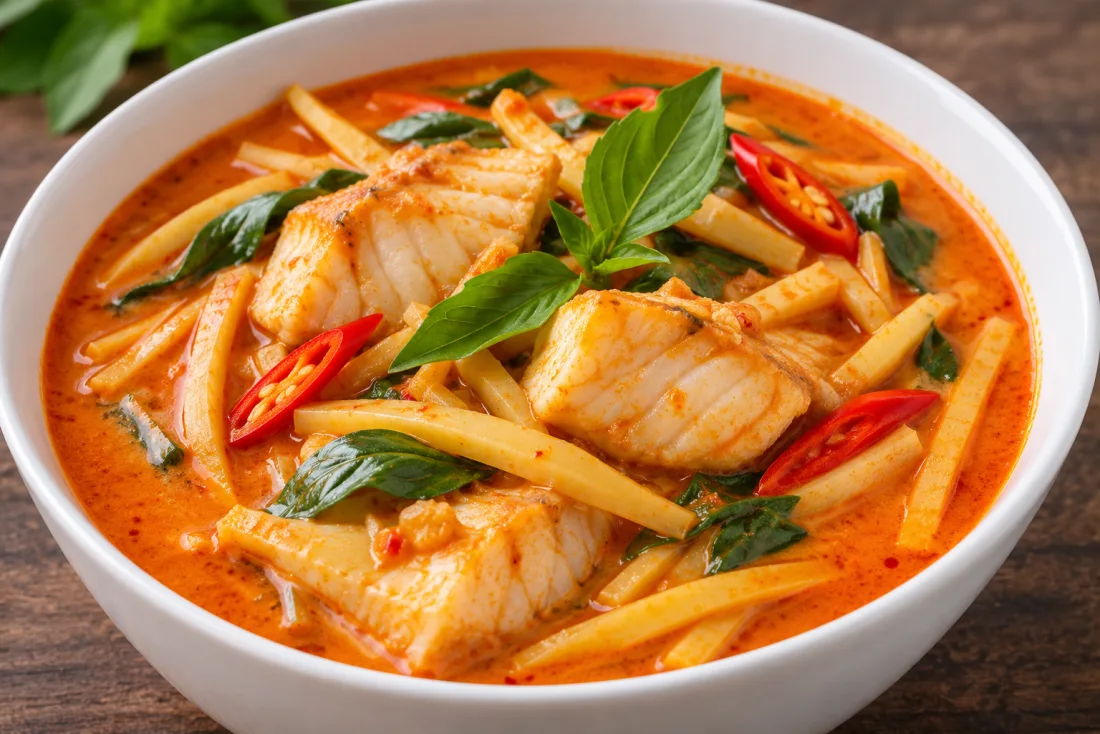
Pla means fish and gaeng phet is a hot curry. Coconut recipes may use fresh fish pieces with eggplant and basil. Some menus specify the species, cut or whole fish, which matters for texture and bones.
Simmered fish and crisp fish in curry sauce
Fry the paste and add coconut milk and water, then simmer the fish gently. Eggplant, sweet basil and makrut leaves are possible. Skin can help hold a cut together, while pieces of skinless fillet are easy to spoon up with the vegetables. A related method fries the fish first and tosses it with paste or adds a thick chu chi sauce at serving.
Silky coconut and tender or crisp fish
Coconut makes the sauce silky, dried chili brings heat and fragrance, and fish can taste tender. Fried fish has crisp edges that soften under sauce. Eggplant absorbs the curry and citrus leaves or basil add different aromas.
Serving with rice and checking for bones
Spoon sauce over rice, share the fish and vegetables, and check chunks for bones. Ask whether curry sauce can be served separately from fried fish and whether the heat can be adjusted.
Jungle curry, sour curry and fish ball versions
Jungle curry is normally water-based. Sour fish curry emphasizes acidity. Luk chin pla means fish balls. Check the Thai menu for coconut milk or a fried preparation, such as chu chi.
Allergens in fish, paste, coating and oil
Fish and fish sauce contain fish. Shrimp paste adds crustaceans. Coating and soy sauces may contain wheat or soy, and oyster sauce can add mollusks. Declare coconut allergy and ask about shared oil and equipment.
If you have a food allergy, tell the restaurant before ordering and ask about ingredients, sauces and shared cooking equipment.