
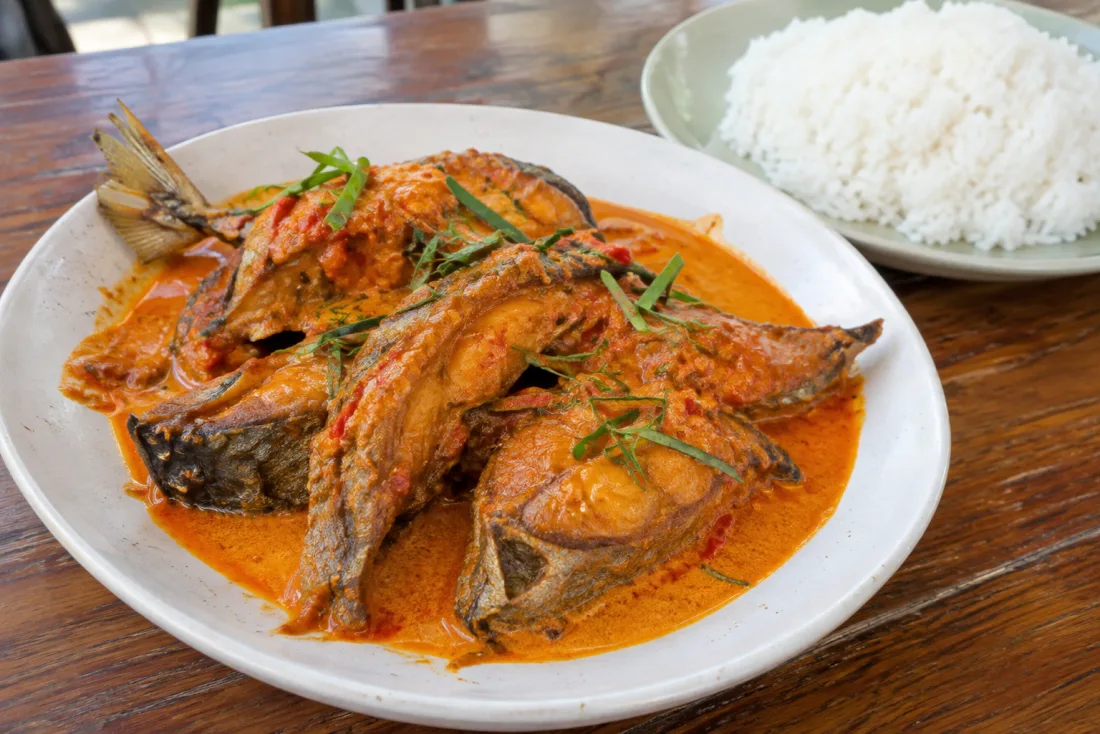

 fried fish
Fry the fish before applying the curry
Pla is fish, tod means fried and prik is chilli. This preparation cooks the fish through by frying before combining it with red curry. A whole small fish or cross-cut steaks can be used. The curry can finish the fish in the pan or be spooned over it. Browning on the fish comes from the frying step. Some Thai fried fish with chilli sauce instead uses a sweet-sour sauce without coconut. Check the actual preparation on the menu.
How Thai cooks combine frying with curry
One Thai home recipe fries mackerel, then cooks red curry paste and shrimp paste with coconut milk and returns the fish to the sauce. Another coats a whole fried fish with a reduced coconut curry. The length of time in the sauce depends on the fish and desired crispness. These are documented Thai preparations without establishing a single origin. Whole fish can go in the centre of a table, and portions can be served as separate steaks. Ask whether the kitchen uses whole fish, steaks or boneless pieces.
Fish, red paste, coconut milk and herbs
Mackerel or another fish that fries well can be used. Watch for fine bones in whole or cross-cut servings. Seasonings can include salt, fish sauce, sugar and red curry paste. Thai pastes may include dried chilli, shallot, garlic, lemongrass, galangal or shrimp paste. Coconut milk gives body, and makrut leaves or red chilli strips add fragrance. Some home cooks add Chinese kale or other greens.
Keep the fried aroma when finishing the fish
Fry the fish until browned and fully cooked, then drain any excess oil. Warm the curry paste until fragrant and cook it with coconut milk and seasoning. Return the fish briefly to the pan to coat it, or spoon the curry over just as it reaches the table to preserve more crispness. Lift fish steaks carefully to keep them intact. Add delicate aromatic leaves near the end and use separate utensils for cooked food and raw ingredients.
Fried texture, coconut and warm spice
The crisp edge and toasted aroma lead into flaky fish. Red curry brings savoury chilli heat, and coconut gives a smooth finish around the fish. Makrut leaves lift the aroma. A piece that spends longer in the sauce may soften, while a last-minute coating leaves crisper edges. Greens or white rice offer a lighter contrast. Taste the fish and then the sauce to decide how much curry to take.
Allergens in fish, paste and the fryer
Fish and fish sauce contain fish. Shrimp paste introduces a crustacean allergen, and oyster sauce can contain oyster. Prepared coatings or seasonings can contain soy, wheat or egg. Coconut is part of this sauce. A fryer shared with shellfish or battered foods can introduce cross-contact. Ask about the fish, coating, sauce and shared cooking equipment. Fish bones are a separate consideration in whole fish or steaks.
If you have a food allergy, tell the restaurant before ordering and ask about ingredients, sauces and shared cooking equipment.