
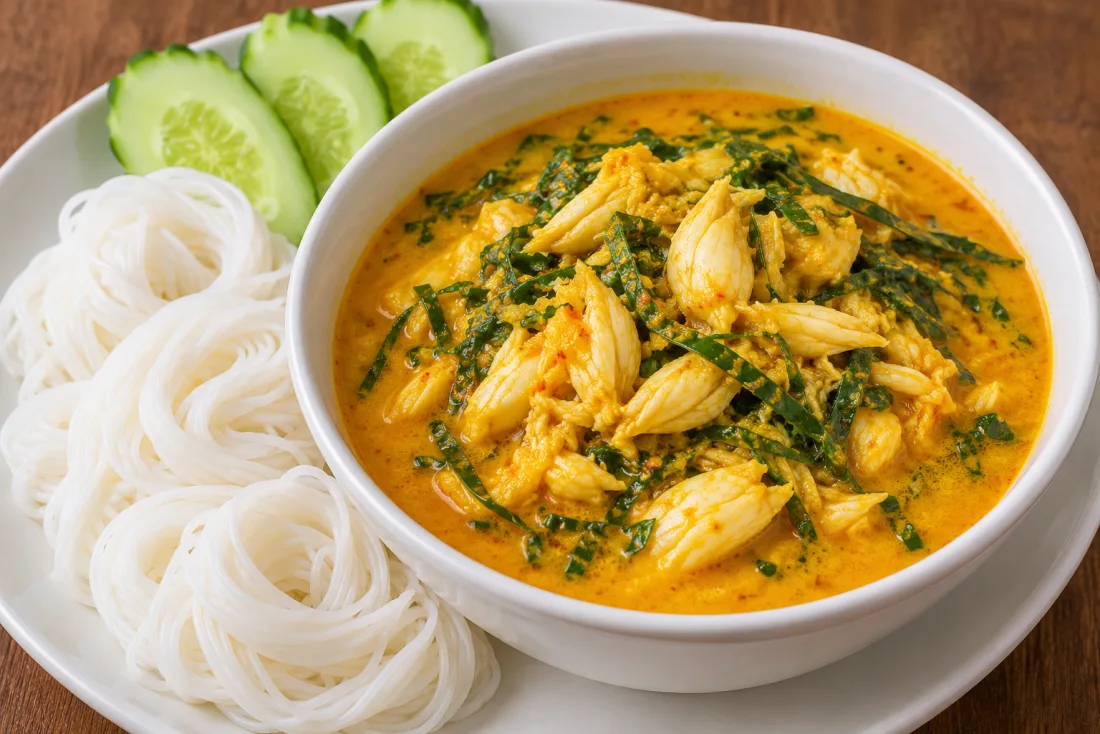

Southern crab curry and the leaf in its name
Gaeng refers to curry, pu means crab and bai chaphlu refers to wild betel leaf. Its botanical name is Piper sarmentosum. English menus may use wild betel leaf or chaplu. The dark green leaves have distinct veins and can be cut into strips.
Thai cooks describe this as a southern style. Khanom chin rice noodles can be served with it, and fine sen mi noodles are documented in Phuket. These examples identify regional serving traditions without establishing a first vendor.
Crab, coconut milk, leaves and curry paste
Cooks can use picked leg or claw meat, or larger pieces of crab. Coconut milk and curry paste build the sauce before the leaf and crab are added. One paste combines dried chilli, turmeric, lemongrass, garlic, shallot and shrimp paste. Other versions can use galangal or pepper and season with fish sauce, salt or sugar.
Wild betel leaves soften into dark strips. Adding crab late helps preserve its larger pieces. A restaurant can serve part of the claw in its shell or use picked crab meat throughout. Ask which you will receive.
Sweet crab, rich coconut and fragrant leaves
Crab has a gentle sweetness, coconut milk adds body, and chilli or pepper contributes heat. Turmeric gives color and an earthy note. More red chilli can make the curry more orange. Wild betel leaf adds a peppery, herbal taste alongside the crab and coconut.
Crab flakes apart easily, while strips of leaf retain some chew. Heat can vary widely with the paste and seasoning. Pale or yellow coconut-based curry can still be spicy.
Serving with khanom chin, fine noodles or rice
Soft khanom chin noodles pick up the sauce, while fine sen mi noodles are another option documented in Phuket. Ask whether the curry comes with noodles or steamed rice. A spoonful of rice can hold sauce, leaves and crab together.
Curry may be poured over a plate or served separately to share. When sauce and noodles are apart, try a little and add more as desired. Fresh vegetables can provide another texture. Move shell-on pieces to a separate plate when needed.
How to read the leaf name and other crab curries
Bai chaphlu indicates wild betel leaf. Bai bua bok means pennywort, a different plant, so ask about the actual leaf if a translation is unclear. Romanized spellings of the Thai name can vary.
Gaeng pu by itself can describe other crab curries. Ask whether leaves are included and whether the crab is shell-on. A kitchen may use salt, fish sauce or a combination, and the resulting sweetness, heat and texture can vary.
Allergies in crab, shrimp paste and seasonings
Crab is a crustacean. Curry paste may contain shrimp paste, and fish sauce can introduce fish. Prepared stock and sauces can contain soy, wheat or other ingredients. Coconut milk usually supplies the creaminess, but check if a kitchen has added dairy.
Ask about crab, curry paste, stock and shared equipment. Removing the crab does not remove what has cooked into the sauce or the shrimp paste that was already mixed in. Tell the kitchen what you need to avoid and ask whether separate preparation is possible.
If you have a food allergy, tell the restaurant before ordering and ask about ingredients, sauces and shared cooking equipment.