

 pork
Recognising the coconut curry
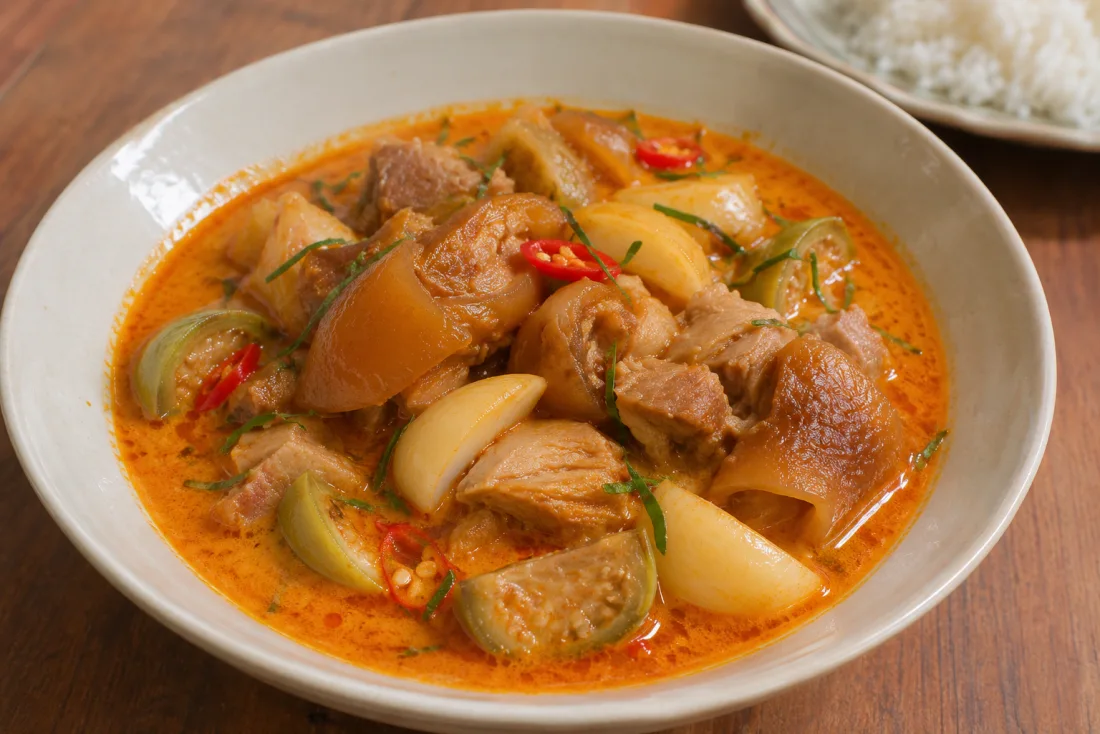
The broth can be orange-yellow to orange-red, coating the cooked meat and fruit. Pork hock and belly differ in shape and texture. Makrut leaves or red chile can be visible. The coconut base distinguishes it from a thin sour curry.
A documented Thai flavor family
A Thai food training guide describes sour khua as balanced sweet, sour and savory. Tamarind, makrut or fruit can bring acidity. A Thai test kitchen uses hock with salak, and a home cook records belly with santol. These examples do not establish a single birthplace.
Pork, paste and sour fruit
Pork hock softens when braised, while belly retains its layers. Curry paste can contain dried chile, lemongrass, galangal, shallot, garlic and shrimp paste. Coconut milk carries the aroma. Tamarind, salak or santol bring their particular sour notes.
Taste and texture
Coconut and curry aromatics can come first, followed by fruit acidity. Hock skin can be tender and springy, while belly is rich. Plain rice absorbs the gravy. Ask how sour, sweet or spicy a shop makes it.
Choosing finished images
One image can show hock, sliced salak and hairy eggplant. A different finished bowl can show pork belly and santol. List the cut of pork, the fruit and the actual included side.
Allergens in the paste and kitchen
This curry contains pork and coconut. Shrimp paste contains crustaceans, and fish sauce contains fish. Other seasonings may contain soy, wheat or molluscs. Ask about fruit and herbs in the sauce and shared utensils.
If you have a food allergy, tell the restaurant before ordering and ask about ingredients, sauces and shared cooking equipment.