

 dried fish or minced pork
 shrimp paste
Seasonal leaves on a Lanna table
Phak siao is the local edible leaf used in this curry. Culinary accounts in Northern Thailand associate its young shoots with the dry season and with dried fish kept in the kitchen. Bringing fresh seasonal greens and a preserved protein together is familiar in Lanna home cooking. Other households add meat or additional local greens. It is a regional preparation and availability can vary with the leaf harvest.
Leaves, fish and aromatics
Small tender leaves have a noticeable centre notch between two soft lobes and are often used with the youngest shoots. The local edible ingredient is the one used by the cook. A similar shape is insufficient to identify an unknown plant for food. Dried chillies, garlic and shallots can go into the seasoning, often with shrimp paste. Cooks can add fully cooked flakes of dried fish or use minced pork, small tomatoes and young cha-om. Fermented fish and fish sauce appear in some versions.
A light, savoury broth
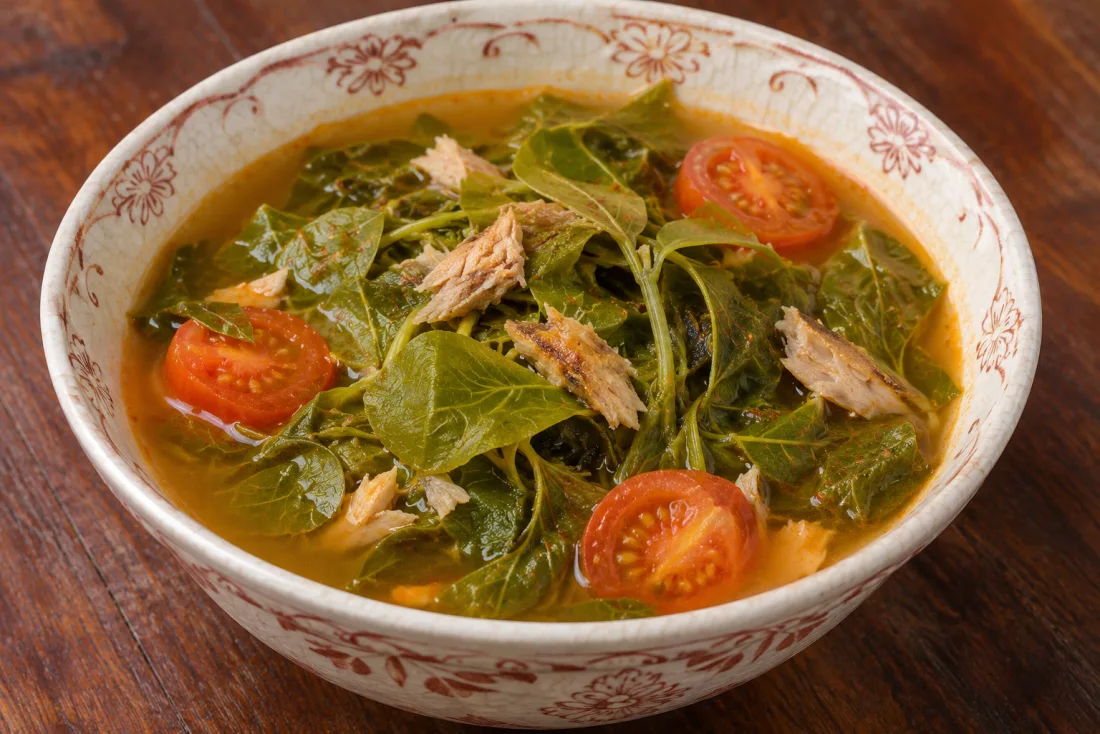
A water-based curry shows the outline of the greens and fish or pork even when the chilli paste turns the liquid orange-brown. Dried fish can contribute a smoky or deep savoury note. Pork is milder and tomatoes can add a little acidity. The leaves bring a gentle bitter and astringent taste, with an aromatic warmth from the chillies. Tender greens and small pieces of cooked protein stay distinct in the thin broth. Heat and colour vary with the cook.
Two home-style servings
One bowl contains tender bauhinia leaves, flakes of cooked dried fish and softened small tomatoes. The other uses cooked minced pork, tender tomato and some feathery cha-om shoots among the broader bauhinia leaves. Both can be served with plain rice, and they also fit a shared table of Northern Thai dishes. Portions and serving bowls vary by household.
How to recognise and order it
At a Northern Thai shop, ask whether the seasonal curry is made with dried fish or pork, and what other greens are in that day's serving. A separate plate of rice makes it easy to taste the greens and soup together. Slight bitterness can depend on the crop and cooking time. Availability varies. If fish or shrimp matters to you, ask about the broth and paste even when the visible protein is pork.
Allergens and fermented seasonings
Dried fish, fermented fish and fish sauce can introduce fish even to a pork-based bowl. Shrimp paste in the curry seasoning introduces a crustacean allergen. Ask about the protein, seasoning and broth, and about shared pots, boards and serving spoons where cross-contact matters. The two-lobed appearance helps recognise the finished dish, but the ingredient itself should come from a source that supplies the local edible greens.
If you have a food allergy, tell the restaurant before ordering and ask about ingredients, sauces and shared cooking equipment.