
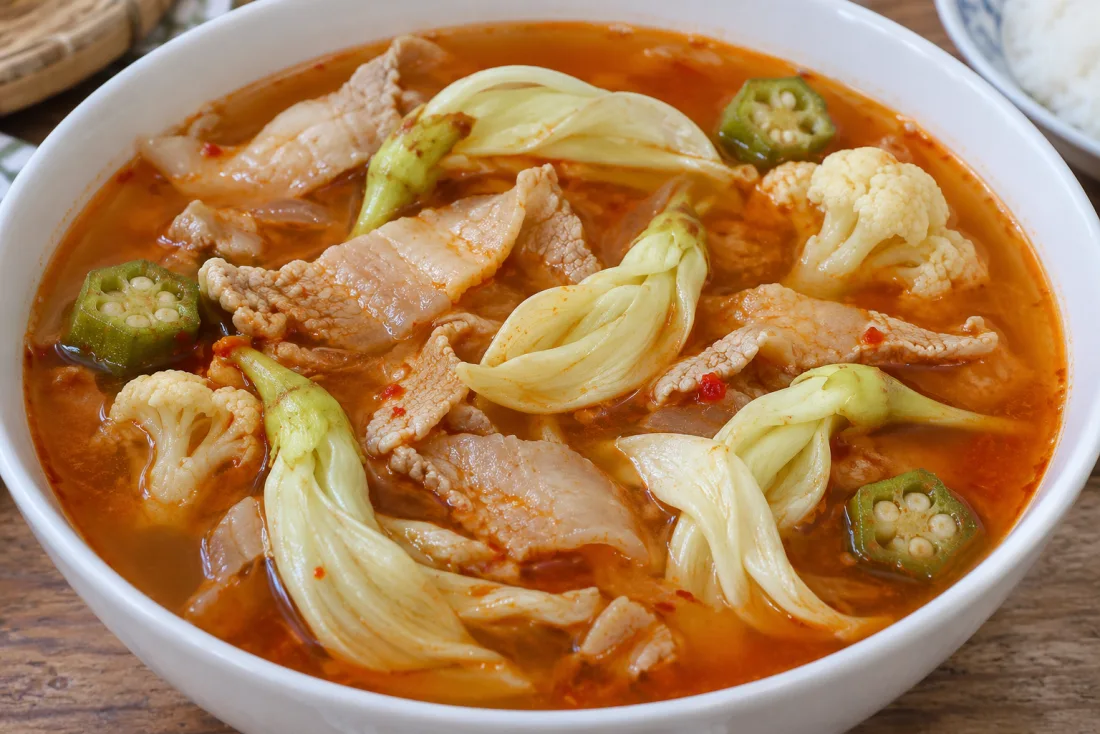

 pork belly
 canned fish
 shrimp paste
The sour broth and the pork
Gaeng som is a family of sour curries, and mu identifies pork. Both documented recipes dissolve curry paste in water and cook the ingredients in the broth. Colour can vary with chilli, paste and turmeric. Pork cuts and the sources of sourness can differ by recipe.
Thai home and restaurant examples
One home cook combines thin pork belly, agati flowers, okra and cauliflower with canned fish. Another uses southern paste, pork belly, prawns, squid, Japanese scallion, tamarind and lime. A Hat Yai restaurant menu lists pork rib and pickled greens sour curry. These examples do not establish a single province of origin or a national popularity ranking.
Ingredients and souring agents
The vegetable version includes sour curry paste, tamarind, fish sauce and sugars. Its paste contains dried chilli, shallot and shrimp paste. Agati flowers are called dok khae and are a separate ingredient from lotus buds. The seafood version contains shrimp paste, prawns and squid, and uses tamarind with lime.
Taste, colour and vegetables
Cooked pork belly can be tender. Tamarind brings a mellow sourness, lime a brighter edge and shrimp paste savouriness. Agati flowers are softer than the cauliflower, and okra has a slightly slippery texture. Prawns and squid add a springy bite. Colour and chilli intensity vary.
Serving and related curries
Cooked pork and vegetables share the same bowl. In the seafood version the cooked prawns, squid and scallion can be visible. Plain rice is a common accompaniment. Other gaeng som versions may use fish or southern turmeric paste. Read the actual ingredients for each menu version.
Allergens and seafood in the broth
Canned fish and fish sauce contain fish. Both documented examples use shrimp paste, a crustacean seasoning. The seafood version also contains prawns and squid, a mollusc. Ask about additional soy, wheat, oyster sauce, egg and shared cookware when relevant. Pork and seafood are served fully cooked.
If you have a food allergy, tell the restaurant before ordering and ask about ingredients, sauces and shared cooking equipment.