

 prawn
 fish sauce
The sour name and the central style
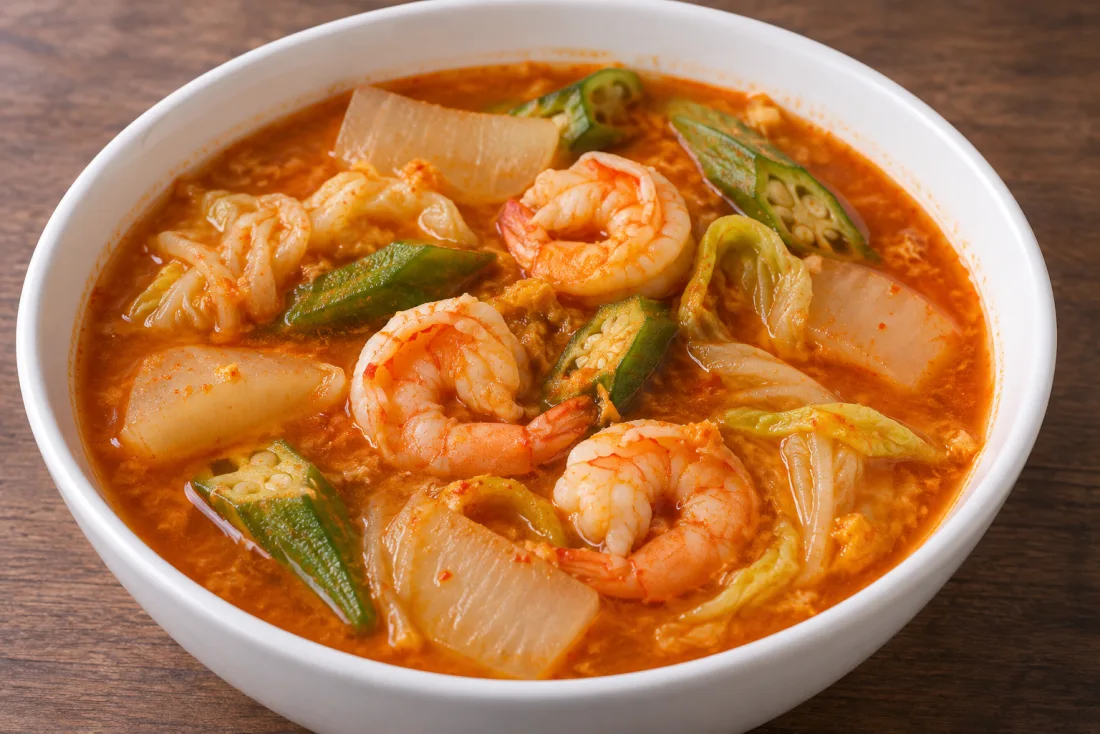
Gaeng describes a curry or seasoned broth, som refers to sourness, and goong means prawn. KRUA.CO distinguishes the central style with dried chillies and tamarind from a southern yellow style. Menu names can overlap, so check which preparation a restaurant serves.
Prawns, vegetables and tamarind
A KRUA.CO recipe pounds cooked prawns into the paste and also adds whole prawns with edible sesbania flowers. Other vegetables can vary. Tamarind lends fruit acidity, fish sauce is savoury and coconut sugar softens the sharpness.
Why the clear-style broth has body
Curry paste dissolves in water and the finely pounded prawns give it some body without coconut milk. Whole prawns and vegetables can be cooked later. Some recipes add fish to the paste, which also changes the broth’s texture.
Tasting tamarind, prawns and chilli
The tamarind gives a rounded tartness and the prawns some sweetness. Dried chilli creates heat, and sugar or fish sauce affects the balance. Try some broth with rice, then compare the prawns and vegetables separately.
Serving styles and southern sour curry
It can be shared at the table or served with rice as one meal. Check which vegetables are included. The southern yellow style often uses turmeric and can be hotter. Tom yum goong is a different prawn soup with a distinct aroma from lemongrass, galangal and lime leaves.
Allergens in prawns, curry paste and broth
Prawns and shrimp paste contain crustaceans. Fish sauce or fish mixed into paste involves fish. Ask about prepared paste, broth and cookware shared with other dishes. Removing visible prawns does not remove prawn material already dissolved into the soup.
If you have a food allergy, tell the restaurant before ordering and ask about ingredients, sauces and shared cooking equipment.