
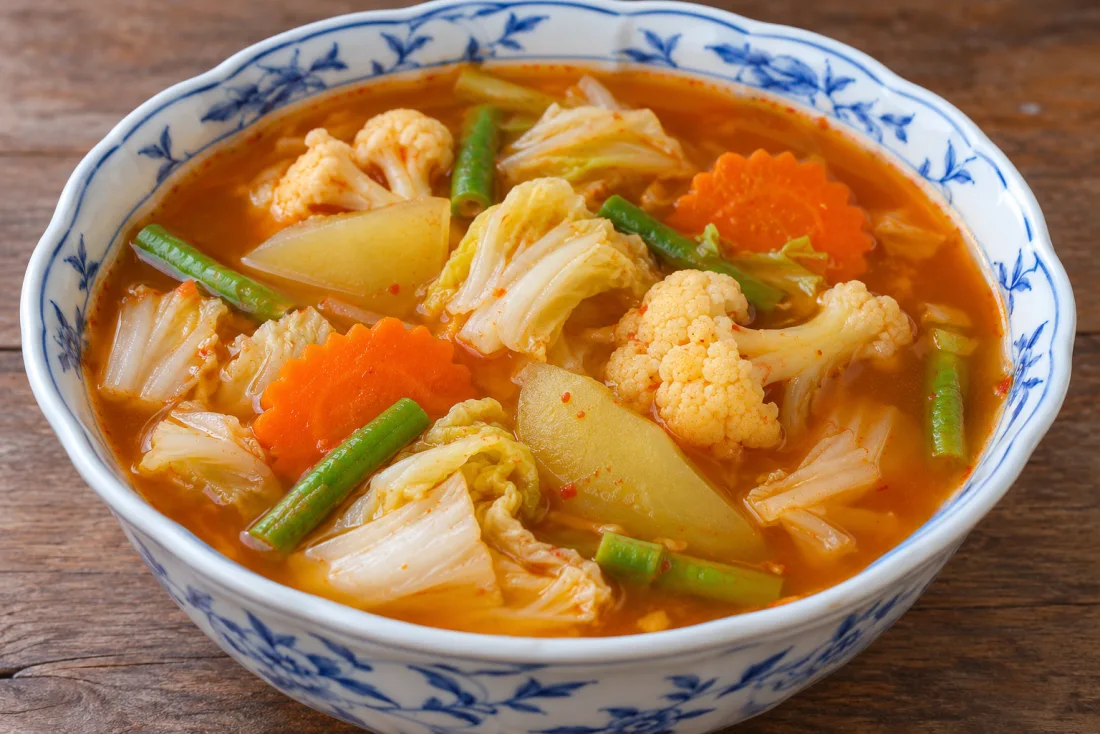

Mixed vegetables in a Thai sour curry
Gaeng som is the sour curry, and pak ruam means mixed vegetables. The broth can be orange-red and translucent or slightly cloudy from ground ingredients. Dried chilli colours it and tamarind gives the sourness in many Central Thai recipes. There need not be an orange fruit or coconut milk. A kitchen may serve pieces of fish or shrimp, or it may work cooked fish into the paste until it is barely visible. The name describes the prominent vegetables and does not determine whether the broth is plant-based.
Central Thai tables and regional styles
Central Thai cooks use seasonal vegetables for this tamarind curry and serve it with rice. Thai recipes demonstrate both a snakehead fish base and versions with shrimp. The balance of sourness, salt and a little sweetness depends on the household and the produce. Southern Thai sour curries can share the gaeng som name and may show a more yellow turmeric-based style. Ask what preparation a particular restaurant serves if these details matter, rather than inferring origin from colour.
Tamarind, chilli paste and vegetables
Long beans, cauliflower, radish, carrot, Chinese cabbage, morning glory and green papaya are possible vegetables. A kitchen can use different leaves, stems and roots to give the bowl different textures. Dried chilli and shallot are typical aromatic ingredients. Fish sauce, salt, sugar and tamarind adjust the broth. Cooked fish can be ground in to add body. Another version may add shrimp or use a little shrimp paste for seasoning.
Add firm vegetables before softer leaves
Dissolve the curry paste in the broth before adding the vegetables. A fish version may first poach the fish, remove its bones and grind the cooked flesh into the curry base. Firm radish and carrot can go in early, followed by beans and cauliflower and finally by tender leaves. Tamarind determines the acidity, and a little sugar can round it out. If shrimp is used, cook it through. The hot curry can be served with the rice separately.
Fruit sourness, chilli warmth and contrasting vegetables
Tamarind gives a deep fruity sourness, followed by a warmth that depends on the chilli. Radish offers a gentle sweetness, long beans may retain a slight snap, cauliflower catches the broth, and leaves soften. A fish-enriched broth may feel thicker than it looks. Some diners taste the liquid first, while others spoon it over rice to soften the intensity. Ask which vegetables are available and how hot the kitchen prepares the curry.
Allergens can be in the broth
Fish flesh, fish stock and fish sauce contain fish. Shrimp and shrimp paste are crustacean ingredients, even when the shrimp paste is invisible. Prepared seasonings may also contain soy, wheat or other seafood. For a plant-based serving, ask about the exact paste, base and liquid seasoning. Shared mortar and pestle, pot, ladle and preparation space can introduce cross-contact. Ask separately about any omelette, side dish or dip, since these have their own ingredients.
If you have a food allergy, tell the restaurant before ordering and ask about ingredients, sauces and shared cooking equipment.