

 shrimp
 fish sauce
Central Thai sour curry through the vegetable seasons
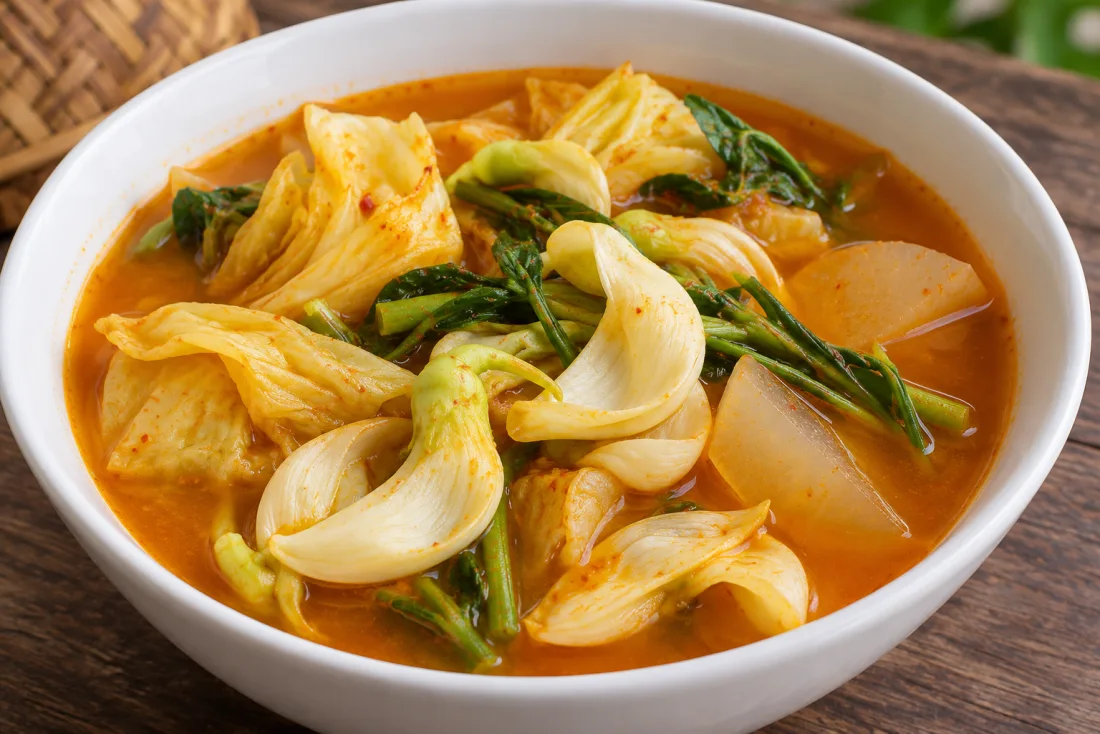
These central-style curries can highlight one vegetable or a mixture. A name mentioning dok khae points to edible blossoms of the vegetable hummingbird tree, while papaya or long beans give a firmer bite. Some southern sour curries get a yellower color from turmeric. The central version here is usually pale orange to red from chili in a tamarind broth.
How sesbania flowers, tamarind and shrimp meet
Cooks can remove the stamens from culinary sesbania flowers to reduce bitterness. One version pounds some cooked shrimp into a chili and shallot curry paste, then seasons the broth with fish sauce, tamarind and coconut sugar and adds whole shrimp. The thin petals cook quickly. Mixed vegetables can go into the pot in batches so thicker stalks cook before the leaves wilt.
A sour first sip with heat, savor and restrained sweetness
Tamarind brings fruity sourness, followed by chili heat. Fish sauce and shrimp add savor, and pounded shrimp lends the broth body. Sesbania petals are tender when cooked, with a firmer base. A mixed-vegetable version can have crisp stems and soft leaves. Coconut sugar balances the sourness in this water-based broth.
Rice and eggs on a shared table
This curry fits a home-style meal or a rice-and-curry shop. At a shared table, offer a little broth with rice and help yourself to flowers, other vegetables or shrimp. Fried fish or an omelette can sit alongside. Ask which vegetables are in the pot today and whether the heat can be adjusted if the broth was made in a batch.
What the vegetables in the name tell you
A vegetable name points to the main greens, blossoms or other produce. The pot can still contain whole shrimp, fish pieces or fish pounded into the paste. Kaeng liang has a pepper-and-lemon-basil profile, and the related sour curry with acacia omelette uses blocks of cooked egg as its main filling.
Allergens in the seasoning and the stock
The sesbania-and-shrimp version contains crustaceans, sometimes inside the paste as well as whole. Fish sauce, fish stock and pounded fish contribute fish; shrimp paste can also be present. An omelette adds egg, and some soy-based seasonings contain soy and wheat. Ask about the full broth and shared utensils. Removing visible pieces does not remove allergens from the liquid.
If you have a food allergy, tell the restaurant before ordering and ask about ingredients, sauces and shared cooking equipment.