

 fish
 shrimp paste
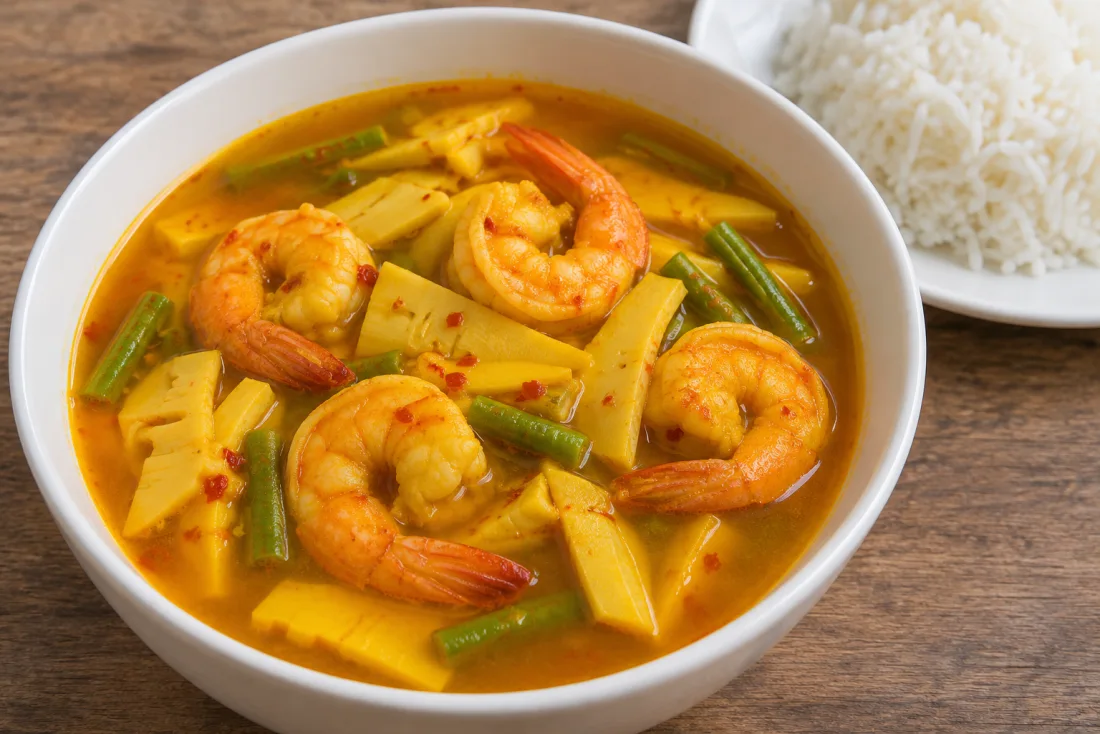
Why southern sour curry is also called yellow curry
Som refers to sourness, and tai means the South. Gaeng lueang refers to the yellow colour turmeric gives the broth. Ask about sourness and fish if the English menu only says yellow curry.
Fieldwork in Songkhla records sea bass and young coconut shoots. A family account from Chumphon describes mullet with moringa pods or pickled bamboo. The combinations differ within a recognisable southern style.
Turmeric, chilli, sour seasonings, fish and vegetables
The KRUA recipe pounds dried and fresh chillies with lemongrass, garlic, turmeric, salt and shrimp paste. It uses fish and tender pickled bamboo shoots, then seasons with fish sauce, palm sugar and tamarind. The shoots give another sour note and a firm bite.
The Songkhla recipe uses sea bass, young coconut shoots and citrus juice. Coconut shoot is a tender vegetable, with a different texture from coconut milk. Other kitchens vary the fish, seafood, vegetables and sour seasoning.
Building the sour broth and adding fish near the end
KRUA rinses and blanches pickled bamboo shoots, then brings the paste and water to a boil and adds the shoots and seasonings. Fish goes in later so it does not overcook while the other ingredients soften.
Leaving the fish undisturbed as it cooks helps the pieces hold together. The broth can stay light in texture and still be strongly flavoured. Serving it hot preserves the contrast between tender fish and crunchy bamboo.
How the sourness, chilli and savoury seafood taste
The first spoonful is tangy and salty-savoury, with chilli heat that lingers and an earthy hint of turmeric. Tamarind has a round tartness, while citrus is brighter. Pickled bamboo has a sour taste of its own. Palm sugar in some versions rounds out the broth.
Try a little broth on plain rice with a piece of fish or vegetable. Cool sides or an omelette can balance the meal. Accompaniments vary by household.
Distinguishing it from central sour curry and coconut yellow curry
Central Thai gaeng som often has a more orange-red colour and may use pounded fish or shrimp for body. Southern versions often emphasise turmeric, sharper chilli and ingredients such as sea fish, coconut shoots or pickled bamboo. The recipe varies between cooks.
Ask whether the broth contains coconut milk and what makes it sour if the menu just says yellow curry. A shop using a prepared paste may have limited ability to lower the amount of chilli.
Allergens to ask about: fish, crustaceans and the broth
Fish and fish sauce both supply fish ingredients. The KRUA and Songkhla versions use shrimp paste, a source of crustaceans even without visible shrimp. In a seafood version ask which crustaceans and molluscs are used. If avoiding coconut, check about the shoots as well as about coconut milk.
Ask separately about the paste, fish sauce, broth, vegetables and fish, and whether the kitchen shares its mortar, board, pot or ladle. Fish pieces may also contain bones.
If you have a food allergy, tell the restaurant before ordering and ask about ingredients, sauces and shared cooking equipment.