
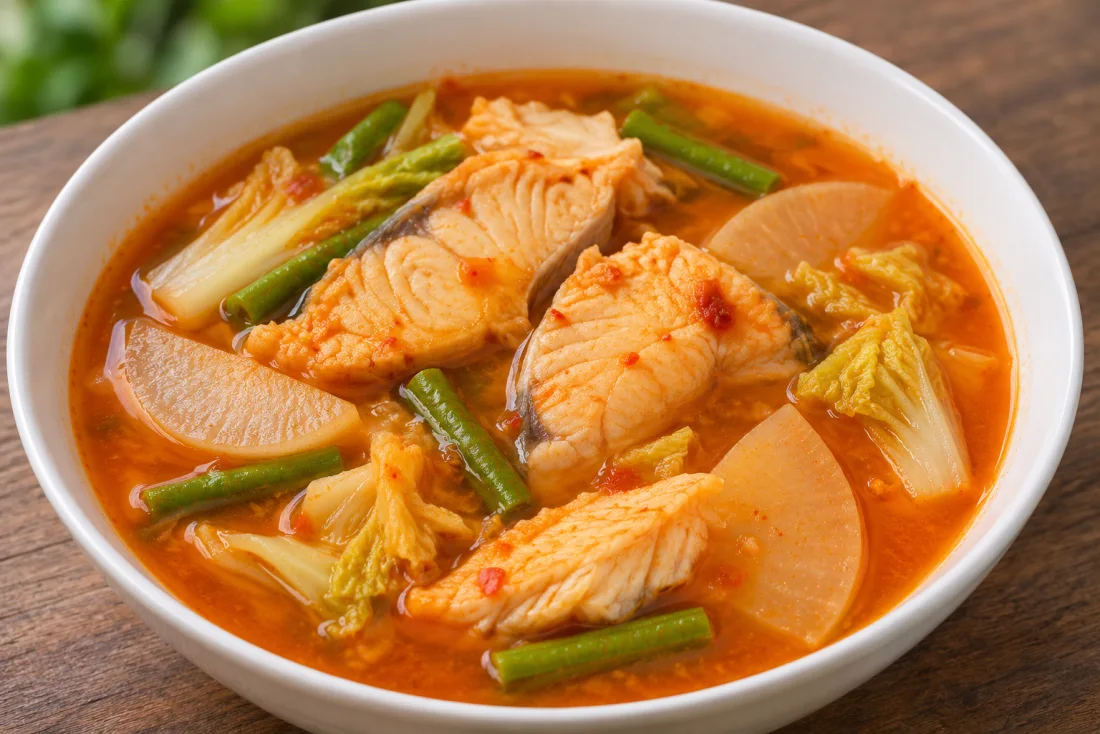

 snakehead fish
Central Thai sour curry and regional fish dishes
The name describes sourness. Central cooks use tamarind with vegetables and fish, including snakehead and firm, partly ripe papaya in the Pa Sak basin. The south has other sour fish curries, some colored with turmeric. A documented Pak Phanang version uses local nipa vinegar, fermented fish seasoning and tender banana stem. The fish, acid and vegetables depend on the cook and the location.
How fish goes into both the paste and the pot
One central recipe steeps dried chilies, pounds together the aromatics and adds cooked meat from the tail to the curry paste. The fine fish flakes give the broth some body. Papaya goes into the broth before the rest of the fish, with tamarind, fish sauce and sugar. Steaks or head pieces may bring bones. Other vegetables, such as sesbania blossoms, are possible.
Tamarind tartness, fish savor and fruit sweetness
Tamarind gives the broth a rounded fruity tang, set against gently sweet papaya and the salt of fish sauce. Chili follows. Sugar can soften the sharp edges, while the papaya ranges from lightly crisp to quite soft. The orange-red color varies with the chili paste and its concentration. The outside of the fish picks up the broth as the flesh retains its own sweetness.
How it fits on the rice table
A bowl can sit in the middle of a meal with plain rice, eggs or a fried side. Spoon a little broth over the rice, then portion the papaya and fish. Ask whether the kitchen uses a whole fish, bone-in steaks or fillets. A batch cooked in a single pot may come at a fixed level of heat.
Reading the neighboring sour dishes on a menu
Central sour fish curry gets much of its identity from tamarind, chili paste and sometimes fish pounded into that paste. Tom yum tends to get its aroma from lemongrass, galangal and lime. Ginger-led tom som has a different fragrant profile. Vegetable sour curry highlights the vegetables but may also use fish or shrimp. Menu wording about turmeric or a southern style helps identify those versions.
Allergens and fish bones
Fish is present in the pieces, fish sauce and any fish pounded into the paste. Ask about shrimp paste and added shrimp for crustacean allergies, and check seasonings for soy or wheat if relevant. Ask about shared pots, boards and ladles. Removing solids does not remove allergens from the broth. Check fish portions for small bones before serving.
If you have a food allergy, tell the restaurant before ordering and ask about ingredients, sauces and shared cooking equipment.