
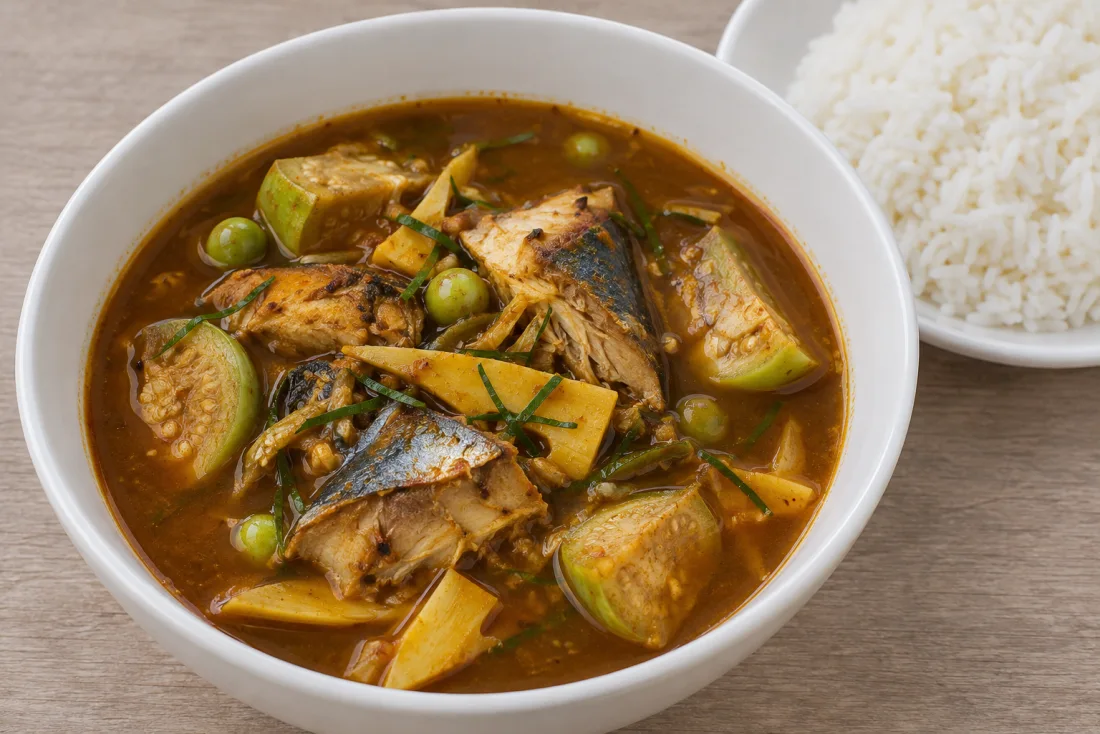

 fermented fish entrails
A fermented-fish curry from southern Thailand
Thailand’s Ministry of Culture records gaeng tai pla and gaeng phung pla as names for the southern curry. Tai pla refers in the kitchen to a salted, fermented fish-innard seasoning. When chefs strain it out, the fish you see in the bowl is usually added separately.
The curry shows how salted seafood and fresh aromatics are combined in southern Thai cooking. Thai SELECT documents a recipe with mackerel and vegetables. The sources establish a southern tradition and leave the first kitchen open.
Fermented fish, curry paste, fresh fish and vegetables
Thai SELECT starts with fermented fish-innard seasoning and adds mackerel. The paste has dry and fresh chillies, lemongrass, garlic, shallots, galangal, turmeric, pepper and shrimp paste. Makrut lime rind and leaves contribute citrus aromas.
Sweet potato, Thai eggplants, small eggplants and bamboo shoots round out its recipe. Sweet potato contributes mild sweetness, eggplants can have a slight bitter edge and bamboo shoots have a crisp bite. The exact vegetables vary by kitchen.
How strained fermented fish becomes a curry broth
Thai SELECT boils the fish-innard seasoning with lemongrass, galangal and makrut lime leaves, then strains it. The cook boils the curry paste in water and combines it with the strained liquid and seasoning. The broth keeps the fermented flavour after the solids come out.
Vegetables and fish go in to cook and absorb some of the spice. Too much stirring can break the fish up. This version builds flavour with fermented fish and ground paste in a water-based broth, so the liquid can be light in texture while tasting very concentrated.
Fermented savouriness, chilli heat and how to eat it with rice
Fermented fish is the first strong aroma, followed by lemongrass and makrut lime. The broth is salty and savoury, with lingering chilli and a warmer note from pepper. A little sugar and citrus juice round out the Thai SELECT preparation.
Try a little broth on rice before tasting the fish and vegetables. Plain rice and cool vegetables can make the heat easier to pace. Removing visible chilli leaves the chillies and pepper already cooked into the paste.
How the balance can vary without changing the name
One cook may use more vegetables and another may emphasise fish. A darker fermented seasoning can intensify the savouriness. Sweet potato, eggplant and bamboo change the texture of each bite. Thinner broth is easy to spoon over rice, while a thicker serving carries more fish or vegetables in a spoonful.
Ask what fish and paste the kitchen uses and whether the heat can be adjusted. When the base is made ahead, a milder serving can mean that fewer fresh chillies are added at the end.
Allergens to ask about: fish, crustaceans and prepared paste
Both fermented fish-innard seasoning and the added fish are sources of fish. Straining leaves fish ingredients in the broth. Thai SELECT uses shrimp paste in the curry paste, so crustaceans also matter. Ask about the broth and paste even when no whole shrimp or fish pieces are visible.
If you need to avoid other ingredients, ask about prepared curry paste and shared boards, pots or ladles. For versions served with fish pieces, look out for small bones when eating.
If you have a food allergy, tell the restaurant before ordering and ask about ingredients, sauces and shared cooking equipment.