
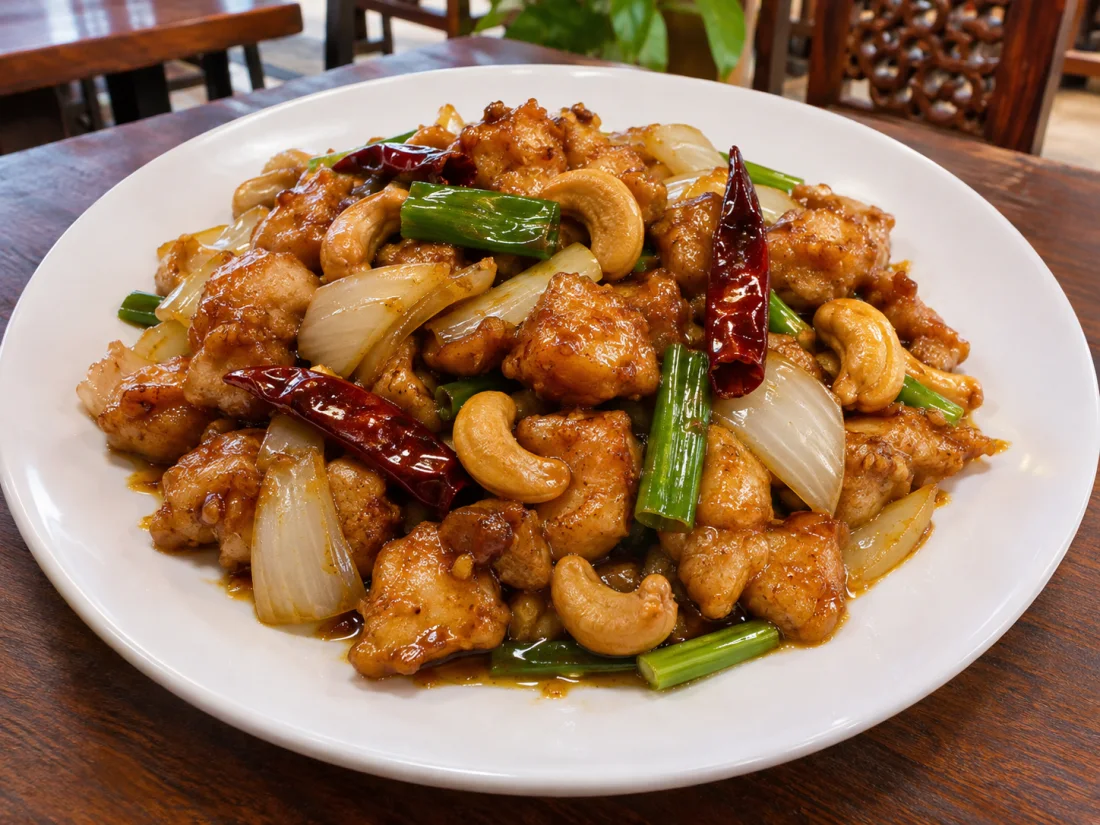

 chicken
The name and its place in Thai cooking
Gai means chicken, pad refers to stir-frying and met mamuang himmaphan is the Thai name for cashew nuts. Mamuang on its own can mean mango, but the full ingredient name here refers to cashews. Mango flesh does not ordinarily sweeten this dish. Menus may spell out the Thai name or list it as stir-fried chicken with cashew nuts or Thai cashew chicken.
Thai SELECT includes the dish in its recipe collection, and restaurants in its directory serve their own preparations. That places it in contemporary Thai restaurant cooking. Those recipes and menus do not establish an inventor or an exact province of origin. Chicken and nuts also appear in stir-fries elsewhere, with different sauces.
What goes into the dish
Chicken and cashews create the main textural contrast. Cooks may use pieces of thigh or breast. The nuts can be roasted or fried separately before they meet the chicken in the pan. Onion, spring onion, sweet pepper and dried chillies appear in some preparations, in varying combinations.
Garlic or onion can add fragrance, oyster or soy sauce can season the chicken, and a sweet note may round out the sauce. Some recipes add nam phrik phao, a Thai chilli paste that can bring a deeper colour and roasted flavour. The particular seasonings, heat and possible allergens cannot be inferred from the colour alone.
Why cooks often handle the chicken and nuts separately
One Thai SELECT preparation fries cashews, chicken and dried chillies separately, then stir-fries the chicken and other ingredients with the seasonings before adding the nuts. That gives the sauce a chance to cling to the chicken while the nuts stay crisp. Another cook might toast the cashews first and stir-fry uncoated chicken.
When the sauce reduces to a light glaze, the chicken, nuts and vegetables remain easy to distinguish. A wetter version lets diners spoon some sauce over rice. Cashews contribute flavour and texture throughout the finished dish.
How it tastes and how hot it might be
Start with a piece of sauced chicken away from any visible chilli. Look for garlic, a savoury seasoning and a hint of sweetness, then try it with a cashew. The nuts add a gentle roasted flavour, and onions and peppers contribute sweetness and crunch. Dried chillies may give colour or fragrance. The variety, amount and treatment of the chilli affect how much heat enters the sauce.
A dark sauce or a visible dried chilli is a poor guide to the actual heat. Some versions are gently seasoned, while those with chilli paste may taste noticeably hot. If you want less heat, ask whether chilli is mixed into the sauce and whether the kitchen can adjust it.
How to order and serve it
In a Thai restaurant the dish can sit in the middle of the table with other plates, or come with rice as a meal for one. Spoon a little sauce over rice when there is enough, or take a bite of the drier stir-fry on its own. A soup or curry on the same table offers a contrast with the quick-cooked chicken.
Menus may list a crispy chicken version separately. That wording describes the intended crisp exterior of the chicken. The basic name allows for several methods, so the individual restaurant description is helpful.
Allergens in cashews, seasonings and shared equipment
Cashews are tree nuts and central to this dish. Tell the restaurant about a cashew allergy before ordering. Picking out the nuts or omitting a garnish cannot undo earlier contact through a pan or a sauce. Ask what ingredients the kitchen actually uses.
Oyster sauce may contain oysters and fish sauce contains fish. Soy sauce and seasoning blends may contain soy and wheat. Coatings, other sauces and chilli paste vary. Tell the kitchen which specific ingredients you need to avoid and ask about shared pans, frying oil, tongs and serving utensils. This description cannot determine whether a particular serving is suitable for someone with an allergy.
If you have a food allergy, tell the restaurant before ordering and ask about ingredients, sauces and shared cooking equipment.