
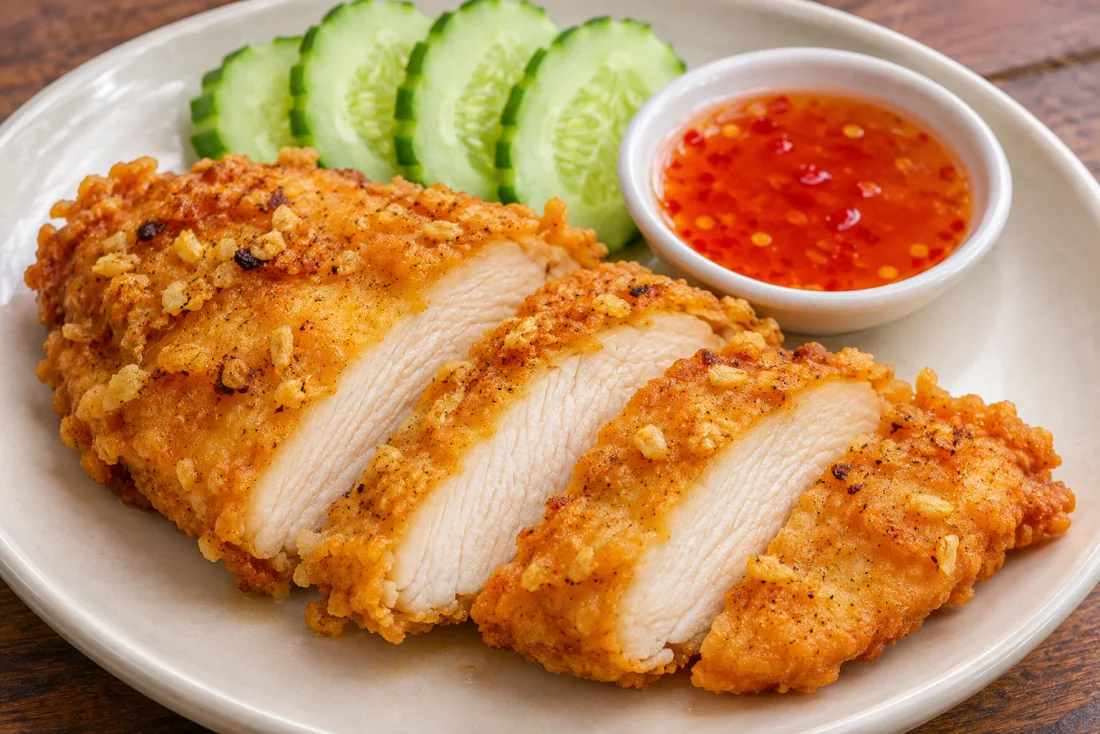

 chicken breast
Reading the Thai name
Ok kai means breast meat and thot means fried. Boneless cutlets show lean white meat under a crisp layer when sliced. Cubes are also possible. A menu that simply says crispy chicken may use another cut. Ask about skin, coating and any sauce.
Fried chicken breast at Thai meals
Thai home cooks describe cooked breast coated and fried with pepper and sesame. Another version uses sliced or cubed breast with sweet-sour sauce. A Thai takeaway can pair the breast with cucumber and rice. The familiar name does not identify one place of origin.
Breast meat, coating and pepper
A Thai cook uses chicken breast, cornstarch, cold water, salt, pepper, toasted sesame and oil. Another uses egg, oyster sauce, light soy, sugar and fried batter before adding tomato sauce. Some kitchens use garlic or a separate chili dip. Coating recipes vary.
Cook the chicken through
Cut the breast evenly or choose a piece of uniform thickness. Exterior color cannot confirm the center is cooked. USDA guidance specifies 74°C for poultry. Use clean tools for the cooked chicken, drain well, then slice on a clean board. Keep dips separate if you want to preserve crunch.
Crisp coating and tender white meat
A thin coating cracks easily and the breast meat tastes mild. Pepper adds warmth, and toasted sesame or garlic can add fragrance. Sweet chili dip brings a mild sweetness, while a lime chili dip is brighter. Cucumber and rice make the bite gentler.
Allergens in batter, sauces and fryers
Wheat, egg, milk, soy and sesame can occur in marinades or coatings. Fish sauce contains fish and oyster is a mollusk. Ask which sauce is served and whether a fryer or tools are shared with shellfish, fish or wheat-coated items.
If you have a food allergy, tell the restaurant before ordering and ask about ingredients, sauces and shared cooking equipment.