
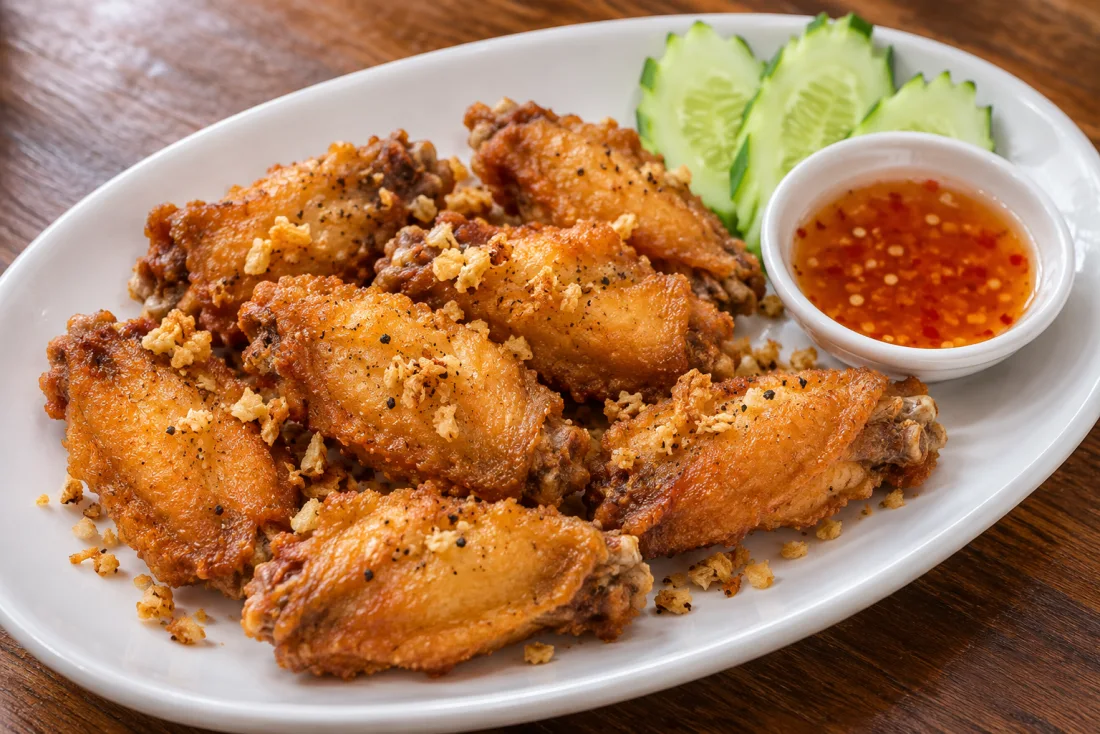

 chicken wings
 fish sauce
Whole wings, flats and drumettes
Pik kai thot is fried chicken wings. Pik klang refers to the flat middle section. Whole wings include the tip, while drumettes are thicker and meatier. A menu marked kratiem phrik thai indicates garlic and pepper. Nam pla indicates fish sauce.
At Thai stalls and shared meals
Thai home cooks make garlic and pepper wings and fish sauce wings. Whole wings can be served with sticky rice. Smaller pieces can be shared with vegetables and other dishes. Hat Yai style can feature fried shallots, while a generic name leaves seasoning open.
Wings, garlic, pepper and fish sauce
One original Thai home recipe uses wings, garlic, pepper, cilantro root, salt, fish sauce, sugar and fresh milk. Other cooks highlight fish sauce or use lighter coatings. Crispy flour can contain several types of flour, and sweet chili dip can be served separately.
Check the thickest part
Golden skin alone cannot confirm doneness. USDA guidance specifies poultry reaching 74°C. Measure the thickest meat without touching bone. Use clean tools and do not reuse raw chicken marinade as a finishing sauce. Drain the cooked wings before adding toasted garlic.
Crisp skin and juicy meat by the bone
The coating or skin gives a dry crunch before the soft, savory meat. Fish sauce is deeply salty and garlic gives a toasted note. Flats have more skin while drumettes feel meatier. Sticky rice and cucumber are mild accompaniments.
Allergens in marinades and fryers
Fish sauce contains fish and some marinades use milk. Coatings can contain wheat or egg. Soy or oyster can appear in sauces. Ask about the marinade, coating and dips, and whether seafood and breaded foods share the fryer and utensils.
If you have a food allergy, tell the restaurant before ordering and ask about ingredients, sauces and shared cooking equipment.