

 chicken
 fish sauce
Hat Yai is one of several Thai fried chicken styles
In Thai, gai means chicken and tod means fried. Together, they tell you the main ingredient and cooking method. Hat Yai is a city in Songkhla Province in southern Thailand. Its named style often features coriander seed and cumin in the marinade and fried shallots added to the cooked chicken. A menu that says gai tod Hat Yai gives you more clues than gai tod by itself.
Bangkok’s Polo Fried Chicken offers another well-documented example. The owners describe frying whole chickens without a flour coating and heaping fried garlic over the chicken at service. Southern restaurants also serve gai tod nam pla, seasoned with fish sauce. The three names all describe fried chicken, but each puts a different coating, seasoning or garnish in the foreground.
The cut, marinade and crisp outside
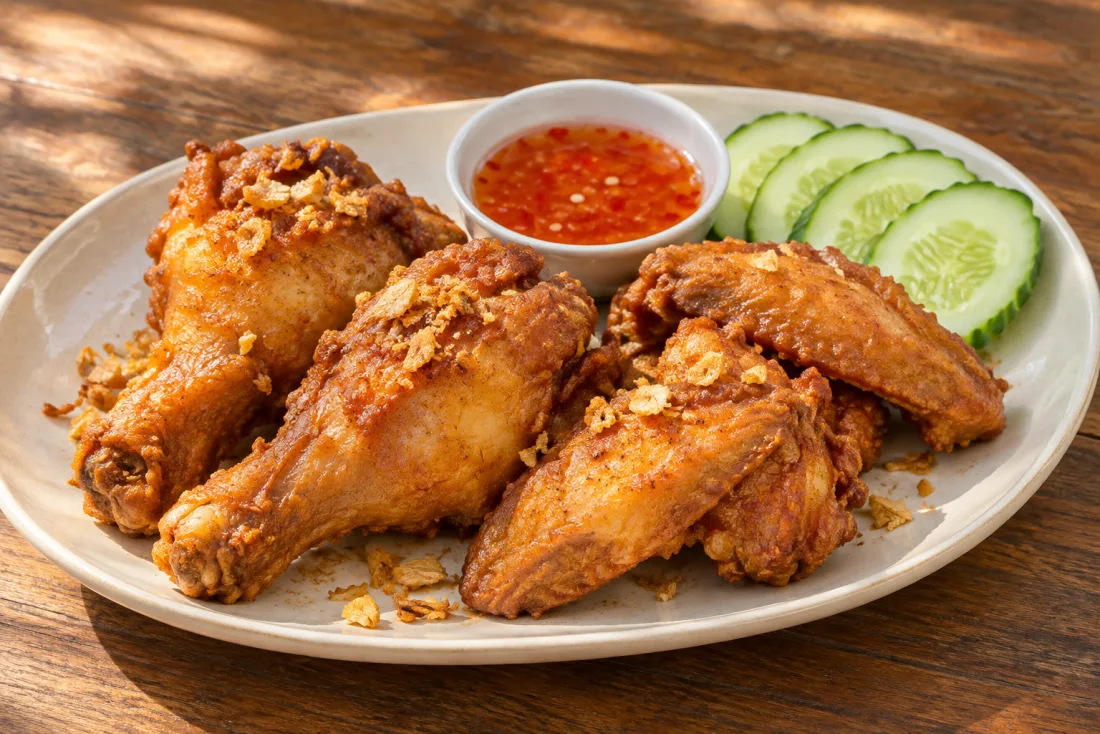
Look at the chicken, the seasoning and the outer layer. Wings, legs and mixed chopped pieces have different proportions of skin and meat. Wings offer more skin, while larger bone-in pieces leave a more noticeable contrast between their exterior and interior. Even pieces from the same plate can have different textures.
One Hat Yai recipe uses a pounded mixture of garlic, shallot, pepper, coriander seed and cumin, with soy sauce, salt and sugar in the marinade. Rice flour forms a thin coating. Fried shallots go on separately and have a crispness distinct from the chicken skin. Thai fried chicken can also be skin-on and uncoated, or use fish sauce and other batters, depending on what you order.
How the chicken gets its flavor and crunch
Fresh out of the fryer, the crisp skin gives way to juicy meat with savory seasoning. Both crisp garlic and fried shallots intensify the fried aroma. Garlic remains distinct, while fried shallots can have a slight cooked sweetness. Toasted spice makes up another part of the Hat Yai style, which can be apparent before the first bite.
The chicken can be mild or carry only pepper warmth. Sweet chilli sauce, a spicy dip or a side of green papaya salad may supply a separate layer of heat. For a milder meal, ask about the marinade and the sauces separately. A particularly thin coating leaves more of the texture of the chicken skin apparent.
A market meal or a plate to share
A few fried pieces and a small bag of sticky rice make an easy market meal to carry away. At a sit-down restaurant, chopped whole or half chickens can be shared with green papaya salad, sticky rice and other sides. The owners of Bangkok’s Polo Fried Chicken recall delivering chicken and sticky rice to nearby offices and serving groups of friends at night.
Fried chicken fits both settings. Its skin, meat and seasoning make it complete on its own, while rice makes it a fuller meal. When sharing several dishes, sticky rice can soften the saltiness of the chicken and green papaya adds a fresh sour crunch. Alternating between the dishes leaves room to taste the chicken with or without a dip.
Reading more specific menu names
Gai tod nam pla points to fish sauce. Gai tod Hat Yai suggests fried shallots and a spiced marinade. Pik gai tod means fried chicken wings, with further menu details giving clues to the seasoning, coating and dip. These terms are more informative than a broad Fried Chicken heading.
Whether the pieces are bone-in, whether the portion is sold by the piece or half bird, and whether sticky rice is ordered separately are worth knowing. Ask about a light rice-flour coating if you prefer a thin crust. If garlic or shallots interest you, check whether they go in the marinade, are fried as a garnish, or both.
Allergies and shared frying oil
Fish sauce can introduce fish. Soy sauce commonly contains soy and can include wheat. Coating mixes, marinades and dips need individual checks, and some preparations can contain egg or milk. A rice-flour coating does not tell you whether the marinade contains wheat in soy sauce. An uncoated piece likewise needs a check of seasonings and shared oil.
Name the specific ingredient you need to avoid, then ask about the marinade, coating, dip and fryer. A fryer shared with shrimp, fish or wheat-coated foods is a potential source of cross-contact. Leaving off sauce or the fried shallot garnish does not remove ingredients already applied in a marinade.
If you have a food allergy, tell the restaurant before ordering and ask about ingredients, sauces and shared cooking equipment.