
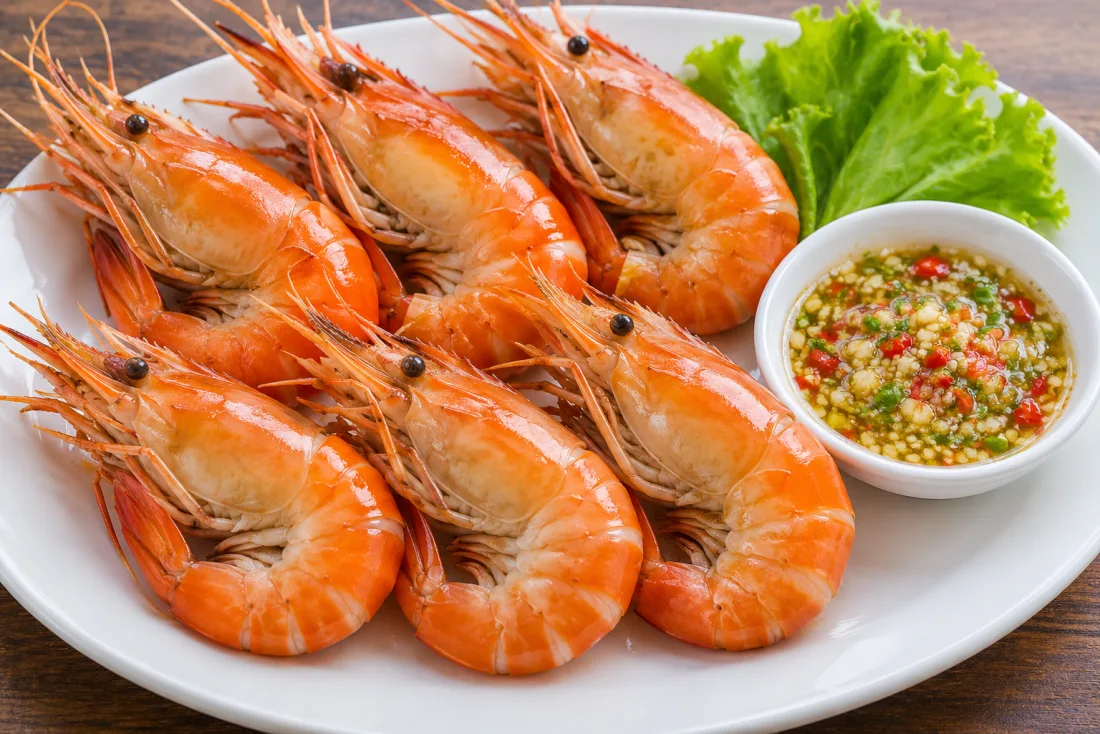

 shrimp
The Thai name and serving styles
Goong means shrimp or prawns, and neung means steamed. Whole, peeled or split prawns are all possible. Some menus separately name a lime-steamed version, in which the aromatics are poured over the prawns.
On Thai seafood menus
Thai seafood shops list steamed prawns by size or portion weight. They can be shared with other seafood or served peeled with rice. Ask whether the listed weight is before or after peeling.
Prawns, steam and seafood dip
One Thai preparation steams the prawns plain, serving light soy or seafood sauce separately. Some versions add salt, while a freshwater prawn recipe splits the shell and includes a dip. Lime, fresh chili, garlic and sugar are common in the dip, with salt or fish sauce depending on the kitchen.
Steam and doneness
Steam must circulate around the prawns. Different sizes may need separate batches. Cook the flesh through until firm and opaque. Shell color alone is insufficient, and acidic sauce cannot replace cooking. Use separate tools for raw and cooked seafood.
Natural sweetness and seasoning choices
Plain prawns are sweet, succulent and slightly springy. Lime gives a bright acidity, garlic adds aroma, and chili supplies heat. A fish-sauce dip is deeper and saltier. Try a plain bite before adding sauce to appreciate the contrast.
Allergens in prawns and dipping sauce
Prawns contain crustaceans. Dips can contain fish sauce or soy sauce with soy and possibly wheat. Oyster sauce may bring molluscs when used. Ask about marinades, the separately served dip and shared steamers or utensils.
If you have a food allergy, tell the restaurant before ordering and ask about ingredients, sauces and shared cooking equipment.