
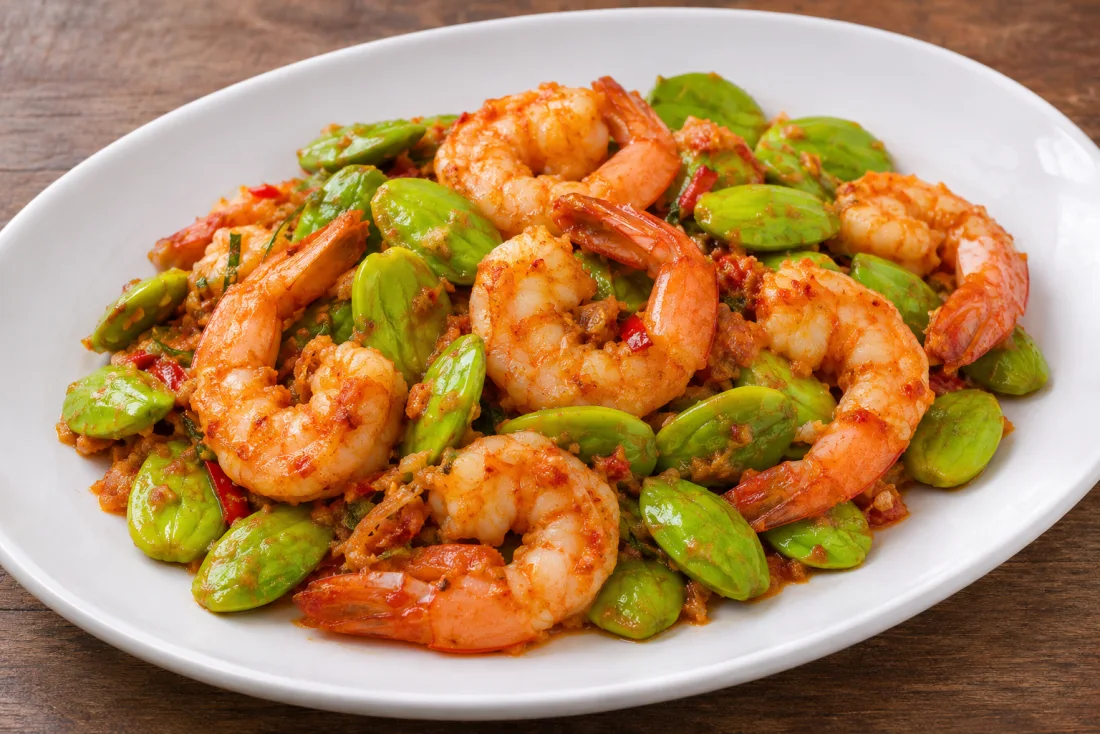

 prawn
Stink beans and seafood in southern Thai cooking
Goong means shrimp, pad means stir-fry and sataw means stink beans. Menus may also spell it sato or use the name petai. Thai cooks describe this combination as southern. Stink beans also go into coconut curries and other dishes.
Shrimp, stink beans and fermented shrimp paste are one familiar combination. Thai recipes include both a basic stir-fry and a hotter version using southern curry paste. These recipes document a regional style without pinning it to one place of origin.
Shrimp, stink beans and shrimp paste in the wok
Shrimp may be peeled with their tails left on. Stink beans come out of their pods and can be split if large. Garlic, shallots, chilli and shrimp paste can be pounded and cooked in oil. Shrimp are cooked through, and a brief stir-fry lets the beans retain some bite.
Fish sauce, oyster sauce and sugar appear in some versions, with lime in others. A little water makes the sauce coat the shrimp and beans. Shrimp paste strength and chilli types vary, so the plate alone does not identify the seasoning.
Crisp beans, sweet shrimp and fermented savor
Stink beans have a pungent scent and a firm bite. Shrimp bring sweetness and a springy texture. Fermented shrimp paste provides savory depth, while cooked garlic and shallot give softer aromas. Lime can brighten the sauce, and chilli adds heat.
A bite with more beans emphasizes their aroma, while one with shrimp tastes sweeter. A drier dish can emphasize the wok aroma, and a saucier one leaves more liquid to spoon over rice. The beans’ green color cannot tell you how much chilli or curry paste was added.
Eating it with rice and vegetables
Share it with steamed rice and other dishes. Rice picks up the garlic and shrimp paste, while an accompanying set of southern-style fresh vegetables can give a crisp bite between spoonfuls. Try a bean and then a shrimp to notice their separate flavors.
It can also come over rice as a single plate. Check whether rice is included and how many shrimp the order contains. Ask about chilli in the seasoning paste and added at service if you prefer a milder dish.
The basic stir-fry and curry paste variations
Goong pad sataw emphasizes shrimp, beans and shrimp paste, sometimes brightened with lime. Pad phet can signal a hotter curry paste, with other herbs and a different sauce consistency. The seasonings tell you more than the color.
Some stink bean dishes use pork or another seafood. Kapi in the name points to fermented shrimp paste, which may remain even if the main protein changes. If you are avoiding a seafood, ask about seasonings and shared equipment.
Allergens in shrimp, shrimp paste and other sauces
Shrimp and shrimp paste contain crustaceans. Fish sauce can introduce fish, and oyster sauce can contain mollusks. Soy sauce and prepared seasonings can contain soy or wheat. Ask about specific legumes or other ingredients rather than drawing conclusions from the bean’s name.
Tell the kitchen what you need to avoid and ask about shrimp, paste, sauces and shared equipment. Picking out shrimp cannot remove the paste from the beans. Shared woks, spatulas and tongs can cause cross-contact.
If you have a food allergy, tell the restaurant before ordering and ask about ingredients, sauces and shared cooking equipment.