

 shrimp
Recognizing the battered version
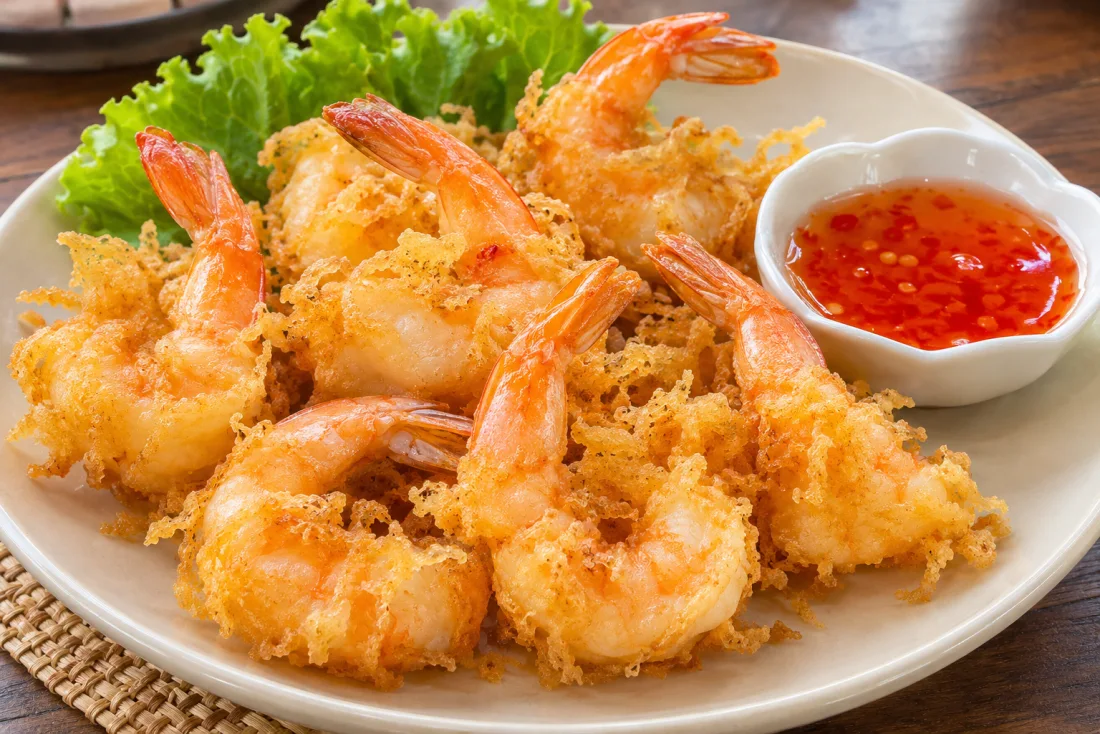
Goong thot means fried shrimp. Goong chup paeng thot specifically identifies battered shrimp. Other versions can use coarse crumbs, fry the shrimp shell-on, or season it with garlic and pepper. This one uses whole shrimp flesh rather than a formed shrimp cake.
Thai snacks and restaurant plates
Thai recipes serve battered shrimp hot as a snack or with rice. Restaurants may list it among starters. A paper-lined tray suits street food, while a sharing plate leaves space between individual pieces so the coating can stay crisp longer.
Shrimp, batter and dip
A Thai recipe coats peeled shrimp in wheat flour, then in frying batter mixed with soda water. Thinner batter leaves the shrimp shape clear. Breadcrumbs give a different coarse crunch. Depending on the kitchen, the dip might be sweet chili, plum or a lime-based seafood sauce.
Frying the coating and shrimp
Drain the shrimp so the coating adheres. Fry with room between pieces, and cook the shrimp flesh until firm and opaque. The batter can brown before the center is fully cooked. Let steam escape after frying, and pack sauce separately if needed.
Crisp outside, springy inside
Freshly fried batter has a crisp outer layer and the shrimp has a slightly sweet spring. Sweet chili sauce makes it sweeter and hotter, while plum sauce adds fruitiness. If the tail remains, it can be used as a handle before removing the shell.
Allergens in shrimp, coatings and fryers
Shrimp are crustaceans, and the representative recipe uses wheat. Batter or breadcrumbs can include egg, milk or soy. Fish sauce in the dip adds fish, and a sauce with oyster can contain molluscs. Ask about the flour, dip and shared frying oil.
If you have a food allergy, tell the restaurant before ordering and ask about ingredients, sauces and shared cooking equipment.