

 shrimp
 fish sauce
What the menu name means
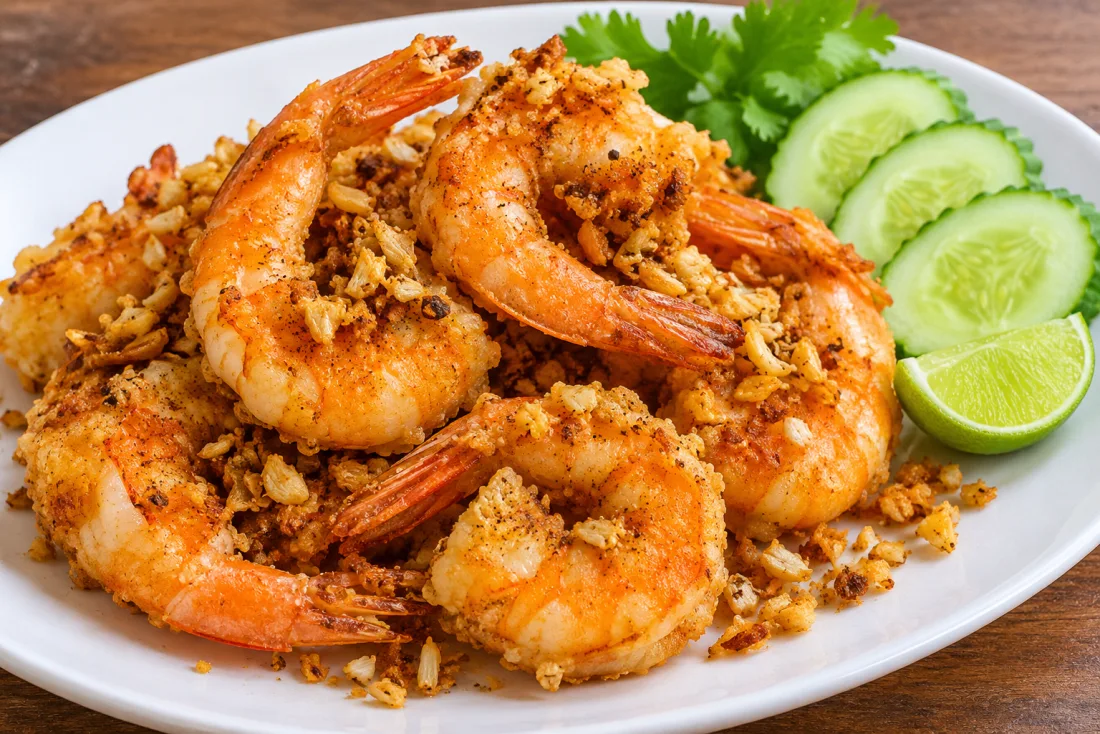
Goong thot kratiem names fried shrimp with garlic. Prik Thai specifies pepper. Some versions use a thin batter and others fry without a heavy coating, but garlic is a principal flavor. Goong mae nam on the menu indicates river prawns.
Thai restaurants, stalls and rice
Thai home recipes use ordinary shrimp or larger river prawns. Big prawns can appear in a sharing dish, while smaller shrimp can be served over rice. Ask whether the shrimp are peeled, and whether the restaurant offers crisp garlic, a saucier glaze, or both.
Shrimp, three aromatics and fried garlic
One recipe pounds coriander root, garlic and pepper, and seasons the shrimp with fish sauce, salt and sugar before dusting with frying flour. A river prawn recipe adds fried garlic at service. Another cook uses oyster sauce, seasoning sauce and sesame oil.
Different cooking times for garlic and shrimp
Garlic browns faster and can be fried separately so it does not burn. Cook shrimp thoroughly until the flesh is firm and opaque. Drain the oil after cooking and add crisp garlic at the end so it stays dry. Shell color alone cannot establish doneness.
Warm pepper and sweet shrimp
The shrimp has a tender spring, crisp garlic delivers toasted flavor, and pepper leaves a warm finish. Fish sauce brings savor and a little sugar rounds it out. A dry version has more crunch while a saucier one is easy to mix with rice.
Allergens in shrimp, sauces and coatings
Shrimp is a crustacean allergen and fish sauce contains fish. Batter may contain wheat, egg, milk or soy. Oyster sauce can contain molluscs and sesame oil contains sesame. Ask about the marinade, coating and shared frying oil or equipment.
If you have a food allergy, tell the restaurant before ordering and ask about ingredients, sauces and shared cooking equipment.