

 shrimp paste
What the Thai name describes
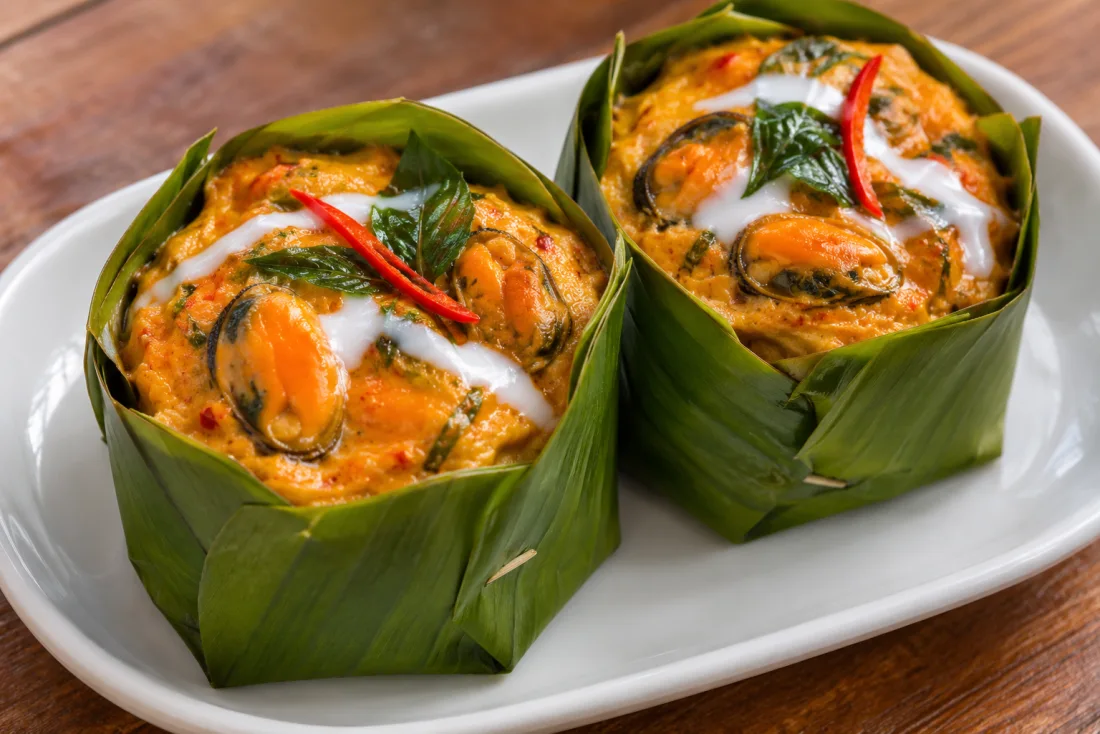
Hor mok is a Thai family of steamed curries. Hoi malaeng phu identifies mussels. The documented preparation steams mussel meat in a coconut and duck egg custard in portion-sized banana leaf cups. Restaurants may use ceramic cups.
Mussels, coconut and vegetables
The archived recipe includes mussels, duck egg, thick coconut milk, cabbage, Thai sweet basil and yellow sesbania flowers. Curry aromatics include dried chili, lemongrass, shallot, garlic, galangal, makrut lime zest, coriander root, pepper and shrimp paste. Garnishes vary.
Aromatic heat and the bite of mussels
Thick coconut rounds out the heat from the curry paste. Citrus and lemongrass rise first, followed by fermented seafood seasoning and the springier texture of the mussels. Vegetables soften beneath the custard.
What steaming does
Egg sets the curry mixture around the mussels. Leaf cups add aroma and keep portions separate, while wider or deeper vessels can set to different textures. A coconut garnish can leave the top paler than the interior.
What varies by restaurant
Mussel hor mok belongs to the same family as fish and mixed seafood hor mok. The seafood and vegetables under the custard, the type of egg, the level of chili and the size of the cup vary. Rice pairs with the compact, seasoned portion.
Allergens and shared equipment
Mussels are mollusks. The historical dish also includes duck egg and shrimp paste, the latter a crustacean ingredient. Ask about fish sauce or further seafood and coconut if relevant. Ask about shared utensils or steamers. Removing exposed mussels does not remove ingredients mixed into the custard.
If you have a food allergy, tell the restaurant before ordering and ask about ingredients, sauces and shared cooking equipment.