
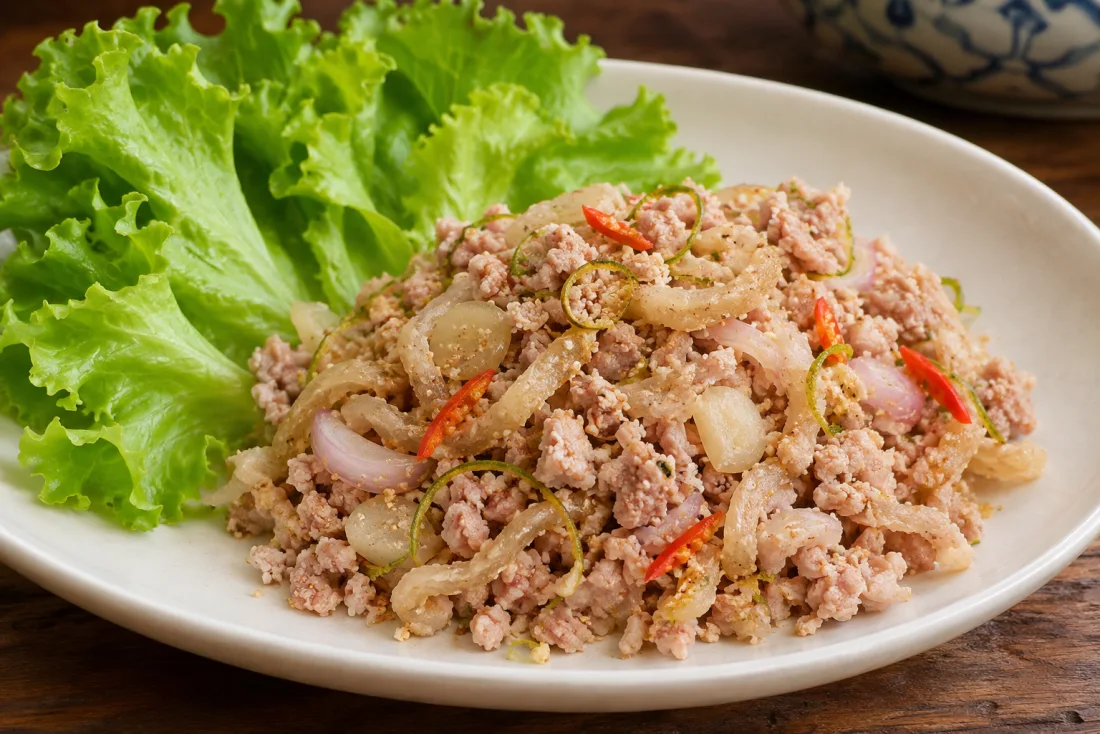

 minced pork
An old Thai cookbook snack
Tamrap Sai Yaowapha documents several styles of moo naem. The sot version is a moist mixed pork snack served with leaves. Thai dictionary descriptions likewise distinguish the cooked pork and toasted-rice preparation from other forms served as wrapped parcels or rolls.
Pork texture and the toasted-rice base
Fine cooked lean pork takes up the sweet-sour seasoning. Thin cooked rind adds bounce, while toasted rice powder gives a nutty aroma and binds some moisture. Galangal, bitter orange peel, shallot and pickled garlic are background flavours.
Cooking the pork before dressing
Cook the pork fully before mixing and use fully cooked rind. Historical acidic seasoning is part of the flavour, and it cannot replace full cooking. Fold the toasted rice into the meat without making it dry. Serve with crisp, drained lettuce. The dressed filling should stay lightly moist, with no pool of dressing at the bottom of the plate. This makes it easier to portion into leaves without dripping.
Bright acidity and warm toasted rice
Lettuce provides a fresh crunch before the tangy, lightly sweet pork. Galangal and citrus brighten the filling, and toasted rice lingers at the end. Thin red chilli can be served in adjustable amounts.
A shared plate or prepared lettuce cups
A shared plate keeps the loose filling and lettuce on opposite sides so each guest can portion a bite. In individual open lettuce cups, the fine filling, garlic and shallot are visible and ready to pick up.
Allergens in actual seasonings
The dish contains pork and may include rind and fat. Prepared condiments or colourings can include wheat, soy or fish ingredients. Ask about the seasonings and shared tools for fish, shellfish or peanuts. Separating the lettuce does not remove ingredients already mixed into the filling.
If you have a food allergy, tell the restaurant before ordering and ask about ingredients, sauces and shared cooking equipment.