
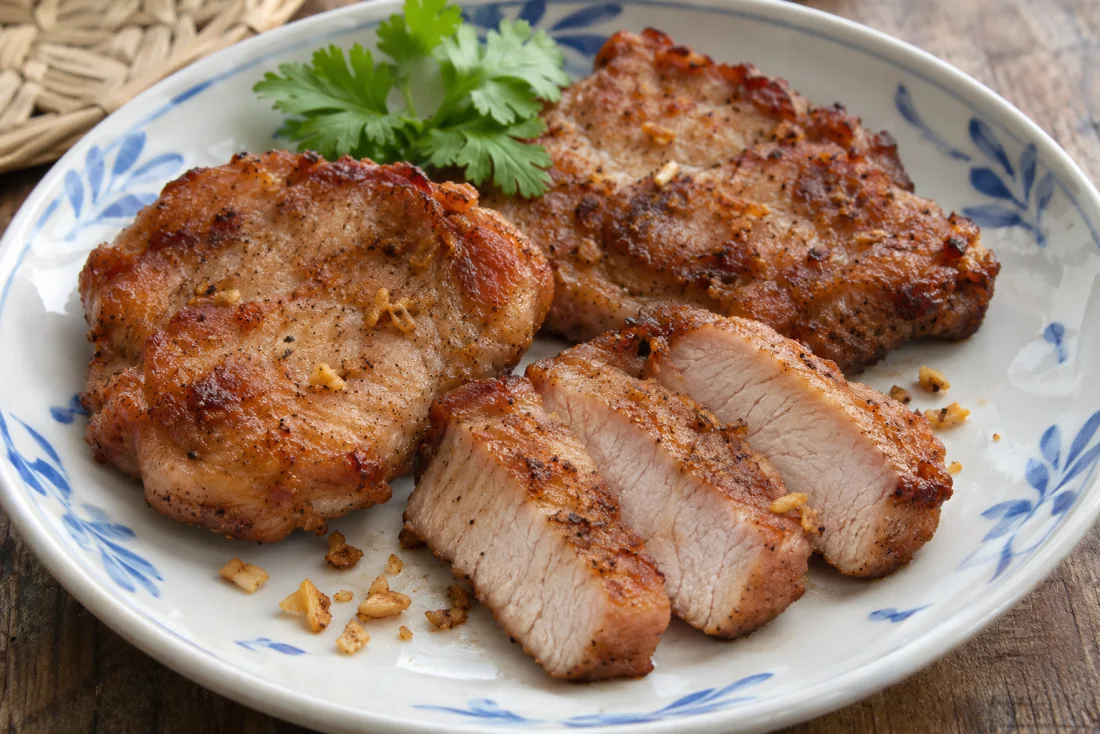

 pork
What the Thai name describes
Mu is pork, thot means frying and khem means salty. The archived recipe seasons fresh sliced pork before frying. It documents a specific preparation without identifying one birthplace.
Pork and a pounded herb paste
The recipe uses pork, garlic, peppercorns, coriander root, salt and lard. An archived variation uses fish sauce and pepper instead. Restaurant cooking fat and seasoning may differ.
Savory pork and warm spice
Frying gives the pork a browned surface and a firm bite. Garlic and coriander root scent the meat, and pepper provides warmth. Salt or fish sauce carries the main savory flavor.
Seasoning and pan-frying
Rub the pounded seasoning on pork slices and fry them in a pan until browned and fully cooked. The old recipe uses no batter. Slices can be served whole or cut for rice.
Serving and nearby fried pork dishes
Eat with rice, sticky rice or congee. Garlic pork, crispy pork belly and dried fried pork can differ in fat, seasoning and texture. Ask about the cut, batter and dipping sauce.
Allergens and the fish sauce variation
Pork and lard are pork products. The salt version lists no fish sauce, while the fish sauce variation contains fish. Ask about soy, wheat, oyster sauce, mixed seasonings and shared equipment.
If you have a food allergy, tell the restaurant before ordering and ask about ingredients, sauces and shared cooking equipment.