
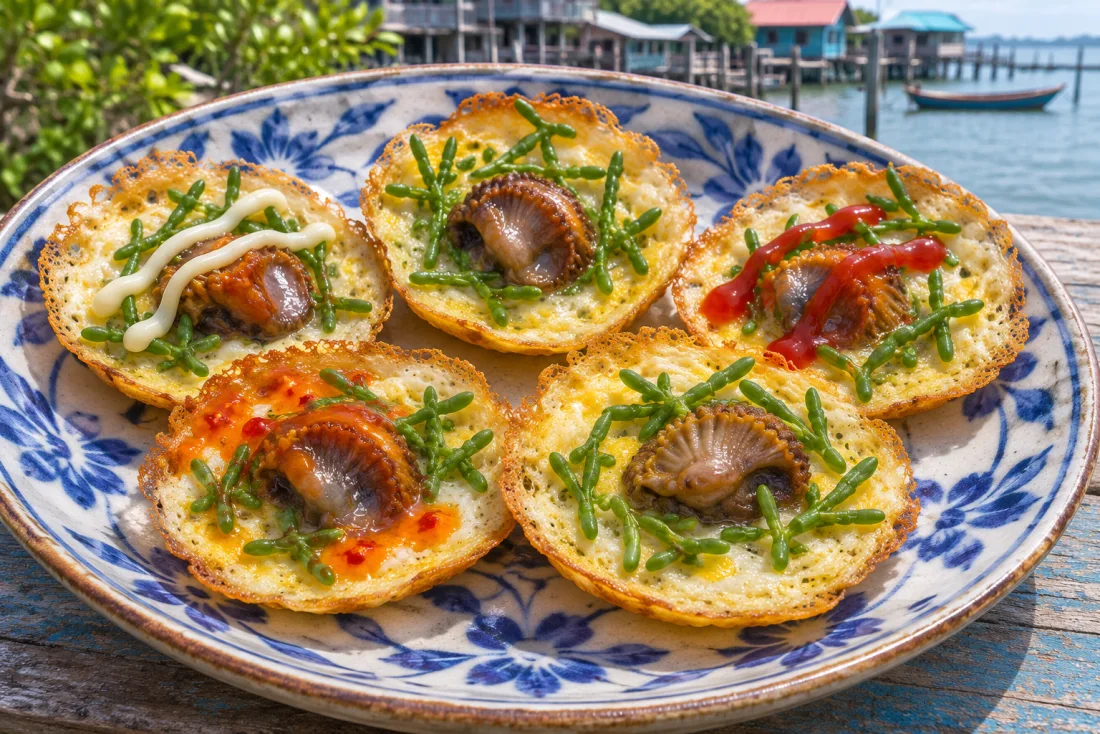

Blood cockles by the river mouth
The intertidal mud near Ban Khun Samut Chin in Samut Prakan is home to local shellfish and salt-tolerant sea-blite. Thai PBS Foodwork paired these ingredients in a small mould-griddle snack. Other muddy shores of the Gulf of Thailand also provide cockle habitat.
What goes in each pancake
Shucked cooked cockles sit with young sea-blite on a base of frying flour, egg and a little water, seasoned with salt and pepper. A little ketchup, chilli sauce or mayonnaise can brighten the bite without covering the shellfish.
Why a round mould matters
Batter spreads against the curve of the hot griddle, making a thin crisp edge and a softer middle. The cockles are fully cooked before they are added and can be seen from above. The pancakes are best eaten while the edges are still crisp.
From egg batter to briny sweetness
Egg and pepper come through on the first bite, before the springy cockle and the gentle saltiness of sea-blite. Ketchup adds mild fruit acidity, chilli sauce brings heat and mayonnaise softens the finish.
Two finished servings
On a shallow patterned platter, small pancakes are set apart, with sea-blite and delicate streaks of sauce. A leaf-lined basket holds thinner, crisper bites with a separate chilli dip. The batter thickness, sauce and portion change the way the snack is eaten.
Allergens in the pancakes and sauces
Blood cockles are bivalve molluscs. The batter contains egg and frying flour may contain wheat. Mayonnaise commonly contains egg, and sauces may also contain soy or fish. Tell the kitchen the specific allergy and ask about shared griddles, oil and utensils.
If you have a food allergy, tell the restaurant before ordering and ask about ingredients, sauces and shared cooking equipment.