
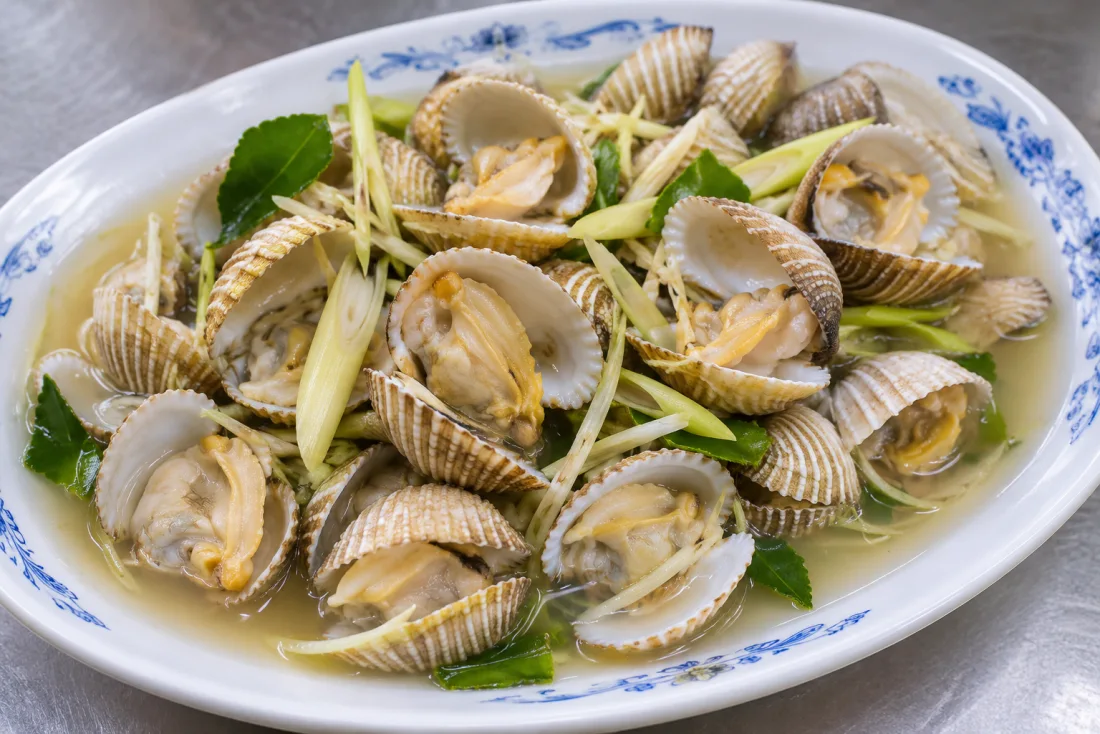

The Thai name and clam
Hoi lai neung means steamed striped clams. A Thai fisheries list identifies hoi lai with the undulate venus clam. Local market names and related clams can vary. The shells and broth distinguish this preparation from a holy basil clam stir-fry.
Coastal serving styles
A Thai kitchen recipe steams a related hard clam with lemongrass, and seafood menus elsewhere in the region describe striped clams with lemongrass. A bowl or plate can hold the clams and juices. Ask about shell-on weight, portions and the dip.
Clams, lemongrass and steam
The featured ingredients are shell-on striped clams, bruised lemongrass and water for steaming. Other aromatics may include makrut lime leaf, ginger or chilies. Chili, garlic, lime, sugar and salt or fish sauce can flavor a separate dip.
Cleaning and thorough cooking
Use clams from a reliable supplier and discard damaged shells. Scrub and cook them thoroughly, discarding shells that remain closed after cooking. Size and equipment affect timing. Keep raw and cooked utensils separate. Acidic dip cannot replace cooking.
Briny sweetness and hot broth
Clams are springy with a mild briny sweetness. Lemongrass adds a citrus fragrance to the hot juices. Try a clam plain before adding lime and chili. A shallow shell can hold some broth.
Allergens in clams and dip
Clams are molluscs. Fish sauce contains fish, shrimp paste adds crustaceans, and oyster sauce can contain another mollusc. Compound dipping sauces can contain soy, wheat or sesame. Ask about the dip, steamer and shared utensils.
If you have a food allergy, tell the restaurant before ordering and ask about ingredients, sauces and shared cooking equipment.