

 fish sauce
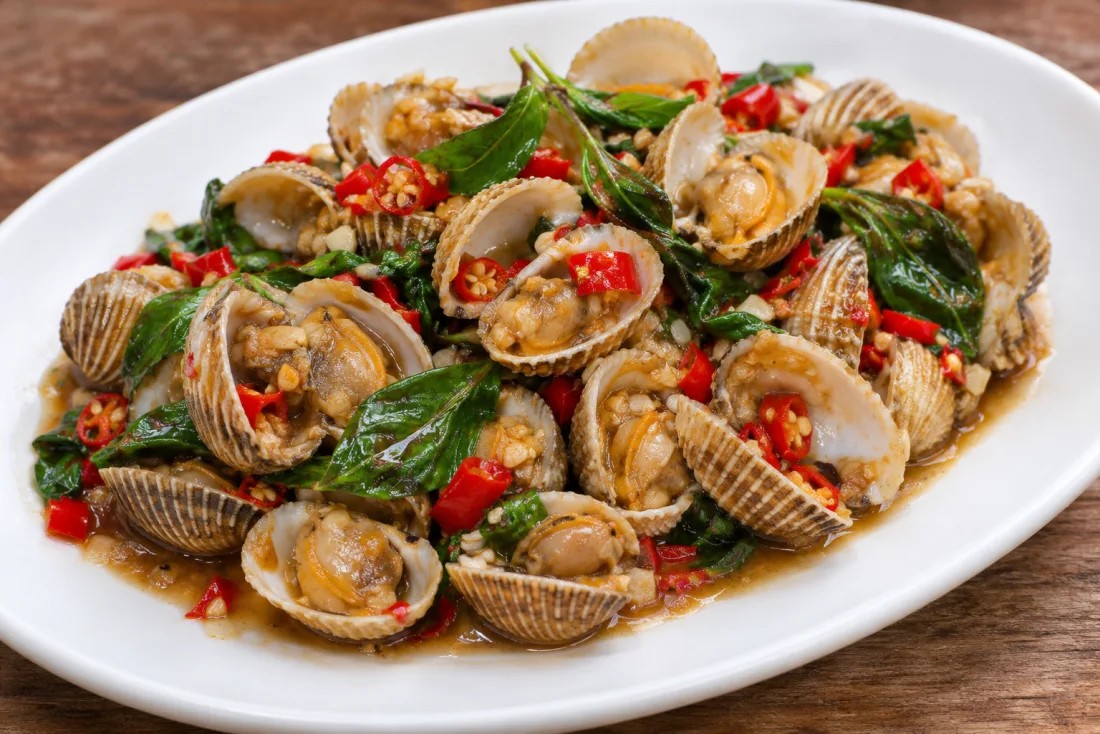
Striped clams and holy basil
Hoi lai is a Thai market name for a patterned clam such as the undulate venus clam. Krapao is holy basil, with a peppery aroma. Some menus offer a separate clam dish with Thai sweet basil. Ask which leaf is used in a roasted chili paste version.
Thai home cooking and rice
Thai recipes use the garlic-and-chili method familiar from holy basil stir-fries with clam meat. Half-shell clams can be shared, while shucked clams can be served directly over rice. The sauce and the shell presentation vary by kitchen.
Clams, chili, leaves and sauce
One Thai recipe has clams, pounded chilies and garlic, sliced chilies, makrut lime leaves and holy basil. Fish sauce, oyster sauce, light soy and sugar season the wok. Another holy basil version adds roasted chili paste. Lime leaves give a different fragrance from the basil.
Cooking the shellfish and adding basil
Scrub whole clams, cook them thoroughly and discard any shells that remain closed. A half-shell version can go into the wok with the sauce after this preparation. Use separate equipment for raw and cooked seafood. Add holy basil near the end so its fragrance stays clear.
Briny, peppery and fragrant
Clams are briny and springy. Garlic and chilies add heat and holy basil gives a peppery herbal note. Roasted chili paste can make the sauce sweeter and deeper. Rice catches the sauce, including any spooned from the shells.
Allergens in clams and seasonings
Clams are molluscs, and oyster sauce can contain another mollusc. Fish sauce contains fish and soy sauce contains soy and may contain wheat. Roasted chili paste can contain shrimp or fish. An added fried egg contains egg. Ask about the sauce and shared equipment.
If you have a food allergy, tell the restaurant before ordering and ask about ingredients, sauces and shared cooking equipment.