

 fish sauce
The name, Bangkok and Chinese-style shellfish pancakes
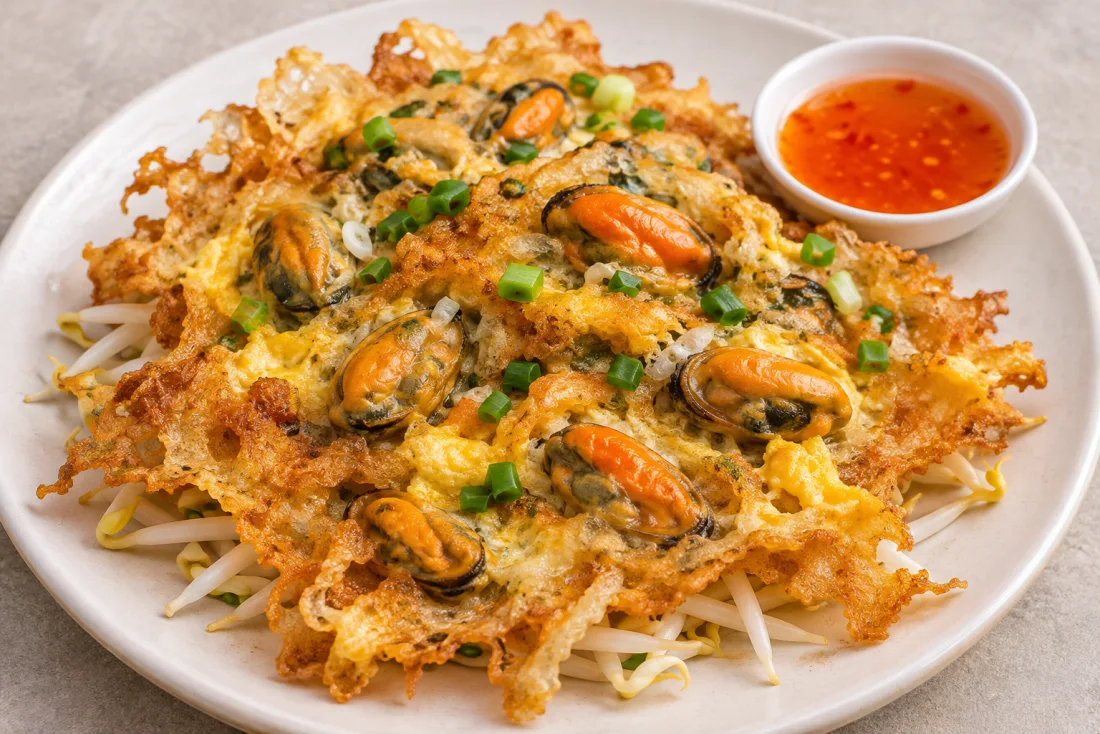
Hoi broadly refers to shellfish and thot means to fry. KRUA.CO describes Chinese-influenced styles in Bangkok’s Yaowarat neighbourhood. A Sam Yan shop lists a crispy mussel version with bean sprouts and sweet chilli sauce. These examples show how it is served in Bangkok.
Mussels, egg and batter
Mussels cook in a thin layer of batter with egg. One KRUA.CO recipe uses tapioca starch and rice flour, while another uses a different Thai root starch. Bean sprouts may go underneath or into the pan near the end. Spring onions or chives add aroma.
How the edges become crisp
The thin edge browns on the hot pan while shellfish, egg and thicker batter can stay tender in the centre. Some cooks break up the pancake and toss it with the sprouts; others keep it whole. Sauce served separately helps preserve the crispness.
Shellfish sweetness, crisp edges and chilli sauce
The fried edges taste toasty, mussels taste of the sea, and bean sprouts bring a fresh crunch. One recipe seasons it in the pan with fish sauce, vinegar and sugar. A separate chilli sauce lets diners adjust the sweet, tart and hot notes.
How to tell the mussel and oyster styles apart
KRUA.CO distinguishes a tender, sticky oyster option called o suan and a crispy oyster version called o lua. Menu wording can vary. Ask which shellfish the kitchen uses and whether the texture is crisp or soft. Takeaway versions may cut the pancake into pieces.
Allergens and shared pans
Mussels and oysters are molluscs, and the pancake generally contains egg. Ask about fish sauce, wheat or soy in batter mixes, and shared pans also used for prawns. Some recipes use lard. Identify the exact ingredient you avoid and ask about batter, sauce, oil and utensils.
If you have a food allergy, tell the restaurant before ordering and ask about ingredients, sauces and shared cooking equipment.