

 fish meat
Fried cake and steamed fish curry
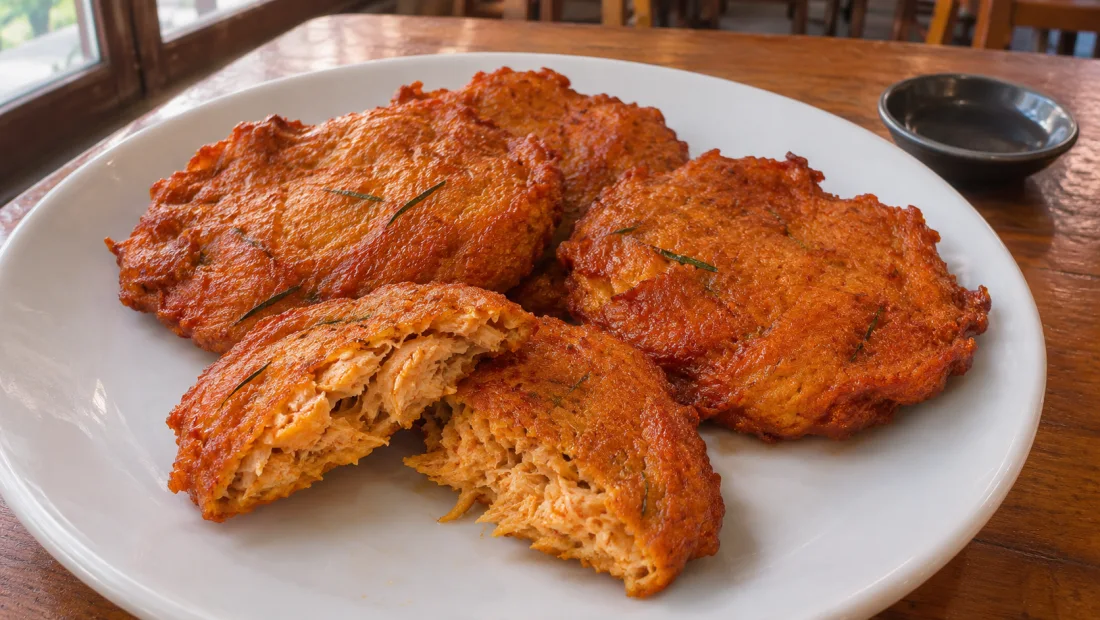
Hor mok generally refers to a set fish curry, while tod specifies frying. Steamed hor mok is often served in a banana leaf cup. The fried dish has golden or reddish edges from the oil and a soft center. Restaurants serve individual patties or several small pieces.
A curry preparation in Thai kitchens
A Prince of Songkla University thesis documents fried hor mok as a variation of the central Thai steamed fish curry. A restaurant in Bang Pho lists the fried version. A Bangkok noodle shop serves one with optional crab or crab roe. The histories of the restaurant preparations vary.
Fish, curry paste and texture
Fish and curry spices give the base its character. Coconut milk, fish sauce, egg and makrut lime leaves occur in steamed hor mok. Ask which go into the fried version. Frying dries the outer surface. Cooked crab topping brings a separate texture and flavor.
Fried edges and a soft curry center
A fresh patty can have crisp edges and a tender center. Chili adds warmth. Coconut milk can soften the flavor, and makrut lime leaves may bring a citrus aroma. Try the cake before using the dip. Cooked crab adds a mild, separate sweetness.
Ordering it alongside other fish cakes
Tod man pla also uses fish and curry seasoning. Texture, extras and restaurant names can differ. Ask about the fish, egg and toppings. Separate menu photos can show the plain and crab-topped portions. List the actual number of pieces and the included dip.
Allergens and a shared fryer
Fish and fish sauce contain fish. Crab, crab roe and shrimp paste contain crustaceans. Egg, wheat or soy may also be present. Ask about coconut milk and any dairy added to sauces. Shared oil and utensils may transfer allergens. Ask about the patty, dip and kitchen equipment.
If you have a food allergy, tell the restaurant before ordering and ask about ingredients, sauces and shared cooking equipment.