
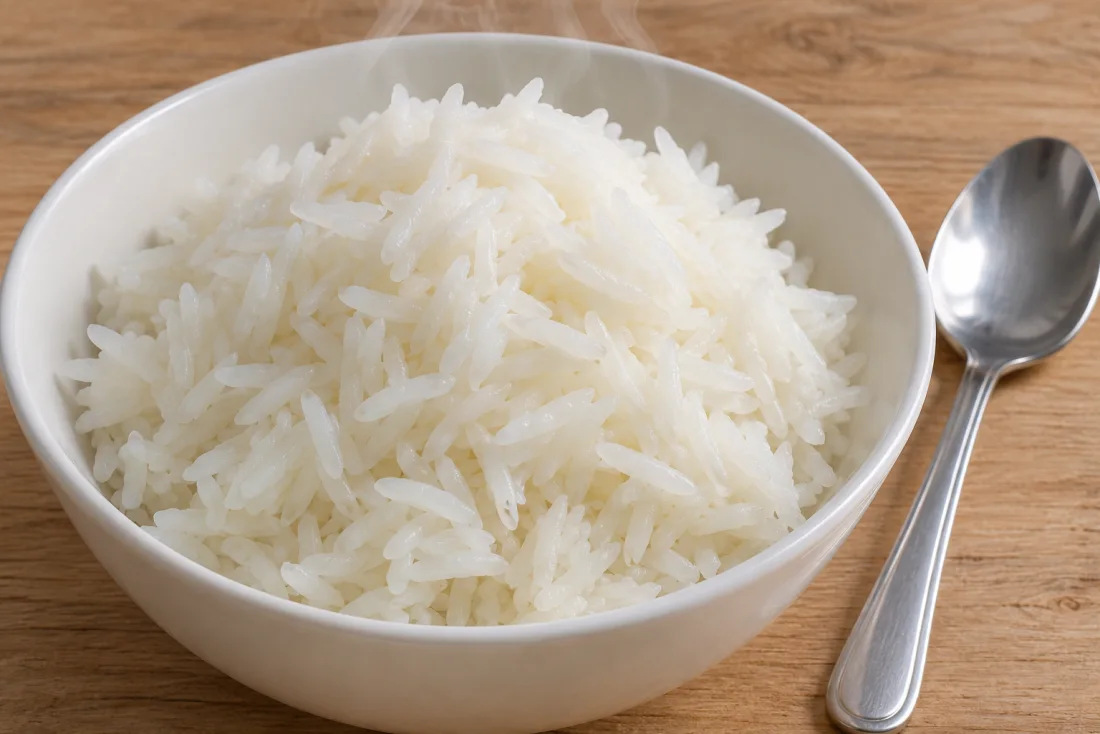

Recognising soft, long grains
The rice can be spooned into a bowl or turned out from a small mould. Cooked grains lightly cling but can be separated with a spoon. The fragrance is natural. The name does not indicate the use of jasmine flowers or tea.
Thai standards and growing areas
Thailand’s agricultural standard recognises Khao Dawk Mali 105 and RD15 for Thai Hom Mali and describes both as non-glutinous rice. The Thung Kula Rong-Hai geographical indication is more specific, tying the rice to a defined northeastern area and crop conditions. A generic menu name does not establish a farm or origin within Thailand.
Rice, water and separate grains
Plain jasmine rice needs rice and water. Rinsing removes some surface powder. The amount of water and post-cooking rest change how soft and separate the grains stay. Newly harvested and older rice can absorb water differently.
Fragrance, temperature and gravy
A warm bowl has a mild grain aroma and a tender bite. It takes on the flavour of curry or soup without providing its own sauce. If the rice is distinctly oily or yellow, it may be cooked with stock, chicken fat or spice.
Ordering a portion with side dishes
Khao suai means cooked white rice. Ask whether it is jasmine rice when the menu is broad and whether the serving comes separately. White jasmine rice is easy to spoon up with a saucy dish. Khao niao is a separate glutinous rice choice.
Ingredients and shared utensils
A portion cooked with just rice and water contains no wheat, fish, milk, egg or nuts as ingredients. Ask about stock or oil in the rice and ingredients in any sauce. A rice cooker or serving spoon may be shared.
If you have a food allergy, tell the restaurant before ordering and ask about ingredients, sauces and shared cooking equipment.