
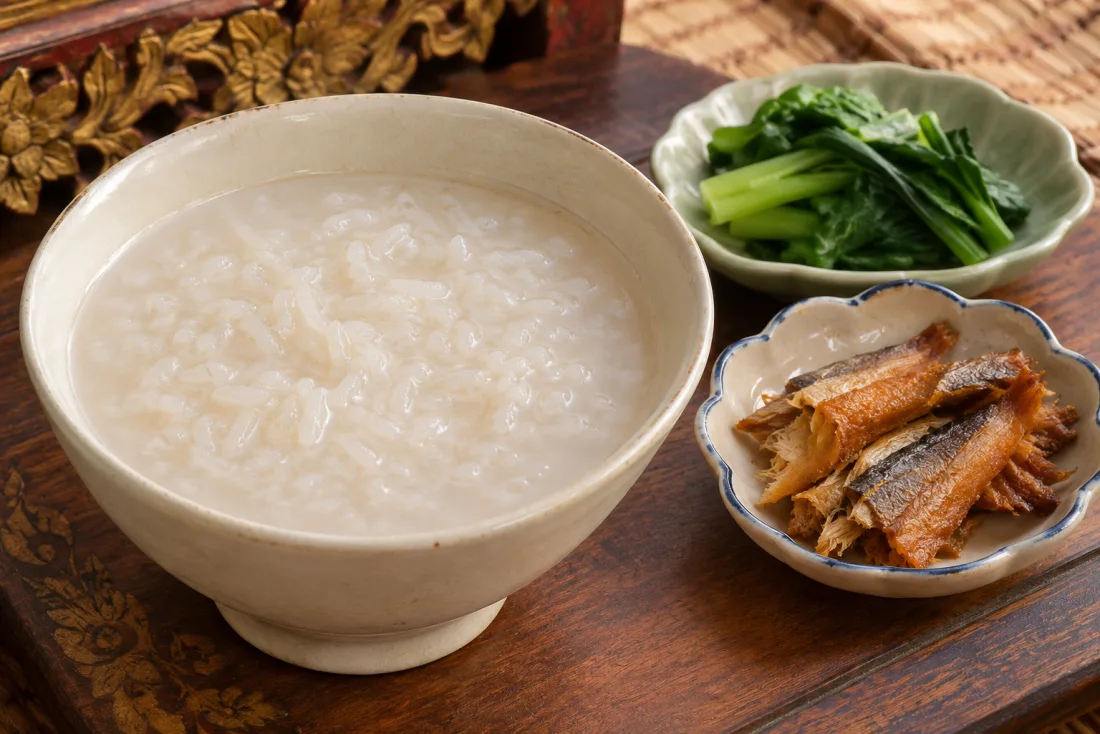

 optional salted fish
The Thai porridge name
ข้าวต้มน้ำกะทิ describes rice porridge with coconut milk. Rice grains remain visible, while finely ground jok is often smoother and thicker. Some similarly named Thai food is leaf-wrapped sticky rice. The sources for this bowl describe cooked rice with coconut liquid and salty accompaniments.
Rice, coconut milk and mild seasoning
Rice is cooked soft before some cooking liquid is replaced with coconut milk. This produces creamy broth while retaining tender grains. Salt or pepper use varies. Coconut milk from the flesh supplies an opaque body, unlike clear coconut water. A salty side contributes much of the seasoning.
A rounded broth and salty bites
Coconut rounds out the flavor and gives the porridge an ivory look. Rice supplies soft texture rather than turning entirely to puree. Fried salted fish gives a sharp contrast. A documented menu can include other preserved seafood, depending on the particular recipe.
Bowl and separate sides
Both serving images keep the rice porridge in its own bowl. Cooked salted fish or other savory sides sit outside so a bite can be as mild or salty as desired. Portion information should say whether sides are included. Visible coconut in the broth does not indicate a separate garnish.
Distinguishing sweet and savory
Some Thai desserts also use rice and coconut milk but add sugar and sweet toppings. This porridge is documented with salty sides. If a menu uses an abbreviated name, look for the bowl format and accompaniments. Explain the visible soft rice grains and coconut in the description.
Allergens and the actual broth
Coconut is present. Salted fish adds fish, dried squid adds a mollusc ingredient, and shrimp relishes or sides add crustaceans if used. Soy or wheat may appear in additional seasonings. Ask whether fish sauce or stock enters the porridge itself and whether utensils or oil are shared.
If you have a food allergy, tell the restaurant before ordering and ask about ingredients, sauces and shared cooking equipment.