

 pork stock
 fish sauce
Where it is commonly eaten
The MICHELIN Guide connects Thai congee with Chinese-descended communities and documents it at Bangkok carts, markets and food courts, in the morning and evening. Jok typically has a more broken-down rice texture than khao tom, which often has clearer broth and visible grains.
What goes into the bowl
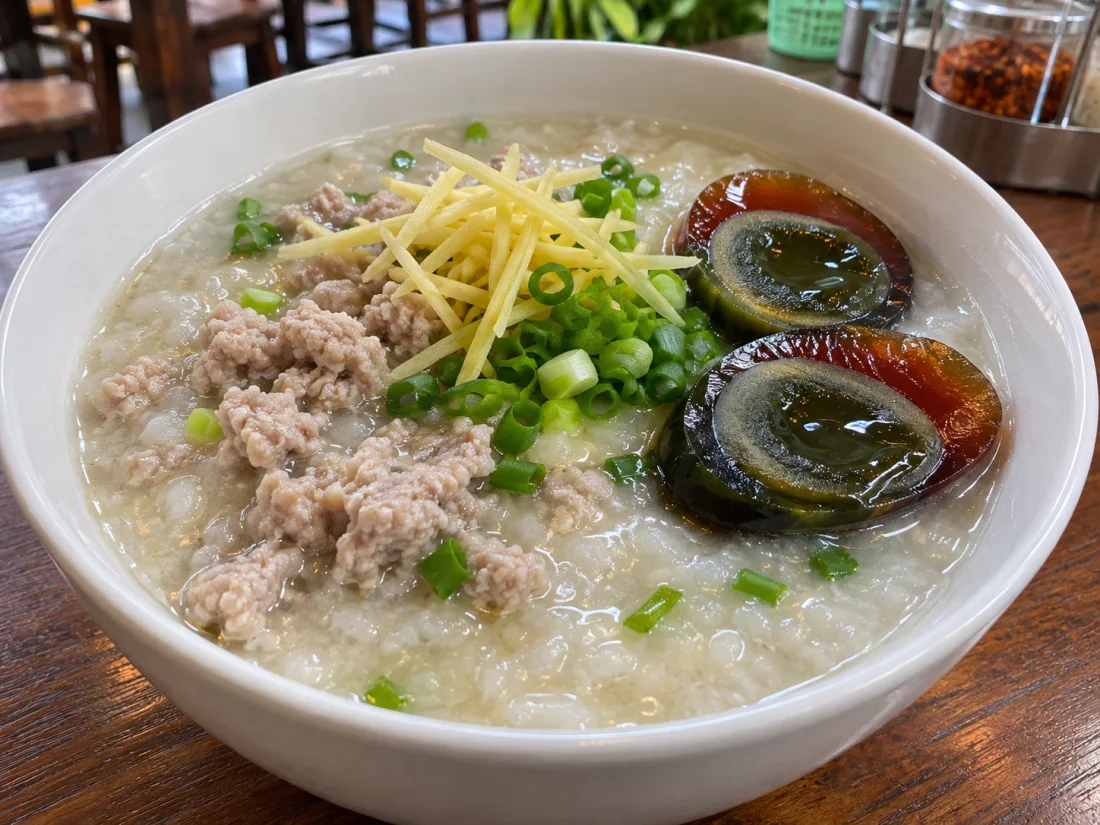
Pailin Chongchitnant’s recipe uses jasmine rice or broken rice, pork stock and minced pork seasoned with soy sauce, fish sauce and pepper. Ginger, spring onions and sometimes coriander go on top. Bowls in Bangkok can also come with an egg, century egg or pork offal.
How the rice becomes smooth
As the softened rice breaks down during cooking and stirring it thickens into porridge. Pork stock helps adjust its body as the seasoned pork is added. It can be quite loose or thick enough to hold toppings on the surface. Some shops produce a distinctive smoky note.
How the base and toppings taste
The rice and broth are gentle and savoury. Seasoned pork, white pepper, fresh ginger and spring onion make certain spoonfuls more aromatic. An egg yolk can make the bowl richer, while century egg contributes a stronger flavour and varied textures. Taste the base before adding extra seasoning.
How to read the menu and recognise serving styles
Shops may pack the ginger and onion separately for takeaway or put them on top in a bowl. Jok moo means pork porridge. Ask whether egg is included and request it fully cooked if that is your preference. Meatballs, offal and egg may all be separate choices.
Allergens and ingredients to ask about
The example uses pork stock, fish sauce and soy sauce. Soy sauce may contain wheat and soy, and fish sauce contains fish. Egg, including century egg, is another possible allergen. Ask about stock, seasonings in the meat, toppings and shared utensils. Removing meatballs cannot remove pork already in the stock.
If you have a food allergy, tell the restaurant before ordering and ask about ingredients, sauces and shared cooking equipment.