

 fish sauce
Recognizing Thai steamed mussels
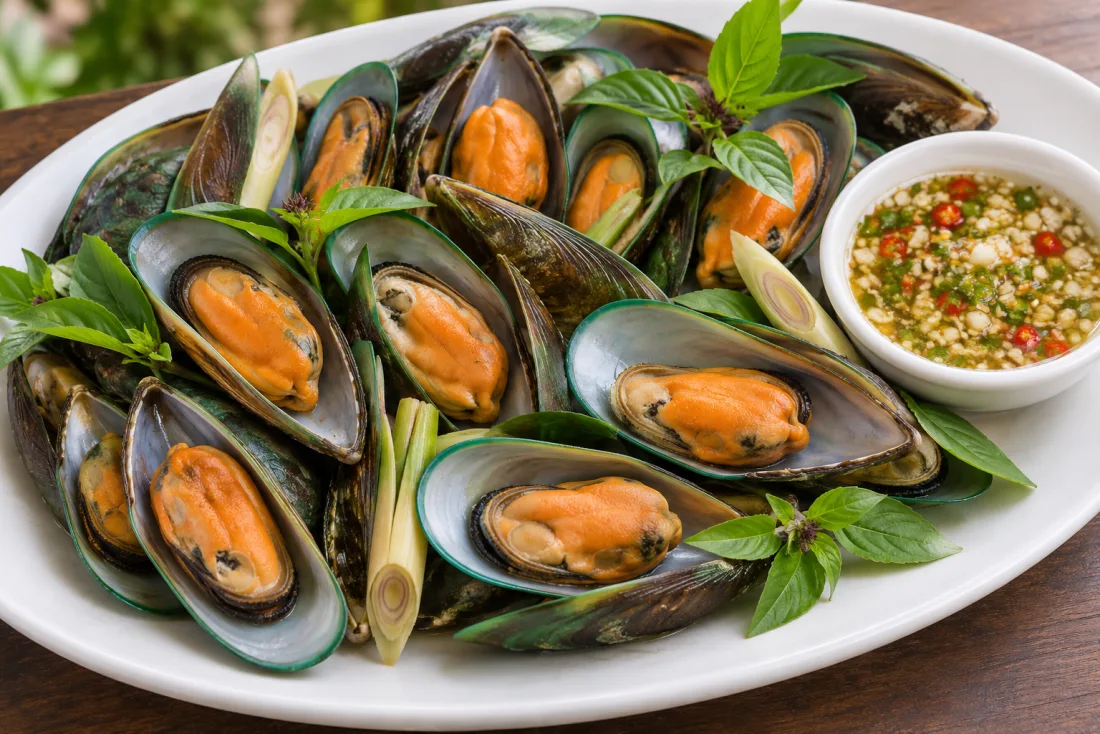
Hoy mangpu neung means steamed mussels. Another menu name mentions cooking them covered with Thai sweet basil. Asian green mussels are a local choice with elongated shells, but a restaurant or recipe may use New Zealand mussels. The exact species depends on the kitchen.
Where to order them in Thailand
Seafood menus may list herb-steamed mussels alongside grilled prawns and shellfish salads. A Si Racha seller lists basil mussels as a separate dish. It suits sharing or eating with rice. The listed weight can include the shells.
Mussels, aromatics and dip
One recipe steams mussels with lemongrass and Thai sweet basil. Its dip uses coriander roots, garlic, fresh chili, lime, fish sauce, palm sugar and white sugar. Other versions use salt for the dip or add lime leaves and galangal to the aromatics.
Thorough cooking and shell preparation
Scrub shell-on mussels and remove visible beards. Use a reliable source and discard damaged shells. Cook the mussels through and discard any that remain closed. Cooking time varies with size and equipment. Use separate tools for raw and cooked shellfish, and keep the dip separate.
Briny sweetness with a bright dip
Lemongrass and Thai sweet basil give a light fragrance. The meat is springy and mildly sweet and briny. Lime and chili make a brighter contrast and garlic adds depth. Try a plain mussel before adding the dip.
Allergens in mussels and dips
Mussels are molluscs. Fish sauce brings fish, and a peanut dip contains peanut. Other sauces can contain shrimp, soy or wheat. Ask about the dip, steamer and utensils. The mussels are still an allergen when no dip is served.
If you have a food allergy, tell the restaurant before ordering and ask about ingredients, sauces and shared cooking equipment.