

 fish sauce
A Thai egg dish to eat with rice
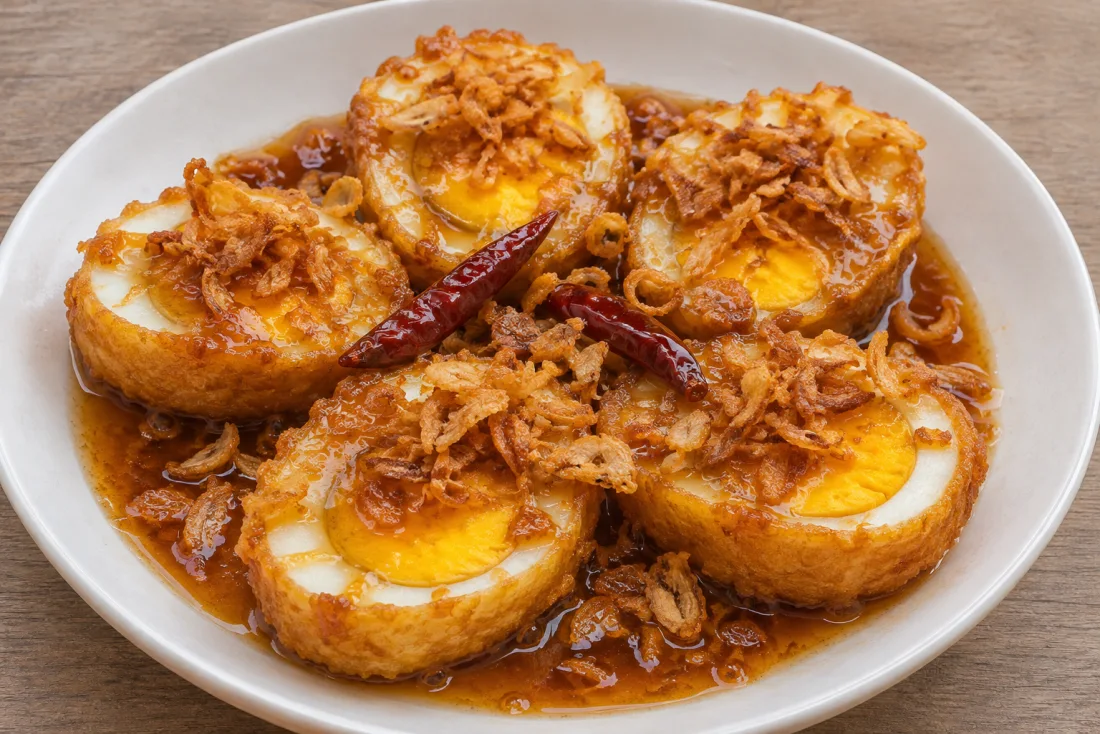
Kai means egg here and luk kuei means son-in-law. Son-in-law eggs keeps the distinctive name, while fried eggs with tamarind describes the flavor. Thai cooks describe it as a familiar dish to eat with rice. Chicken or duck eggs can be used, and the name does not establish a particular family or place of origin.
There are anecdotes about the son-in-law name, but the name alone cannot establish any one account. The cooking process is easier to see on the plate. The eggs are boiled and then fried, and sauce is added so it can cling to each half. Halving exposes both the golden outside and the white and yolk in the center.
The egg, tamarind sauce and crisp toppings
Chicken or duck eggs are boiled and peeled. Frying gives the outside of the white a lightly wrinkled golden surface. Halves keep the shape of a boiled egg beneath that thin layer. Chicken and duck eggs differ in size and yolk proportion, which can change the balance of yolk and white in a bite.
A typical sauce reduces tamarind, coconut or palm sugar and fish sauce. A little thickness helps it adhere to the cut sides and fried surface. Fried shallots are added separately, sometimes with dry fried chillies and coriander. Egg, sauce, shallot and chilli give different textures, and late-added shallots can stay crisp.
Fruit acidity, browned sugar and soft yolk
A piece of egg can have a slightly chewy exterior, a soft white and a richer yolk. Tamarind gives fruit acidity, coconut sugar rounds it out with a caramel-like sweetness, and fish sauce supplies savory saltiness. The sauce concentrates those flavors on the surface of the egg.
Fried shallot adds a cooked onion aroma and lightly sweet crunch. Dried chillies sometimes appear as a few whole pieces and are hotter if eaten with the egg. Ask whether the sauce itself contains chilli if you prefer a milder portion. Using a little sauce lets the egg and shallots come through more clearly.
Serving it with rice and other dishes
Son-in-law eggs can be served with steamed rice, clear soup or vegetables. The halves are easy to share and the extra sauce can season a bite of plain rice. Alongside a spicy stir-fry or salty dish, the sweet-sour sauce and yolk offer another flavor. Thai home cooks also describe it as a familiar dish to share with family.
A plate usually contains several egg halves. One restaurant might add more shallots or coriander, another might let the sauce collect underneath. If you want to try the crisp surface first, ask whether sauce can come separately so you can dip each piece and taste the fried surface, yolk and tamarind separately.
Chicken eggs, duck eggs and other fried eggs
Duck eggs can make larger halves with a thicker yolk. Chicken eggs look similar when sauced, and choice depends on the cook. Kai dao commonly means eggs cracked directly into a pan. Son-in-law eggs are boiled whole, fried and then cut, with sweet-sour tamarind sauce as another clue.
Boiled egg salad is another dish that might arrive in halves, with herbs and a mixed dressing. If the photo shows little more than cut eggs, look for a golden outside, crisp shallots and dark tamarind sauce. Ask the restaurant when the recipe uses other sour ingredients or added chilli.
Allergies in the eggs, fish sauce and fryer
Chicken and duck eggs both contain egg. The tamarind sauce often uses fish sauce, which introduces fish. A restaurant might substitute a prepared seasoning that contains soy, wheat or other ingredients. The appearance of tamarind and sugar cannot establish whether fish is present.
Name what you need to avoid and ask separately about the eggs, sauce, shallots and frying oil. Oil used for prawns, fish or wheat coatings can be a source of cross-contact. Scraping off already applied sauce or removing garnishes does not undo that contact, so the kitchen should confirm the actual preparation.
If you have a food allergy, tell the restaurant before ordering and ask about ingredients, sauces and shared cooking equipment.