
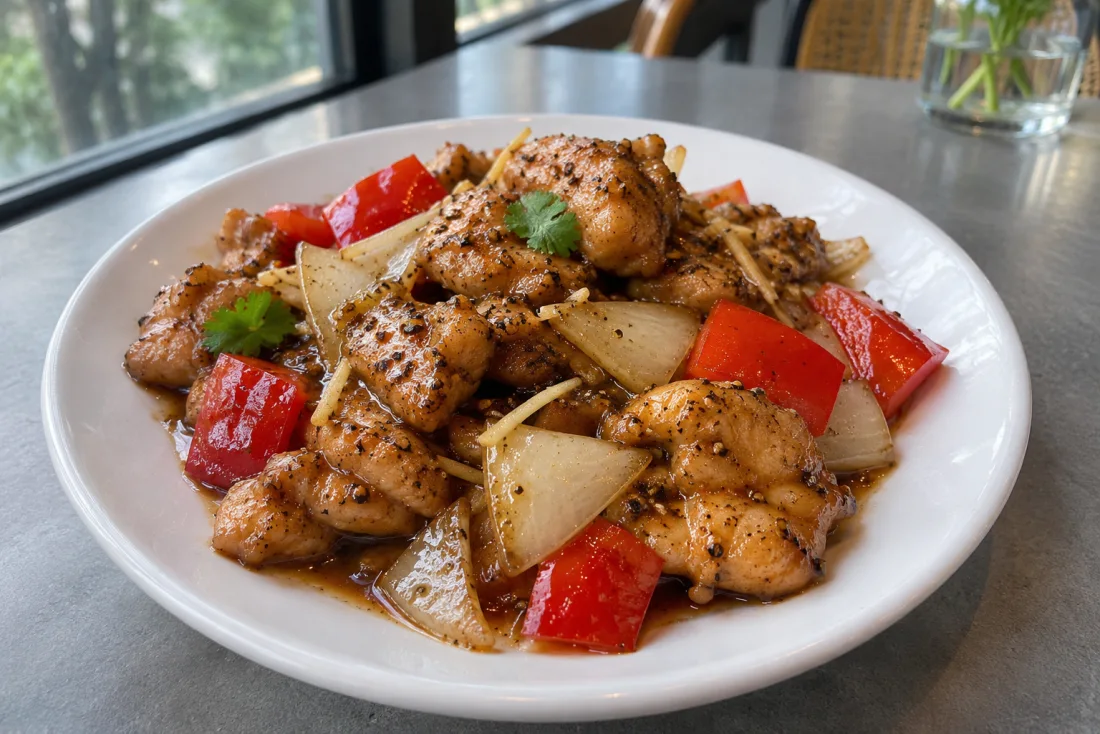

 chicken thigh
Reading the Thai Name
Kai phat phrik thai dam identifies chicken, stir-frying and black pepper. Khao at the front often means it is plated with rice. Sweet peppers add color. Some recipes also use a little fresh chile, so the kitchen can explain the level of heat separately.
Restaurant and Home Versions
Chef Phol Tantasathien uses thigh, onion, red pepper, garlic and ginger. A Kui Buri Hospital meal guide plates the chicken with rice, red and green peppers, onion, tomato and scallion. A Bangkok home cook uses chicken breast, yellow pepper and mushroom sauce.
Chicken, Black Pepper and Vegetables
Thigh stays juicy in larger pieces, while breast can be sliced thinner. Onion softens into the sauce and bell peppers contribute their own aroma and crunch. Tomato brings sweet acidity in some plate meals. A chef's version seasons the chicken with oyster sauce, light soy sauce, sesame oil and Chinese cooking wine.
How the Pepper Reaches the Sauce
Toasted peppercorns can be crushed coarsely before cooking. Some cooks add white pepper for a second aromatic layer. Onion, sweet pepper, garlic and ginger go into the pan with the chicken. A little starch may help the sauce cling. Chicken should be cooked through with separate clean utensils for serving.
Two Ways to Serve It
One serving uses browned thigh with red sweet pepper and onion in a dark glossy sauce. Another places the stir-fry, colored peppers and tomato next to steamed rice. The latter can hold less sauce and tastes brighter. The same warm pepper aroma links the two.
Allergens and Sauces
Oyster sauce can contain mollusks. Soy sauces and seasoning blends can contain soy and wheat. Sesame and fish sauce can also appear in some recipes. Ask about any cooking wine, the marinade, toppings and shared wok or utensils.
If you have a food allergy, tell the restaurant before ordering and ask about ingredients, sauces and shared cooking equipment.