

 chicken
 shrimp paste
Reading the menu name
In Thai, kaeng kathi is a coconut-milk curry, kai means chicken and man farang means potato. The name signals a red-orange sauce with both chicken and potatoes. A Phuket cook records a household recreation of a curry remembered from school lunches. This is one example of how the dish appears in everyday cooking. Different kitchens can use their own red paste, chicken cuts and finishing herbs.
Chicken, coconut milk and potatoes
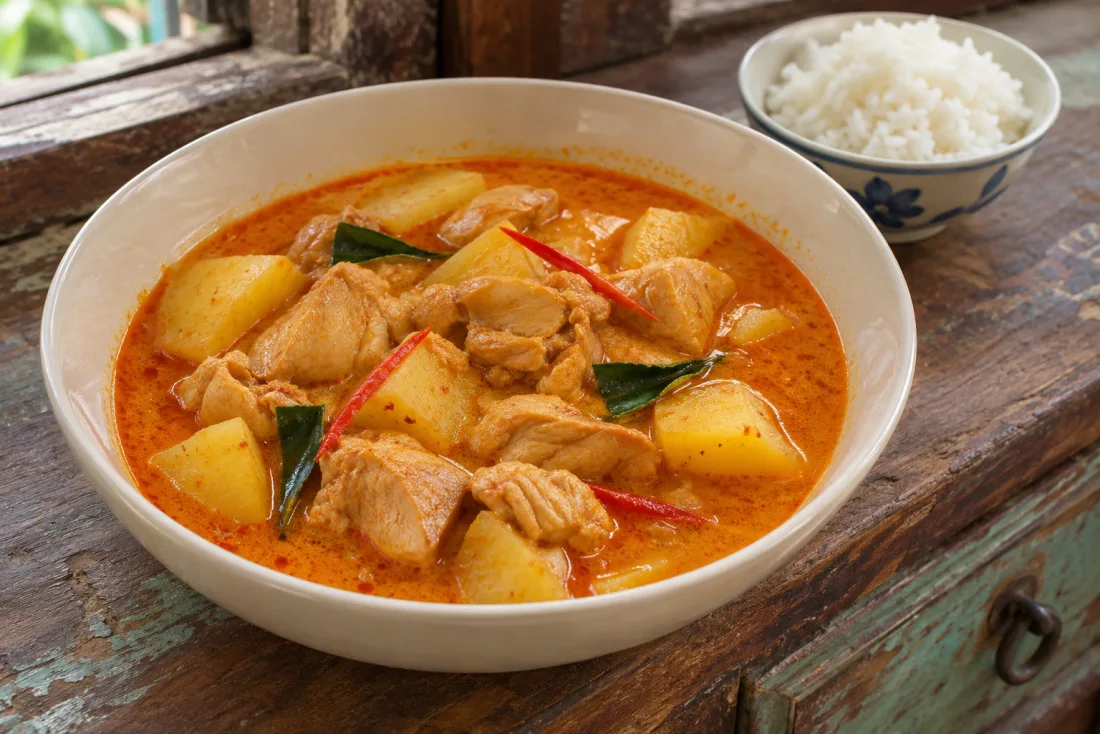
This style brings together chicken, potatoes, coconut milk and Thai red curry paste. Thigh meat stays tender during simmering, and boneless pieces are easy to serve with the potato. Potato chunks soften and absorb the sauce on their surface while staying pale and soft inside. Some cooks use sweet potato, which makes the dish sweeter and gives the chunks a deeper colour. Makrut lime leaves or Thai sweet basil may finish the curry with sliced red chilli.
Simmering and presentation
The red paste warms in coconut milk before the chicken and root vegetables are simmered until cooked through. A final portion of coconut cream can round out the sauce, followed by fragrant leaves. An individual bowl can hold boneless chunks and a bowl of rice on the side. A larger shared serving can hold skin-on thigh pieces and bigger potato chunks. Small droplets on the surface can come from heating the coconut milk with the paste.
Flavour and accompaniments
Soft potato and mild chicken carry the heat and perfume of the red paste. Coconut milk adds body, and the finishing herbs brighten the aroma. Potato also appears in chicken massaman, which has a different signature spice blend. Chilli intensity depends on the paste and the kitchen, so colour alone gives little guidance. Warm jasmine rice picks up a spoonful of sauce, and lightly seasoned vegetables can accompany it in a shared meal.
Allergens and changing recipes
Some red curry pastes contain shrimp paste, and the Phuket recipe adds shrimp paste separately. That version contains a crustacean even though whole shrimp are absent. Fish sauce or fish stock contributes fish. Soy, wheat and other allergens depend on the seasoning and stock labels. Coconut itself matters to diners allergic to coconut. Ask about all ingredients in the curry base and whether the kitchen shares equipment with dishes containing an allergen.
Showing the actual serving
A menu can name the chicken, coconut and potato and say whether rice is included. Write sweet potato separately if the restaurant uses it. A light orange individual bowl with makrut leaves communicates a different portion and finish from a shared bowl with Thai sweet basil and skin-on chicken. Both can show generous potato and cooked chicken so diners can see what distinguishes the dish.
If you have a food allergy, tell the restaurant before ordering and ask about ingredients, sauces and shared cooking equipment.