
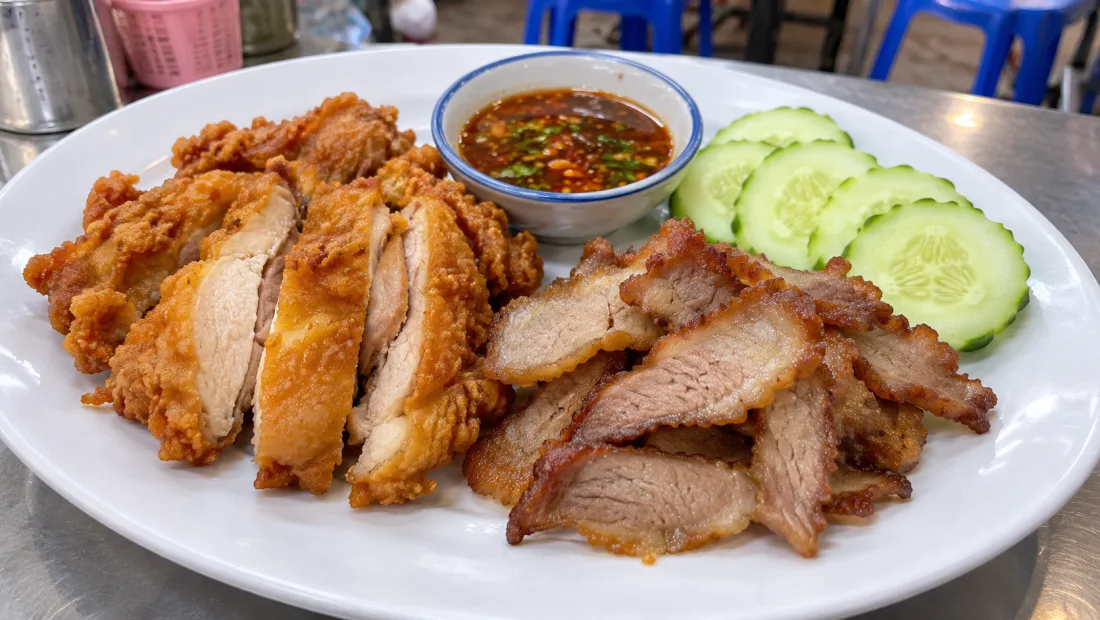

 fried chicken
 fried pork
Recognising both meats
Chicken often has a lighter golden coating and pale cooked meat. Thin pork slices tend to be darker and firmer. The two can sit in separate groups. An optional cooked egg, cucumber, soup and dips remain visible when served separately.
A combination in Thai market kitchens
Kai thot means fried chicken and mu thot means fried pork. A Bangkok market outlet lists both on a shared plate with jaew and as a rice set. Another restaurant includes cooked egg, with separate dip or broth. Exact cuts and sides differ by shop.
Frying and assembling
Kitchens can cook the meats separately so chicken is cooked through and thin pork develops crisp edges. Garlic, pepper and fish sauce are possible seasonings. Drain and place over rice or on a shared platter. Separate dip keeps the crust crisper.
Crisp texture and savoury meat
Chicken can be crisp outside and tender inside. Thin pork tastes salty and toasty. Jaew adds tang and chili, while sweet chili dip can be milder. Plain rice, cucumber or broth can offset concentrated flavours. Try a piece before dipping.
How to order and choose a photo
Ask about portions, bones, cuts and whether rice and egg are included. Use different images for the shared plate and the rice set. Show the two meats clearly and list the sides that come with the actual order.
Allergens in coating, sauce and shared oil
The platter contains pork and chicken, and some sets add egg. Batter or seasoning may contain wheat, egg, soy or milk. Fish sauce contains fish, and some other sauces contain mollusc or crustacean ingredients. Ask about marinade, dips, shared oil and tools.
If you have a food allergy, tell the restaurant before ordering and ask about ingredients, sauces and shared cooking equipment.