
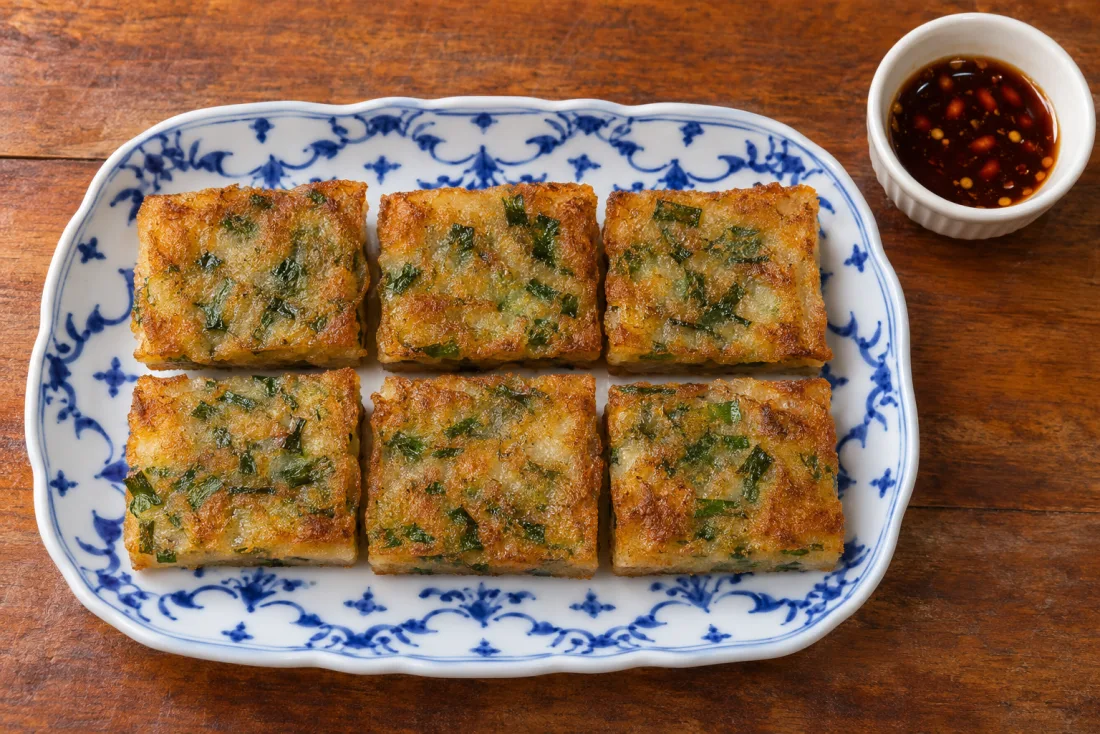

Six pieces with a choice of cooking method
Kui chai means chives and also the filled dumplings named after them. Hok chin means six pieces, nueng means steamed and tod means fried. The count does not define how the item is cooked. A steamed wrapper can look translucent, while fried pieces can have crisp sides and a darker colour. Check the method, fillings and size, especially when the box contains mini pieces.
Two formats at Thai market stalls
A Talat Phlu stall lists both steamed and fried six-piece kui chai and lets customers specify a filling. Another shop lists both four- and six-piece fried boxes. A floating-market vendor has a six-piece mini pack with a bag of dip. These are examples of how shops serve the count without setting a common piece size. Sets can also be shared to compare a steamed and a fried dumpling.
Thin wrapper, chives and a separate dip
Rice flour, water and other starches can form the wrapper. Chives are chopped and seasoned before they are enclosed. Some steamed wrappers let the green show clearly. Fried ones can use a similar dough with browned sides. Shops may also offer taro, mushroom and cabbage or other fillings. Sweet soy, vinegar or chilli may go into a separate dip. Ask what the shop actually uses in its dough and filling.
The same starting parcel can become soft or crisp
Steam sets the wrapper and cooks the filling, leaving a moist finish. A fried version can use another stage in hot oil to brown one or more sides. Thickness, heat and cooking time affect the texture. Eat the fried pieces warm if you want crispness. Steam trapped in a takeaway box can soften them. Leave the dip separate until eating and count the pieces before serving.
A tender steamed bite or a crisp fried edge
Steamed kui chai has a lightly chewy skin and a soft green filling. The fried piece starts with a toasted smell, yet can remain soft beneath the crust. Chives bring a fresh allium taste. Taro can feel starchier and shiitake brings an earthier finish. A sweet-sour dip introduces contrast and any hot chilli can be controlled separately when supplied on the side.
Allergens in the filling, steamer, fryer and sauce
Soy, wheat, shrimp, fish, oyster, egg or sesame can occur in the dough, seasonings or other fillings depending on the vendor. Rice flour does not establish that an entire box is gluten-free. Check soy sauce, fish sauce and oyster sauce in both filling and dip. Steamed dumplings may share prep surfaces or a steamer, while fried ones also need a check for shared oil. Confirm the actual fillings and utensils where allergies matter.
If you have a food allergy, tell the restaurant before ordering and ask about ingredients, sauces and shared cooking equipment.