
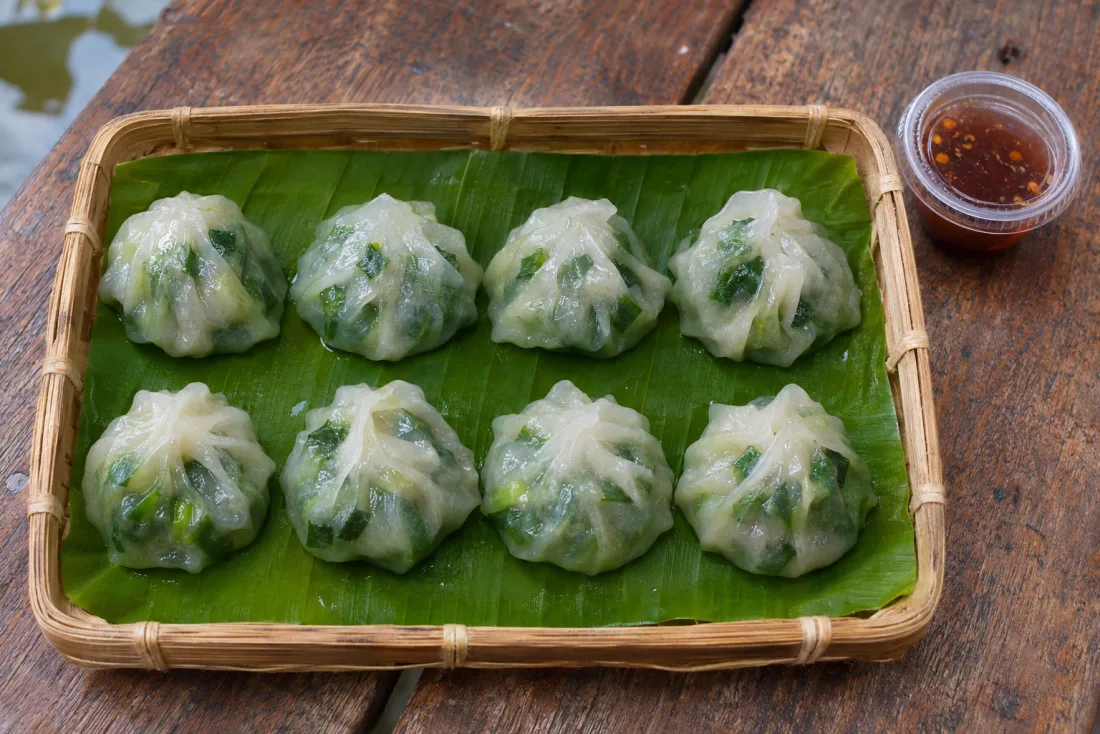

Eight is the count of the box
Khanom kui chai is the dumpling family, and paet chin means eight pieces. A box can be all chives or arranged by different fillings. Steamed wrappers can be pale and moist. A green chive filling may show through, while taro or bamboo shoot can look lighter. Shapes and piece size depend on the vendor. Chive dumplings is the family name even when an individual piece has another filling.
Examples from Thai market vendors
A floating-market vendor lists eight pieces of one filling, a three- or four-filling assortment, and combinations of four chive plus four taro or bamboo shoot. A Talat Phlu vendor lists both an all-chive eight and an eight-piece assortment. The menus show how vendors pack these sets without fixing one proportion for all shops. A small supply of dip can be shared by the table.
Chives, taro and shoots in a thin wrapper
Chopped chives turn deeper green during cooking and keep a savoury allium aroma. Taro is soft and starchy, and bamboo shoots can keep a little bite. Some shops add jicama or other vegetables as choices. Rice flour, starch and water can make a partly translucent wrapper. Dip may use soy sauce, vinegar and chilli, and it is often packed separately. Ask what a pale filling is if you need to identify it precisely.
Steam and organise the pieces by filling
Steam the prepared parcels until the skin sets and the filling is cooked. Vendors can group each filling or place four of each in separate rows. Markings are shop-specific and cannot identify a filling at a different stall. Leave a little room between pieces if you want to lift them easily. A separate dip helps keep the wrapper visible. Ask for nueng if you want steamed pieces and the vendor also offers fried trays.
A green all-chive tray or a range of textures
The chive pieces have a clean, savoury aroma and a tender, lightly chewy wrapper. Taro is more floury and mildly sweet, while bamboo can provide small crisp bites. Try a piece before dipping to understand its filling. Vinegar and sweet soy can add brightness, while chilli in the dip adds heat. A warm wrapper is softer and may become more chewy as it cools.
Allergens in different fillings and shared tools
Ask about each filling separately. Soy sauce contains soy and may contain wheat. Fish sauce contains fish, oyster sauce may contain oyster and shrimp is a crustacean. Some taro recipes can include peanuts, while other shop items may use egg or sesame. Filled dumplings can touch in the same box and share steamers or tongs. Ask for separate preparation if needed and check the dipping sauce independently.
If you have a food allergy, tell the restaurant before ordering and ask about ingredients, sauces and shared cooking equipment.