
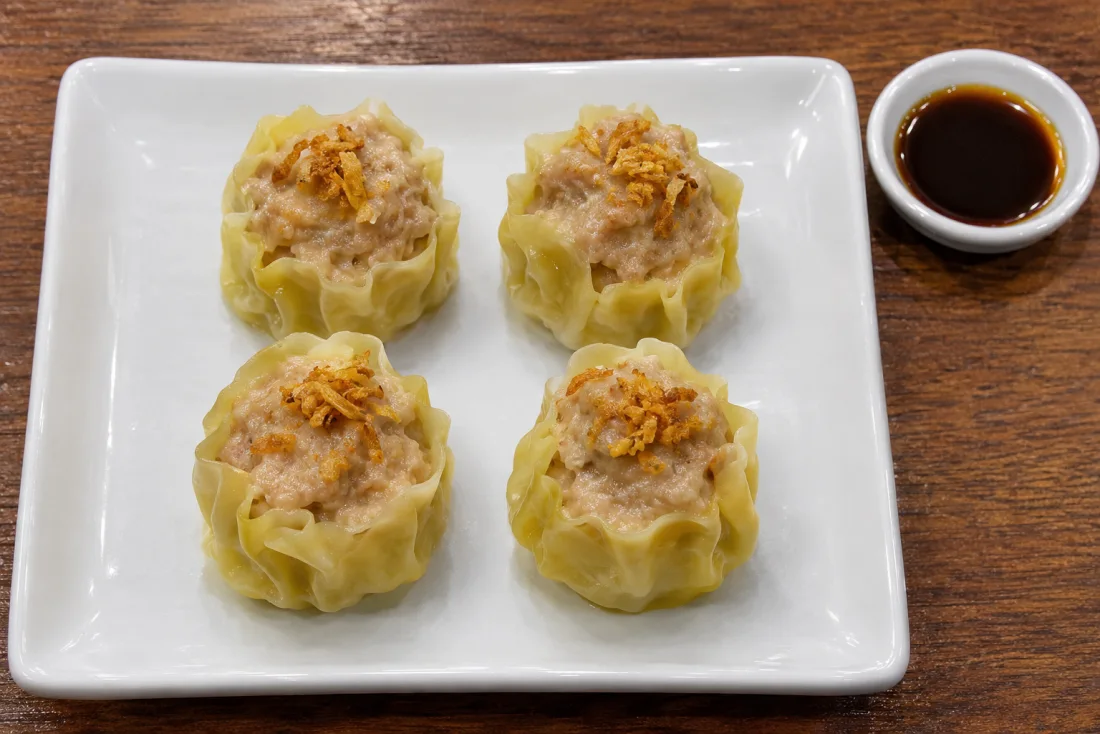

 pork or shrimp filling
What a four-piece order means
Thai menus count shumai with chin or luk. Four pieces is a serving format. A Bangkok vendor lists four pork shumai, while another offers four pork and four shrimp as separate options. Thai shumai has ties to Chinese dim sum, including the pork styles found in Bangkok's Chinatown.
What can go under the pleats
A Yaowarat pork recipe uses minced pork, pork fat, jicama, shiitake, egg white, soy and sesame for a moist filling. A Thai chef's prawn recipe combines chopped shrimp with pork, egg white, soy and sesame. A shrimp label does not exclude pork.
Trying the filling and the dip
The wrapper stays tender and pork can be juicy, while pieces of shrimp bring a springy bite. Try one plain and another with a little Chinese black vinegar. Fried garlic is an optional garnish.
Folding and steaming four pieces
Gather the thin wrapper around the filling and flatten the bottom. Leave the tops open and steam the pieces with room between them until the filling is cooked through. A small dish or basket holds four and sauce can be served separately.
Using a small portion
The plate can be a light snack for one or a tasting portion to split. Check whether the vendor allows mixed fillings and how large the pieces are; count by itself does not establish weight.
Allergens in wrappers, filling and sauce
Wheat is typical in wrappers, and egg, soy and sesame can occur in the filling. Shrimp is a crustacean and some sauces have fish or mollusc ingredients. Ask about shared steamers and utensils if a food allergy affects the choice.
If you have a food allergy, tell the restaurant before ordering and ask about ingredients, sauces and shared cooking equipment.