
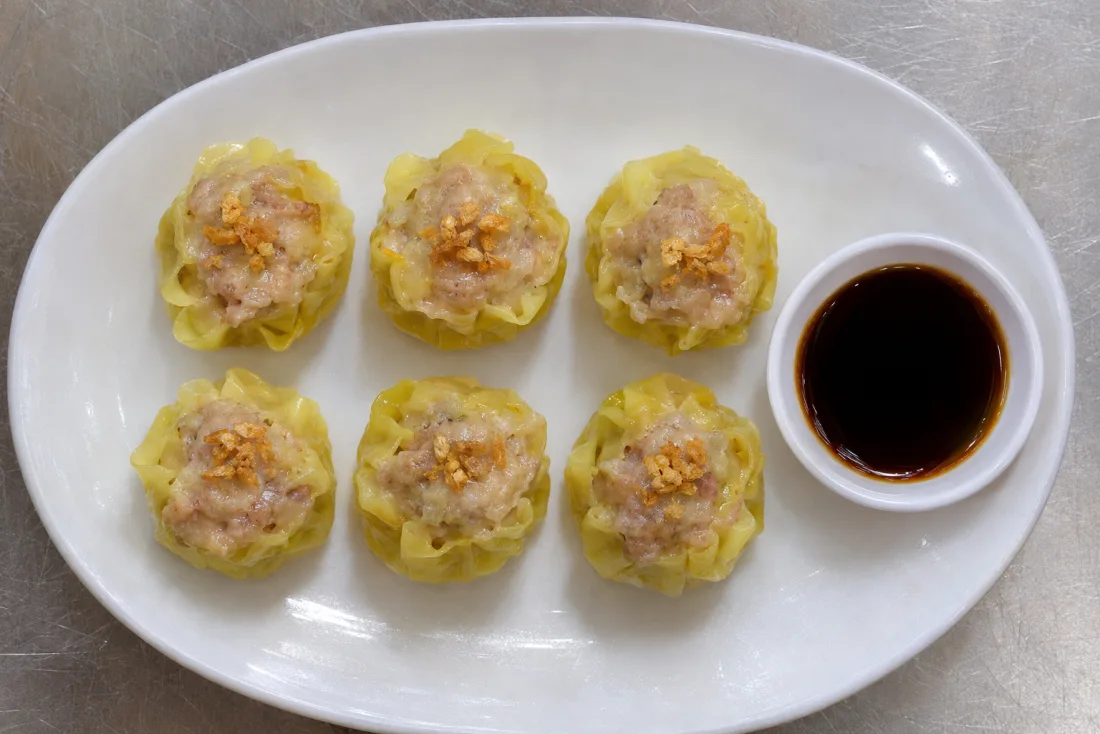

 pork or shrimp filling
Reading a six-piece menu listing
Six is the count, and the text around it tells you the filling. One Thai shop lists six-piece pork, shrimp and crab options. A homemade dumpling seller offers six pieces of shrimp mixed with pork, as well as an assortment. Thai shumai belongs to a Chinese-influenced dim sum tradition.
Telling blended filling from an assortment
A pork recipe can use pork, jicama, shiitake, white pepper, soy and sesame. Thai cooks also combine minced pork with chopped shrimp and egg white. Kung phasom mu means shrimp mixed with pork within a filling. Khla means an assortment of separate pieces.
Comparing fillings and dipping sauces
The steamed skin is tender and the pleats have a little chew. Pork can be juicy, and pieces of shrimp springy. Chinese black vinegar adds tang, while fried garlic and chilli can be offered separately. Try one dumpling plain first if you want to distinguish the fillings.
Portioning a tray into six
Fill thin wrappers, gather the edges and leave the tops open. Steam the dumplings until the centres are cooked through. A six-piece serving can be packed from a larger tray, and two rows of three make the count clear. Separate equipment may be needed to prevent allergen contact.
Sharing and ordering a mix
Split six between two or three people or serve it as a fuller snack for one. Ask whether the vendor allows three pieces of each flavour. Piece size and any accompaniments affect how much food the order contains.
Allergens in mixed portions
Wheat is common in wrappers and egg, soy and sesame may be used. Shrimp and crab are crustaceans. Shared steamers, trays or tongs can transfer allergens between fillings. Ask about seasoning and sauces, which may contain fish, molluscs, wheat or soy.
If you have a food allergy, tell the restaurant before ordering and ask about ingredients, sauces and shared cooking equipment.