
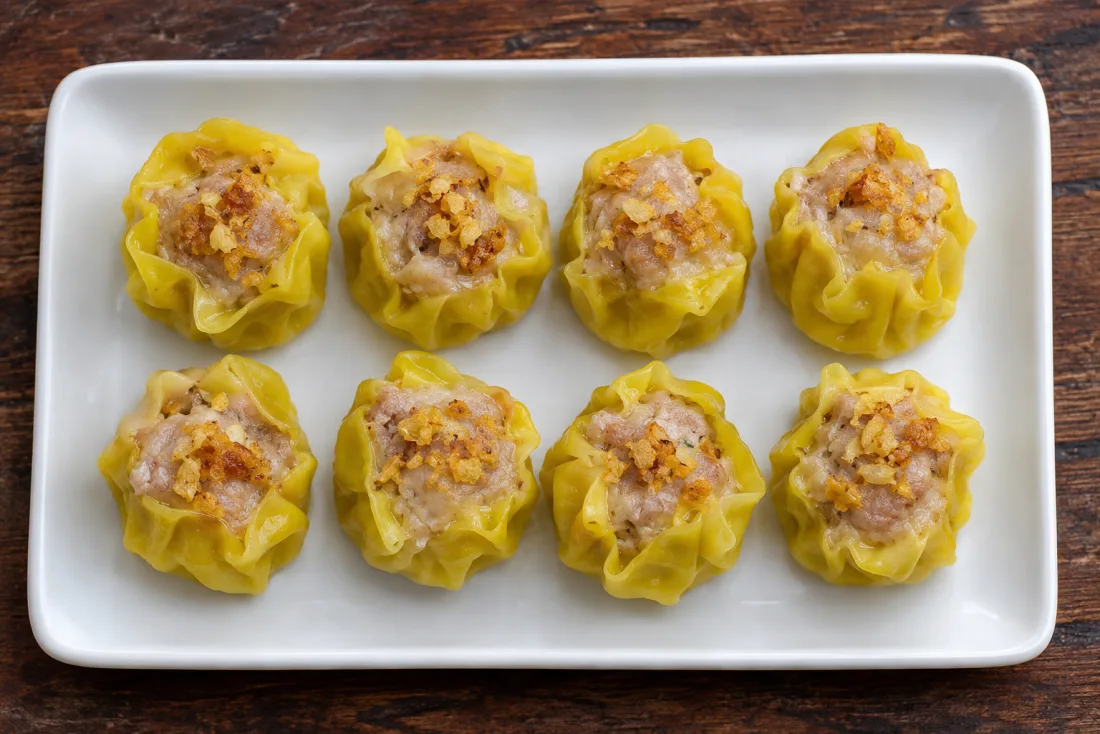

 pork or shrimp filling
The eight-piece serving in Thai shops
A Song Wat café in Bangkok lists eight pork shumai. A Thai bun and dim sum vendor lists a large eight-piece shrimp box and a smaller four-piece box. The count is a packaging and serving choice within a Chinese-influenced dim sum tradition.
Pork and shrimp fillings on a larger plate
Yaowarat-style pork can use jicama, shiitake, egg white, starch, soy and sesame oil. Another chef's recipe combines shrimp pieces with pork and white pepper. A deluxe shrimp label can still include pork; ask about the actual filling and whether assorted pieces are sold.
Steam aroma and dipping choices
The skin stays tender and its pleats can have some chew. Pork can be juicy and savoury while pieces of prawn provide bounce. Optional garlic gives a crisp bite, and black vinegar or soy dip can be served separately.
Steaming and packing an order of eight
Gather the wrappers with the tops open and leave space between pieces in the steamer. Cook the fillings through. Arrange eight in rows or in a basket, and handle them from the base if the skin is delicate. Separate handling can be needed for allergens.
Sharing an eight-piece order
Split four each for two people, or two each at a table of four. Ask whether mixed fillings are available and how large the pieces are. Tea, another dim sum dish or congee can be added depending on the meal.
Allergens in wrappers, sauces and shared boxes
Wheat is typical in wrappers; egg, soy and sesame can occur in the skin or filling. Shrimp is a crustacean. Sauces can introduce additional allergens. A shared steamer or container can bring different fillings into contact. Ask about separate equipment and packaging before ordering.
If you have a food allergy, tell the restaurant before ordering and ask about ingredients, sauces and shared cooking equipment.